
What Happens After All Bitcoins Are Mined?

 Prefer us on Google
Around the year 2140, the last Bitcoin will have been mined, marking the end of new BTC issuance. Once all 21 million coins are in circulation, miners will no longer receive block rewards and will depend solely on transaction fees for revenue. Some critics express concern that these fees may not be enough to sustain the current level of network security.
Introduction
Bitcoin is known for having one of the strictest monetary policies ever implemented: a fixed supply cap. Only 21 million bitcoins will ever be created. This built-in scarcity is a key reason why Bitcoin is often compared to gold and regarded as a reliable store of value. But what happens after all bitcoins are mined? How will the network remain secure, and how will transactions be processed once no new coins are generated? Let’s explore.
What Is Bitcoin’s Total Supply Cap?
From the very beginning, Bitcoin’s mysterious creator, Satoshi Nakamoto, set a maximum supply of 21 million coins. This design makes Bitcoin inherently resistant to inflation—unlike government-issued currencies, which can be printed indefinitely. The hard cap ensures that Bitcoin remains a scarce digital asset with predictable issuance.
How Many Bitcoins Have Been Mined So Far?
As of August 2025, approximately 19.91 million bitcoins have been mined. New BTC enters circulation through a process called mining, which started back in 2009. The rate of issuance slows down every four years during an event known as the “halving,” where block rewards are reduced by half. With just over 1 million BTC left to be mined—and continued halvings—the last bitcoin is projected to be mined around the year 2140.
-- Price
What If Mining Hardware Becomes More Powerful?
Satoshi designed Bitcoin to self-regulate. No matter how powerful mining equipment becomes, the protocol adjusts the difficulty level to ensure that new blocks are produced approximately every 10 minutes. If more miners join the network or upgrade their hardware, the difficulty increases. If miners leave, it becomes easier. This built-in adjustment maintains a consistent block time regardless of changes in computational power.
How Long Does It Take to Mine One Bitcoin?
Currently, miners receive a block reward of 3.125 BTC every 10 minutes. This means the network produces about 0.3125 BTC per minute. Put simply, one bitcoin is mined every 3.2 minutes on average when considering global mining efforts.
How Many Bitcoins Are Actually in Circulation?
While around 19.91 million BTC have been mined, not all of them are accessible. It’s estimated that up to 20% of all mined bitcoins have been permanently lost—whether due to forgotten passwords, misplaced private keys, or damaged hardware. This unintentional reduction in supply makes Bitcoin even scarcer than it appears.
What Happens to Miners After All Bitcoins Are Mined?
There’s a common belief that Bitcoin’s security will weaken as block rewards diminish. However, the reality is that Bitcoin’s mining economy is highly adaptive and resilient by design.
Bitcoin’s incentive structure is built around a self-regulating feedback loop. When mining becomes unprofitable, some miners exit the network, leading to a downward adjustment in mining difficulty. Approximately every two weeks, the protocol recalibrates this difficulty to maintain a consistent 10-minute block interval — regardless of shifts in hashrate. This ensures that mining remains feasible for those who continue to participate, even as rewards evolve.
This system has already proven its robustness under extreme conditions. For example, when China imposed a mining ban in 2021, Bitcoin’s global hashrate plummeted by over 50%. Yet the network continued operating seamlessly, and hashrate recovered within months as miners relocated to more favorable regions. This demonstrates that miner profitability — not the absolute size of the block reward — is what ultimately drives participation.
Looking ahead, even when block rewards near zero, the security of the network will depend not on the amount of new BTC issued, but on whether transaction fees and operational efficiency can sustain mining profitability. With its built-in difficulty algorithm and demonstrated adaptability, Bitcoin is well-equipped to maintain security through market-driven incentives long after the last bitcoin is mined.
Conclusion
2140 may seem distant, but the end of Bitcoin’s supply issuance is a fundamental event that will shape the network’s future. The shift to a fee-driven mining economy may alter transaction costs and miner behavior, but Bitcoin’s core value proposition—scarcity and decentralization—will remain unchanged.
As the ecosystem continues to develop, one thing is clear: Bitcoin’s resilience lies in its ability to innovate under changing conditions. Whether you’re looking to trade, invest, or simply learn more, WEEX Exchange offer a secure and user-friendly environment to buy and trade Bitcoin. Join today and become part of the future of finance.
Further Reading
- What is Bitcoin Pizza Day : A Slice of Crypto History
- What Is Bitcoin and How Does It Work?
- User Guide: How to Invest in Bitcoin and Cryptocurrencies?
- 7 Common Mistakes in Crypto Trading
Disclaimer: The opinions expressed in this article are for informational purposes only. This article does not constitute an endorsement of any of the products and services discussed or investment, financial, or trading advice. Qualified professionals should be consulted prior to making financial decisions.
This content is provided for general informational purposes only and doesn't constitute financial, investment, legal, or tax advice. Any events, rewards, online promotions, or related information mentioned herein should not be considered a recommendation, solicitation, or invitation to purchase, sell, trade, or otherwise deal in any crypto assets. Crypto assets are highly volatile and may result in loss. The availability of WEEX services, products, and related events may vary by region. You are responsible for ensuring that your participation is in accordance with applicable local laws and regulations.
You may also like

How to Convert ETH to USDT on WEEX: Step-by-Step Guide
How to Convert USDT to BTC on WEEX: Step-by-Step Guide
How to Convert BTC to USDT: A Step-by-Step WEEX Guide
BTC Funding Rate and Open Interest: What Each One Measures and How to Read Them Together
How Transparent Is a Crypto Exchange? Checking Proof of Reserves and Protection Funds
How to Use the WEEX Trust Center: Check Reserves, Protection Fund and Official Contacts
Crypto Leverage Trading Explained: How Perpetual Futures, Margin and Liquidation Work
Bitcoin Margin Trading: BTC Liquidation Math at 3x, 10x and 25x

Crypto Leverage Trading Platform: 6 Checks Before You Deposit
What Is Margin Trading? A $1,000 Example at 3x and 10x Leverage
How to Day Trade Crypto for Beginners: The Math Behind One Trade

Trading Psychology for Beginners: Crypto Traps and Hard Rules

What Is a Bitcoin ETF? How Creation, Custody and Fees Work

What Is Blockchain and How Does It Work? One Transaction, Traced

WEEX Convert Fees: What Zero-Fee Conversion Really Costs You

WEEX Convert Quote: How the 8-Second Price Lock Really Works
WEEX Convert Limits: Minimum and Maximum Amounts Explained
How to Check a WEEX Convert Order: History, Rate and Status

USDC Significant EMT Status in the EU: What Changes on November 12 Under MiCA
Walrus (WAL) Jumps 30%: Sui Storage Token Rallies on AI Data
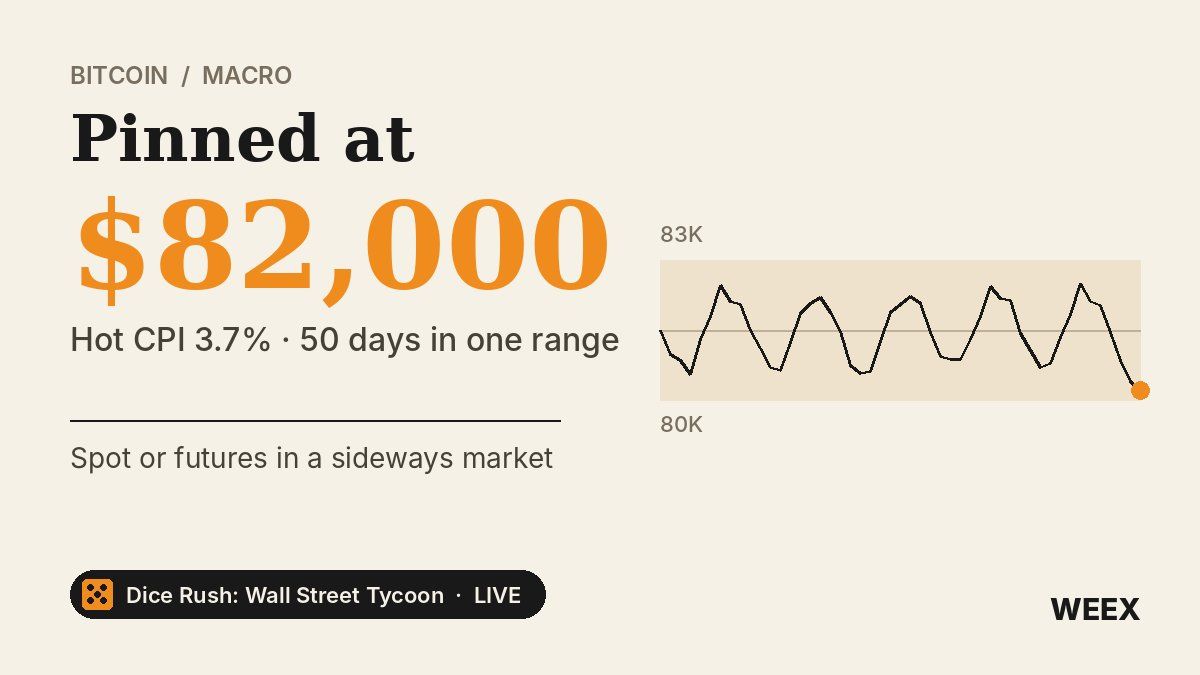
Bitcoin Price After Hot CPI: Why BTC Is Pinned Near $82,000
What Is a Limit Order? How It Works and When to Use It

Best Crypto Miner for Beginners: What to Check on Cost, Power, Hashprice and Profit Before You Buy

Limit Order vs Market Order: Which One to Use When Trading Crypto
What Is a Limit Order? How It Works in Crypto With BTC Examples
Stop Limit Order: How It Works and Why It Can Fail to Fill
Best Crypto Platform for Beginners: Pick by Goal, Not Brand

Best Crypto Podcasts for Beginners: A 4-Week Listening Plan

How to Buy Crypto Anonymously: 5 Methods, Real Costs and Limits
Will Bitcoin Break $87,000 This Week? CPI, Fed Speakers and ETF Outflows to Watch
How to Convert ETH to USDT on WEEX: Step-by-Step Guide
How to Convert USDT to BTC on WEEX: Step-by-Step Guide
How to Convert BTC to USDT: A Step-by-Step WEEX Guide
BTC Funding Rate and Open Interest: What Each One Measures and How to Read Them Together
How Transparent Is a Crypto Exchange? Checking Proof of Reserves and Protection Funds
How to Use the WEEX Trust Center: Check Reserves, Protection Fund and Official Contacts


