
Who Is Vitalik Buterin? The Complete Guide to Ethereum’s Founder

 Prefer us on Google

Key Takeaways:
- At just 31 years old, this Canadian-Russian programmer co-created Ethereum - the dominant smart contract platform that expanded blockchain's potential far beyond Bitcoin's original digital cash concept.
- With a $1.04 billion crypto portfolio, Buterin ranks among the world's youngest self-made billionaires.
- In 2025, Buterin continues driving innovation by streamlining Ethereum's core architecture while preserving its programmability - ensuring the network remains both powerful and accessible as decentralized systems evolve.
Who is Vitalik Buterin?
Vitalik Buterin stands as one of the most influential figures in blockchain technology as the Russian-Canadian co-founder of Ethereum. Born on January 31, 1994, in Kolomna, this programming prodigy conceptualized Ethereum at just 19 years old, forever changing the trajectory of decentralized systems.
Buterin's groundbreaking 2013 Ethereum whitepaper introduced the revolutionary concept of a programmable blockchain - moving beyond Bitcoin's digital cash framework to enable smart contracts and decentralized applications. Today, his creation processes over $10 billion in daily transactions and hosts the vast majority of DeFi protocols, NFT marketplaces, and Web3 applications.
While renowned for his technical brilliance, Buterin has emerged as blockchain's foremost philosopher-king. His writings on cryptocurrency economics, scalability solutions like sharding, and Ethereum's transition to proof-of-stake demonstrate unique depth in both technical and socio-economic analysis of decentralized systems.
Buterin's journey - from writing Bitcoin articles for $5 per piece to becoming one of the youngest crypto billionaires - epitomizes the disruptive potential of blockchain technology. His continued leadership in Ethereum's development maintains its position as the foundation for the next generation of internet infrastructure.
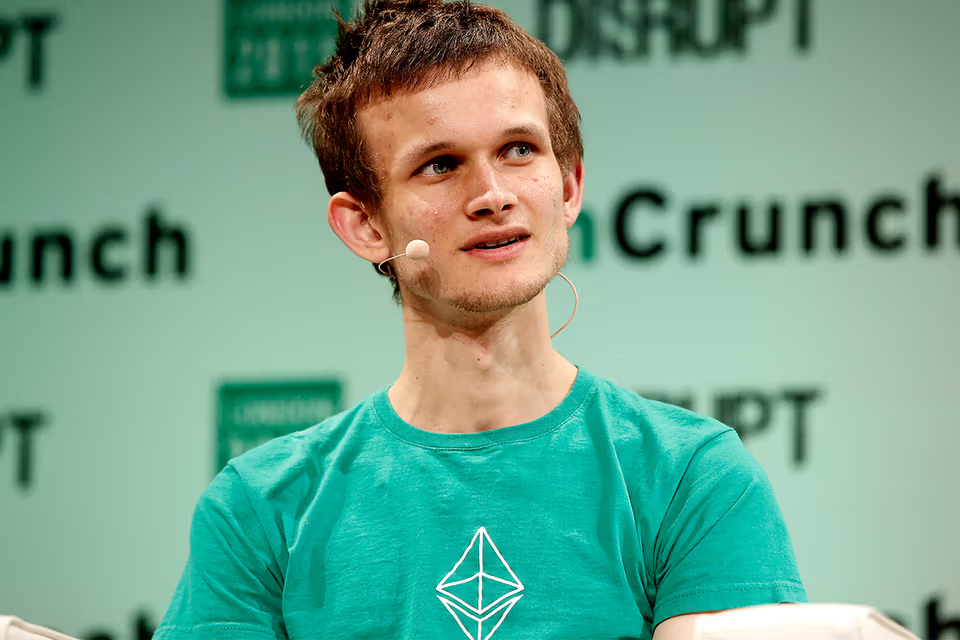
How Did Vitalik Buterin Come Up With Ethereum?
At a pivotal Bitcoin conference in 2013, Buterin recognized cryptocurrency's transformative potential beyond mere speculation. After abandoning his university studies, he pursued opportunities to contribute to the movement - including a rejected internship application at Ripple that serendipitously redirected his focus toward developing Ethereum. This twist of fate would ultimately reshape the blockchain landscape.
- The Birth of a Vision (2013-2014): Buterin spent months globetrotting to understand Bitcoin's limitations firsthand. Convinced blockchain technology could enable more than just payments, he conceived Ethereum as a programmable platform for decentralized applications. His whitepaper, circulated among cryptographers in late 2013, immediately garnered enthusiastic support from technical peers who recognized its revolutionary potential.
- Going Public (2014): When Buterin unveiled Ethereum at a Miami Bitcoin conference, the crypto community recognized its groundbreaking implications. The platform's ability to host smart contracts and custom tokens represented a quantum leap in blockchain functionality. This vision earned 20-year-old Buterin the prestigious Thiel Fellowship, providing crucial early funding and validation for his ambitious project.
- Foundational Tensions (2014-2015): The Ethereum Foundation's establishment as a Swiss non-profit (funded by 31,000 BTC) sparked internal conflicts. Co-founder Charles Hoskinson vehemently opposed the non-profit model, advocating instead for venture capital backing. This philosophical rift led to Hoskinson's departure and eventual creation of Cardano - though he later acknowledged Ethereum's remarkable success despite their disagreements.
- Philosophical Paradoxes: While championing decentralization, Buterin's Ethereum has faced criticism for certain centralized dependencies, notably exposed during a 2020 Infura outage that disrupted major DApps. These contradictions highlight the complex realities of implementing idealistic visions at scale, as Ethereum continues evolving toward its techno-utopian goals while navigating practical constraints.
Vitalik Buterin's Personal Life and Philosophy
Vitalik Buterin's worldview extends far beyond blockchain technology, rooted in formative experiences that shaped his decentralization ethos. The infamous World of Warcraft incident , when Blizzard weakened his warlock character in a 2009 update , became a personal revelation about centralized power's dangers, ultimately inspiring his journey toward building user-empowered systems.
Buterin's approach consistently prioritizes technological empowerment over financial gain. His public writings and interviews reveal a deep philosophical commitment to creating systems that redistribute power from centralized authorities to individual users , whether in digital gaming, global finance, or societal governance structures.
Despite global recognition including Fortune 40 Under 40 and Time 100 honors, Buterin maintains an unusually private personal life for someone of his stature. The 2018 honorary doctorate from University of Basel acknowledges his unique fusion of technical innovation and economic theory that transcends traditional academic boundaries.
Buterin's intellectual pursuits bridge technology and social science, exemplified by his collaboration with economist Glen Weyl on quadratic funding - an innovative mechanism for public goods financing. This work demonstrates his ability to apply blockchain principles to solve complex human coordination challenges beyond cryptocurrency.
-- Price
The Future of Ethereum Founder Vitalik Buterin
Vitalik Buterin's recent technical proposals chart a clear path for Ethereum's future - one prioritizing sustainability, accessibility, and radical simplification. His vision moves beyond raw scalability to address fundamental challenges in decentralized governance and network participation, ensuring Ethereum remains adaptable as adoption grows. Key innovations like "partial stateless" clients and RISC-V architecture aim to dramatically reduce node operation costs, potentially making Ethereum more decentralized than ever.
Buterin's influence now extends far beyond protocol development into broader societal applications. His quadratic funding mechanism has already distributed over $20 million to public goods projects, demonstrating blockchain's potential to solve collective action problems. Simultaneously, his writings on AI safety and mechanism design reveal a growing focus on how cryptographic systems can address humanity's most complex coordination challenges.
As Ethereum matures, Buterin appears to be transitioning from hands-on coding to high-level research and strategic guidance. Recent organizational changes at the Ethereum Foundation have freed him to explore long-term, cross-disciplinary innovations - suggesting his most transformative contributions may still lie ahead, potentially redefining our understanding of decentralized systems altogether.
Conclusion
From Bitcoin enthusiast to billionaire blockchain pioneer, Buterin's journey with Ethereum demonstrates how technical vision can reshape industries. The platform he architected now supports thousands of applications processing billions in daily transactions, while his recent return to billionaire status ($1.04B portfolio) underscores both his influence and Ethereum's enduring market position.
Buterin continues driving blockchain evolution through Ethereum's simplification and decentralization efforts. His unique fusion of technical expertise and philosophical depth makes him a pivotal figure in finance and technology, with innovations likely to influence digital infrastructure for decades.
Ready to explore Ethereum's groundbreaking technology? Now that you've learned about Vitalik Buterin's vision, dive deeper into What Is Ethereum and How Does It Work and How to Trade ETH Futures on WEEX?. Our complete guide breaks down the revolutionary platform that redefined blockchain technology, explaining all its key components and innovations in clear detail.
Further Reading
This content is provided for general informational purposes only and doesn't constitute financial, investment, legal, or tax advice. Any events, rewards, online promotions, or related information mentioned herein should not be considered a recommendation, solicitation, or invitation to purchase, sell, trade, or otherwise deal in any crypto assets. Crypto assets are highly volatile and may result in loss. The availability of WEEX services, products, and related events may vary by region. You are responsible for ensuring that your participation is in accordance with applicable local laws and regulations.
You may also like

How to Convert ETH to USDT on WEEX: Step-by-Step Guide
How to Convert USDT to BTC on WEEX: Step-by-Step Guide
How to Convert BTC to ETH on WEEX: Step-by-Step Guide
Ethereum Funding Rate: How It Works and Why It Dropped Near Zero

Crypto Liquidation Heatmap: Reading the $972M Oct. 15 Long Flush
Margin Trading Crypto: Cross vs Isolated and Liquidation Math
How to Convert BTC to USDT: A Step-by-Step WEEX Guide
xStocks Crypto Explained: What Tokenized Stocks Are, How They Work and What Holders Should Check
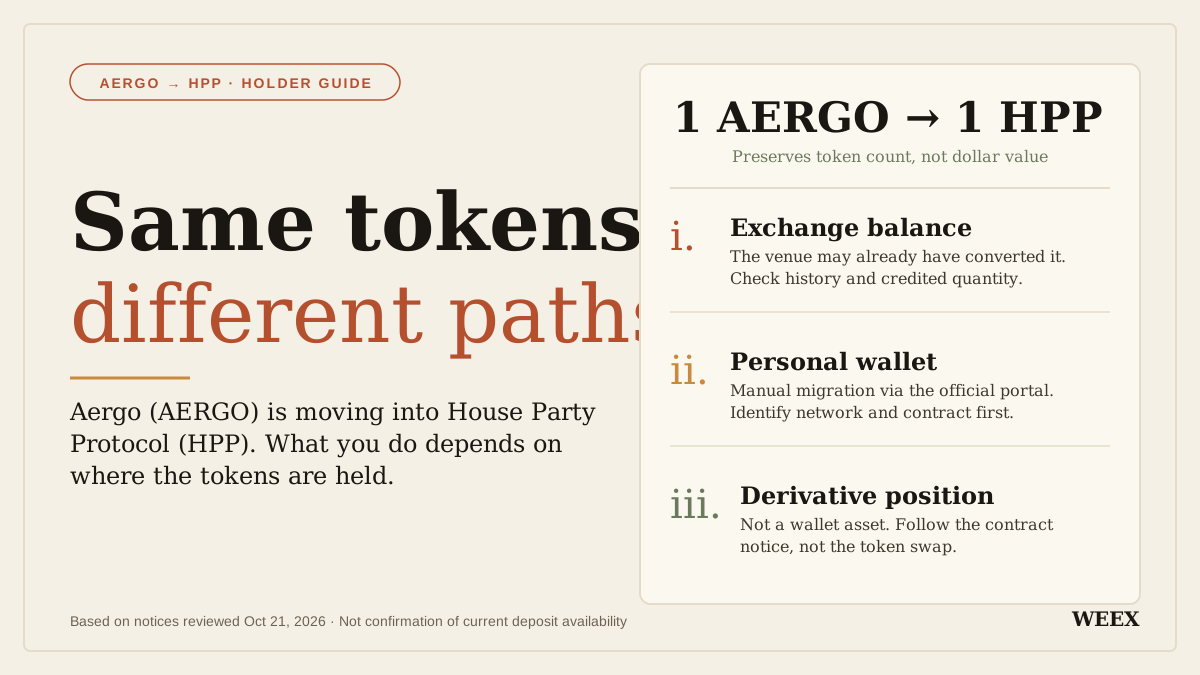
What Happened to Aergo (AERGO) Crypto? Token Migration and What Holders Should Do
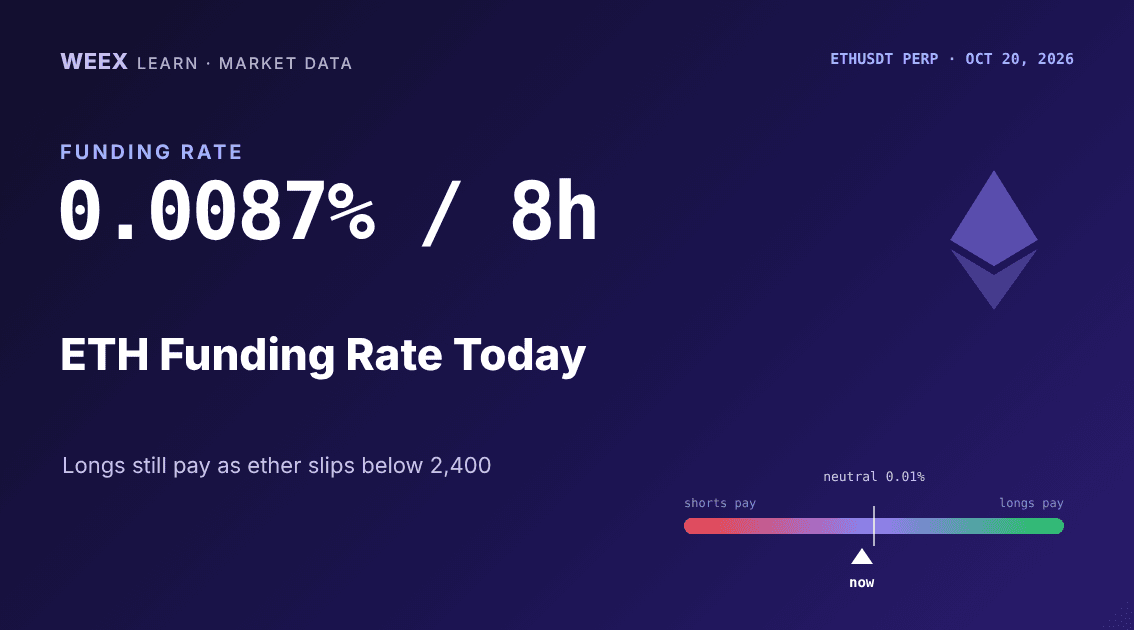
ETH Funding Rate Today: 0.0087% per 8h as Ether Longs Re-Lever

What Is Blockchain and How Does It Work? One Transaction, Traced

Staking APR vs Inflation: How Much of Your Crypto Yield Is Real?
WEEX Convert Fees: What Zero-Fee Conversion Really Costs You

WEEX Convert Quote: How the 8-Second Price Lock Really Works
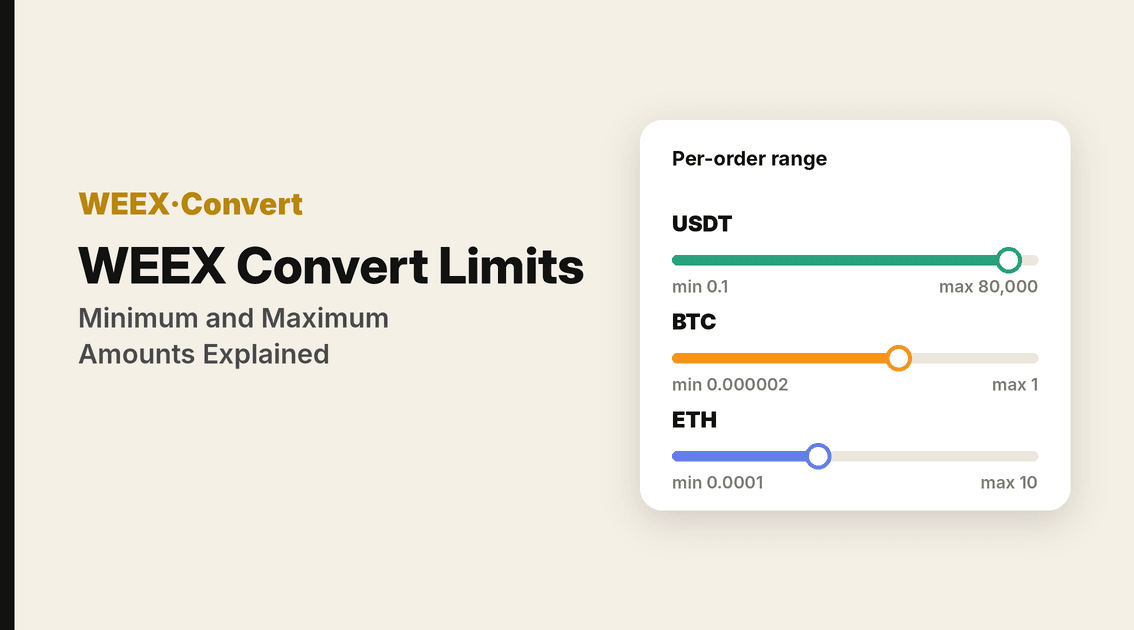
WEEX Convert Limits: Minimum and Maximum Amounts Explained
How to Check a WEEX Convert Order: History, Rate and Status
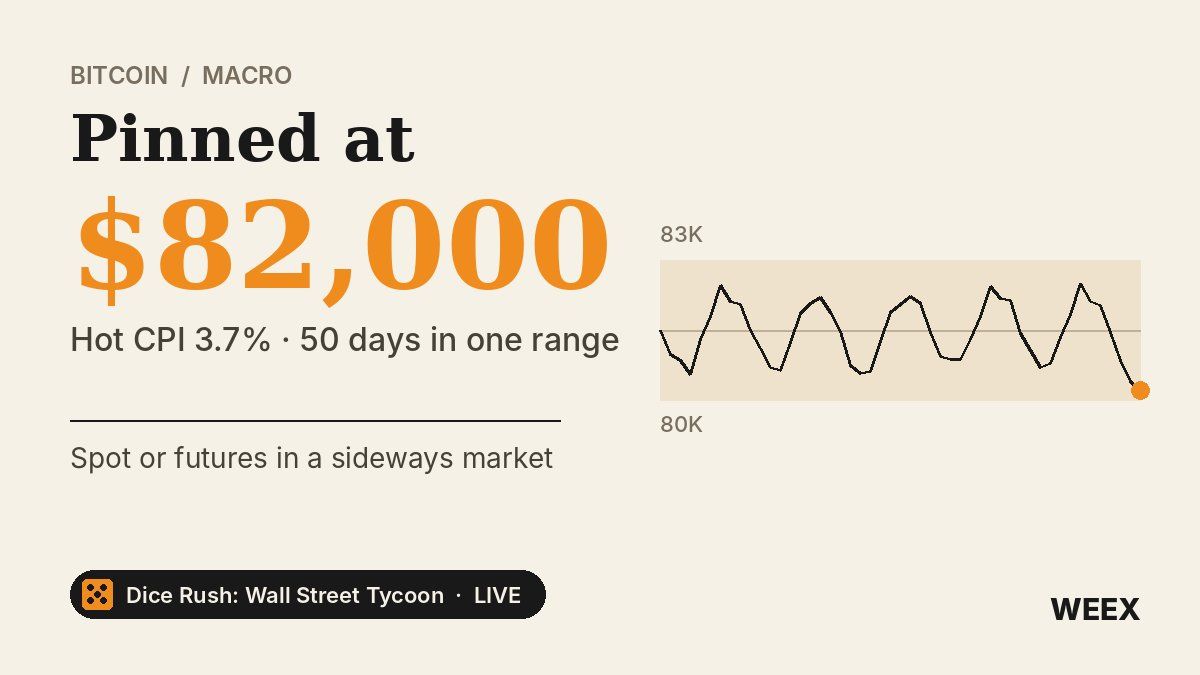
Bitcoin Price After Hot CPI: Why BTC Is Pinned Near $82,000
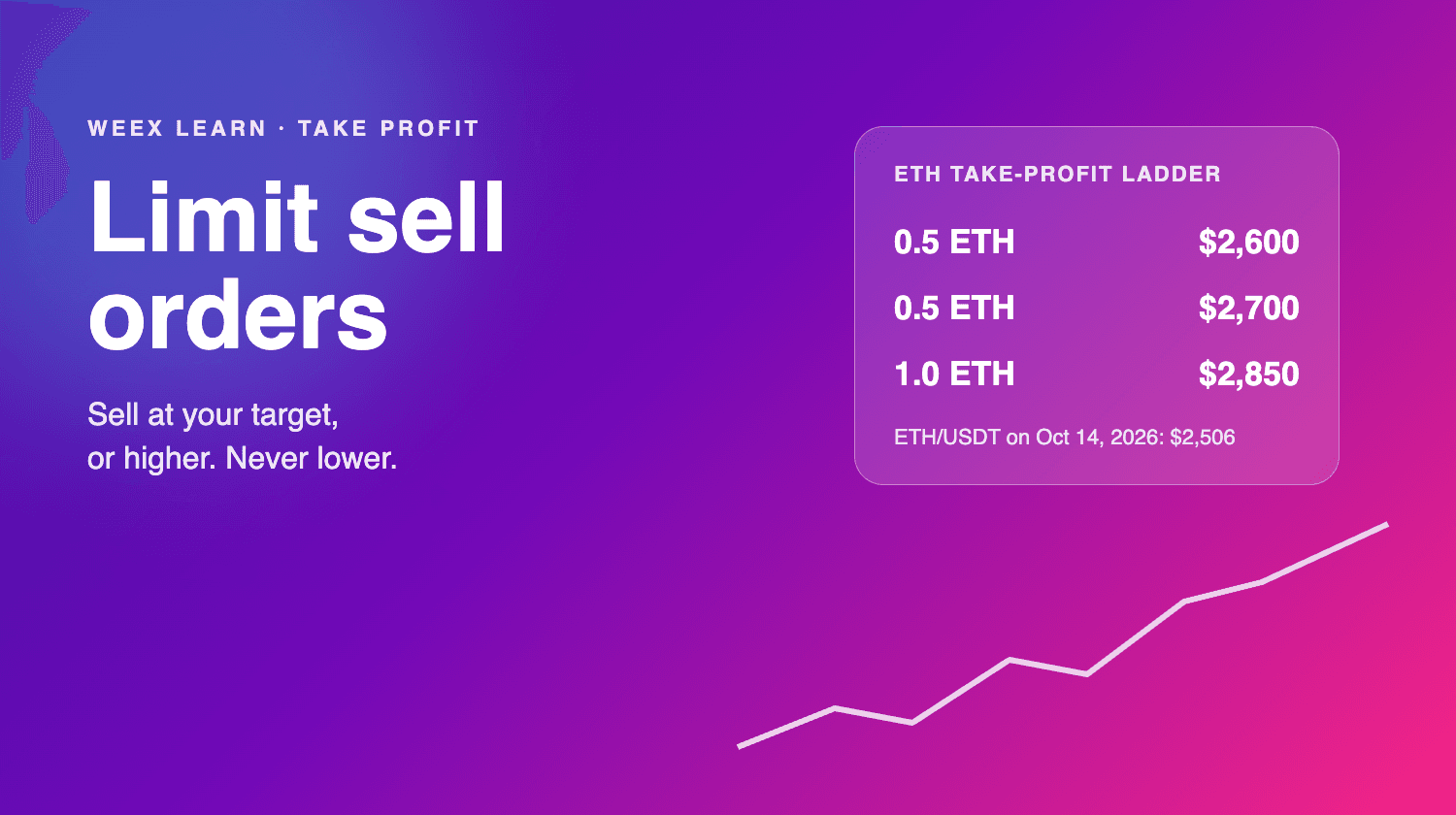
Limit Sell Order: How to Set a Take-Profit Price in Crypto

Best Crypto Podcasts for Beginners: A 4-Week Listening Plan

What Is Plume (PLUME)? Why the RWA Token Stays 93% Below Its High Even After the Layer 2 Rally
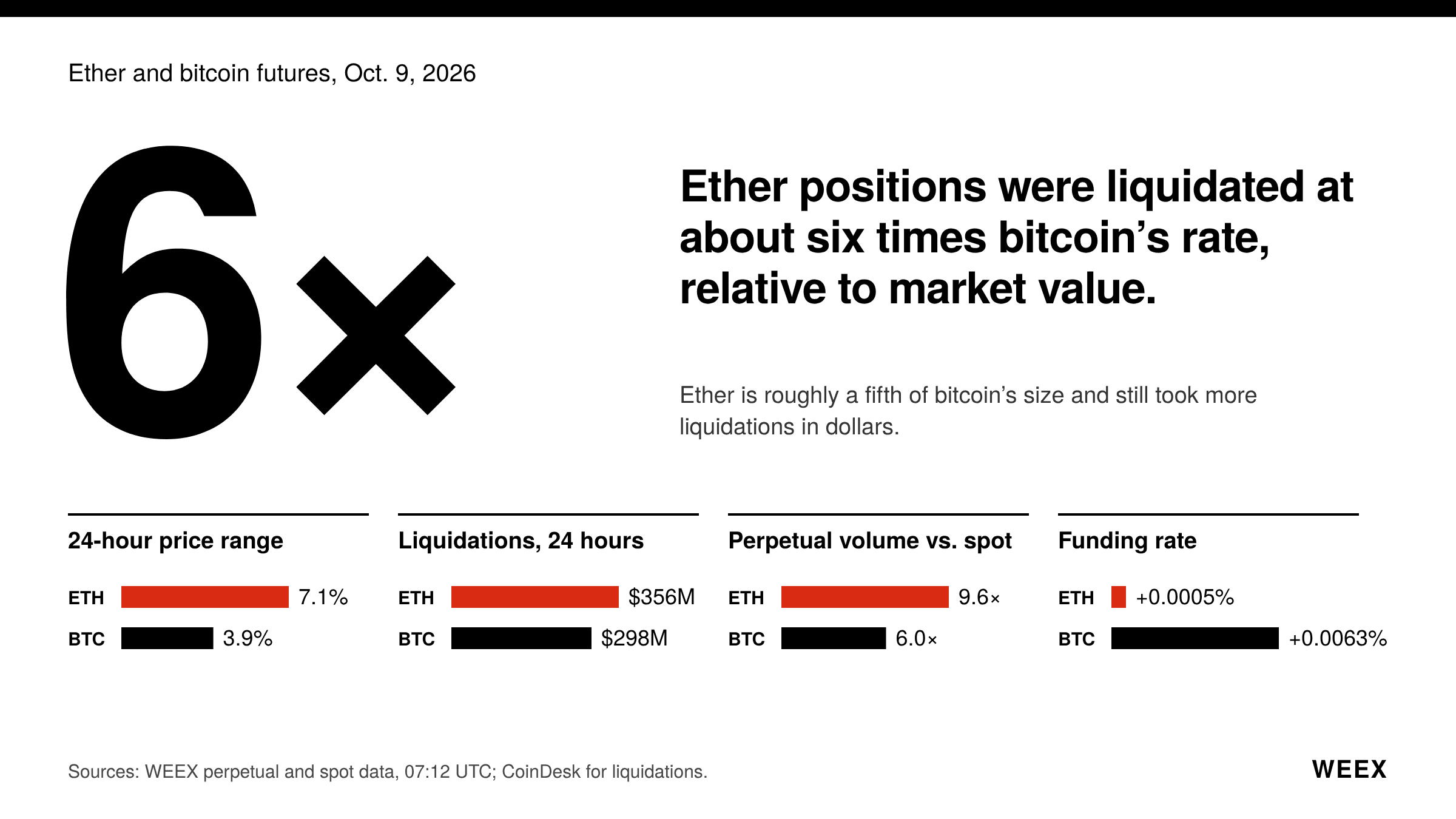
ETH Futures: Why Ether Is Falling Faster Than Bitcoin This Week
How to Buy Presale Crypto: Step by Step Guide for Beginners

Ethereum Glamsterdam Hits 200M Gas on Sepolia: What Changes After the Upgrade?

What Is Staking? 4 Myths to Clear Up Before You Stake Crypto
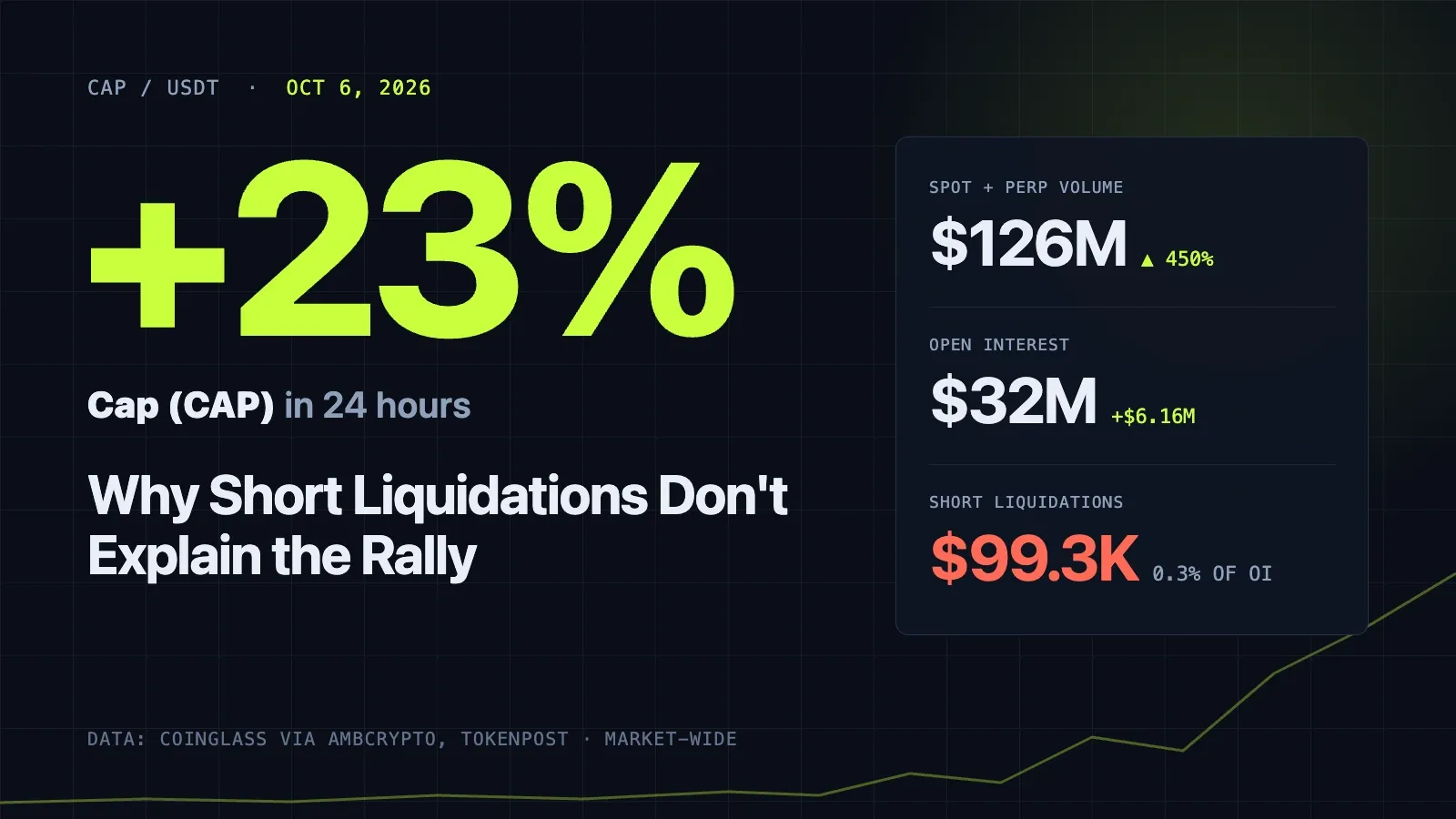
CAP Price Up 23%: Why Short Liquidations Don't Explain the Rally
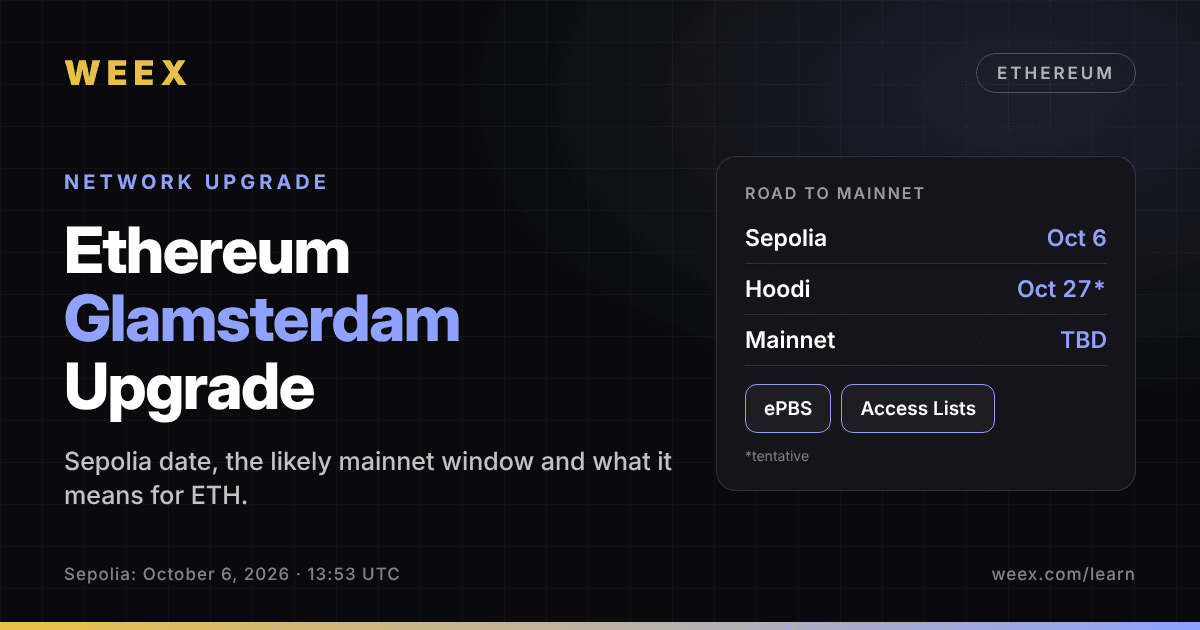
Ethereum Glamsterdam Upgrade: Sepolia Date and ETH Price Impact
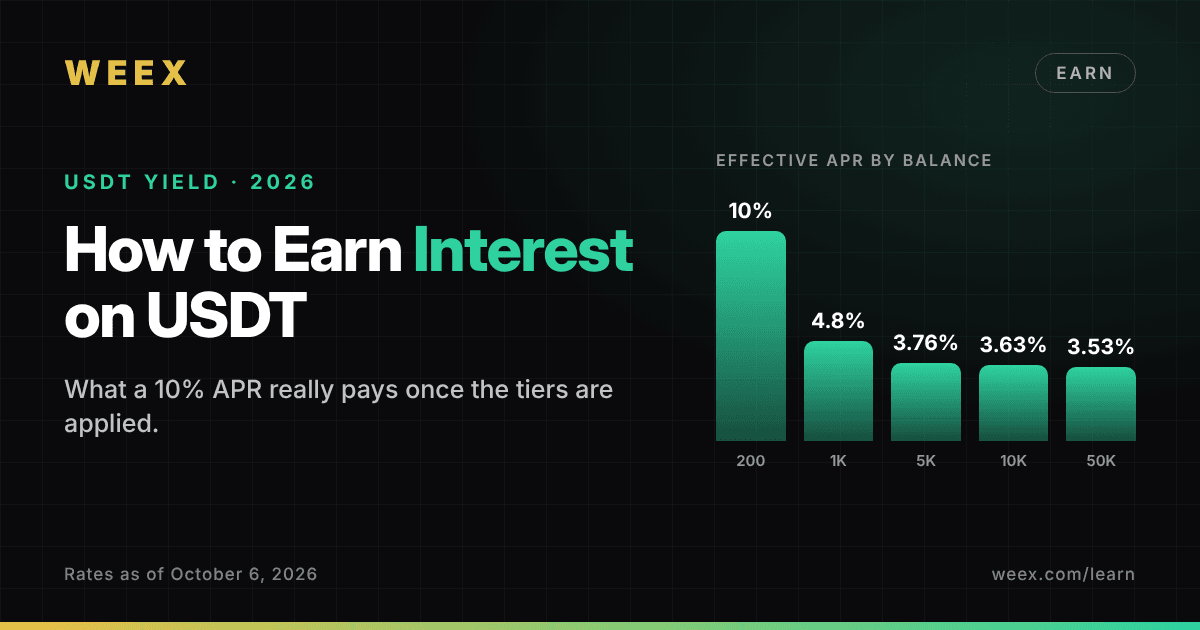
How to Earn Interest on USDT: What a 10% APR Really Pays in 2026

How to Buy Crypto With Apple Pay in 5 Steps: Why Your Bank May Decline the Payment
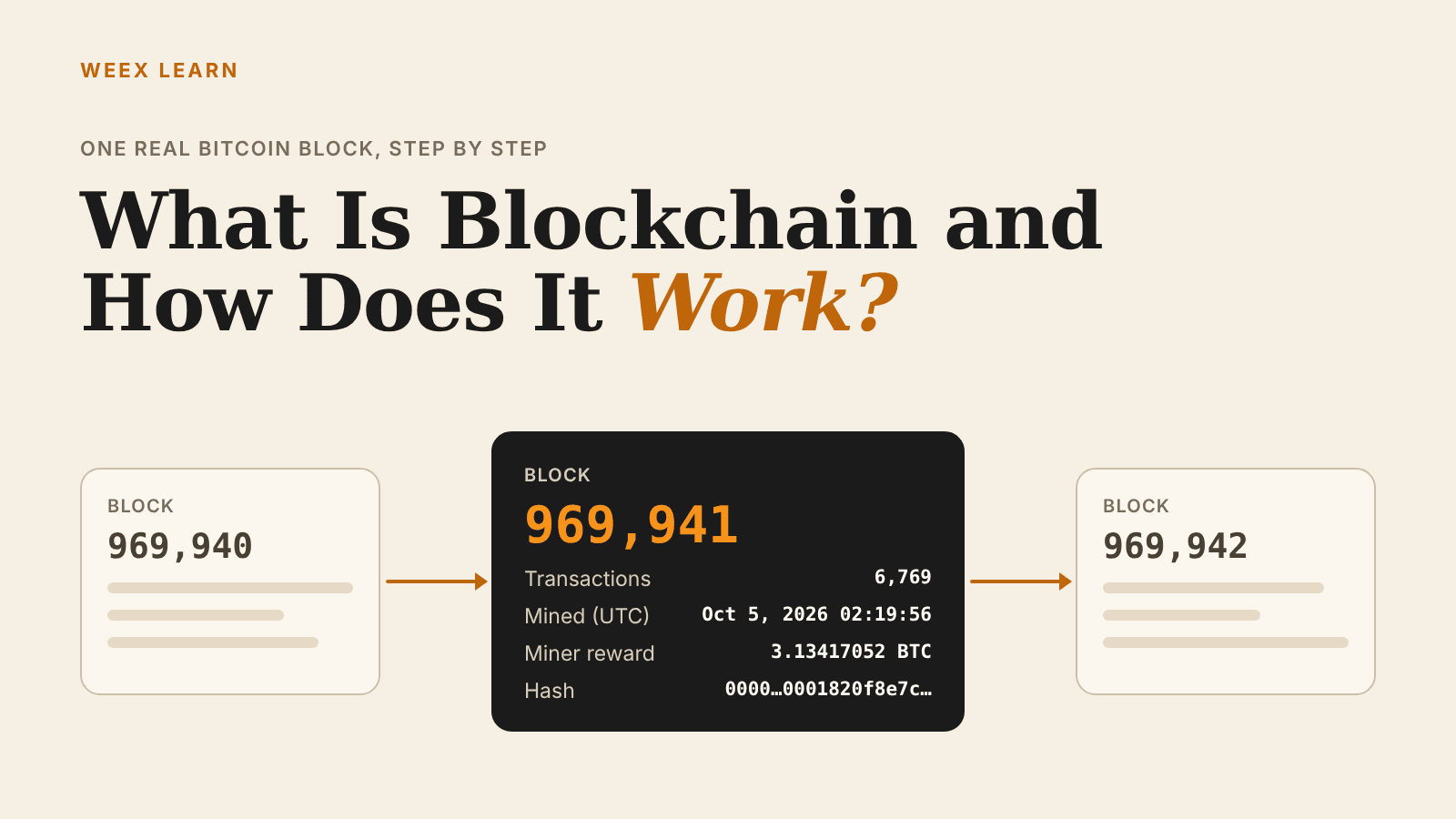
What Is Blockchain and How Does It Work? One Real Block Explained
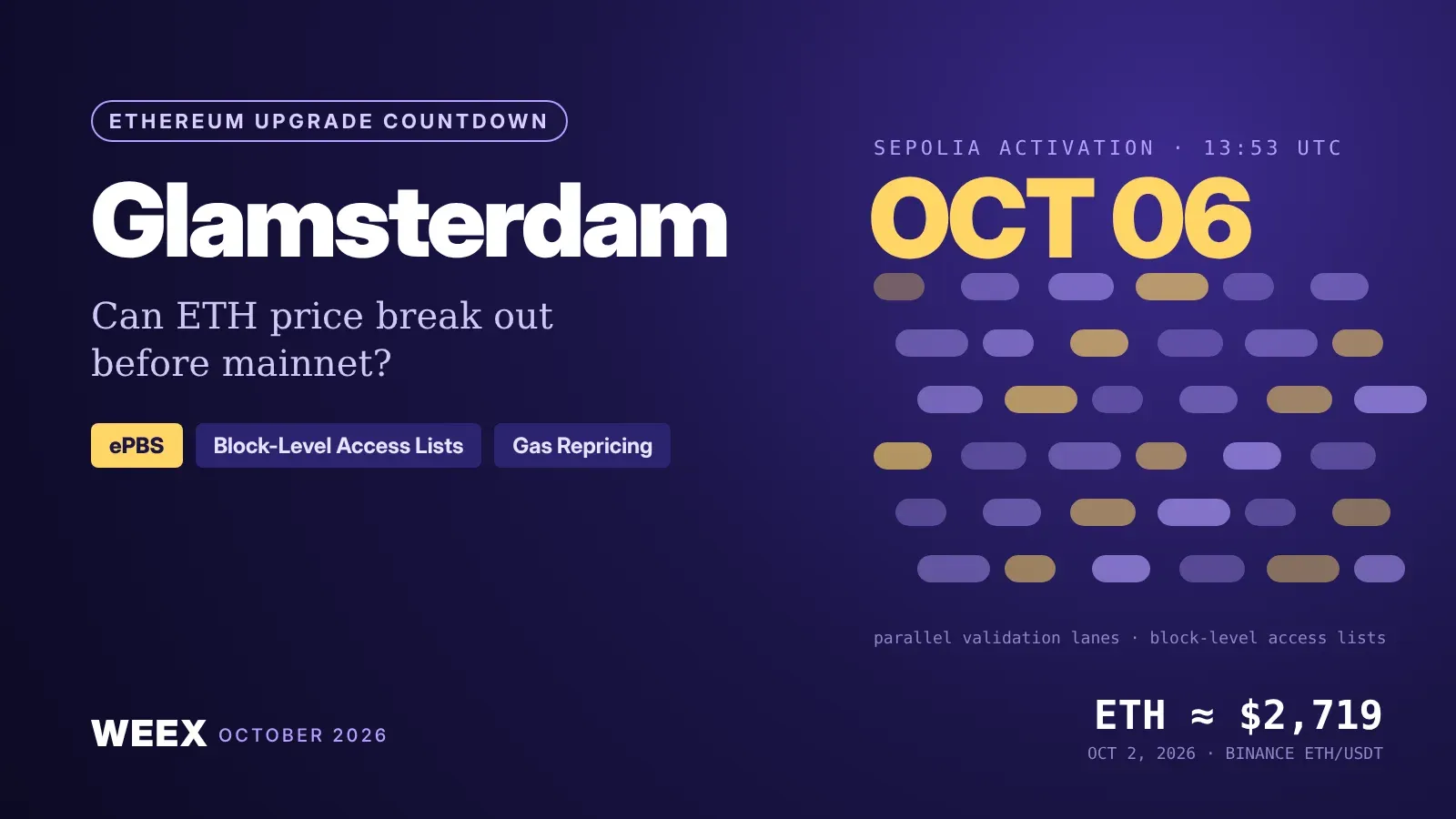
Ethereum Glamsterdam Upgrade Countdown: Can ETH Price Break Out?
How to Convert ETH to USDT on WEEX: Step-by-Step Guide
How to Convert USDT to BTC on WEEX: Step-by-Step Guide
How to Convert BTC to ETH on WEEX: Step-by-Step Guide
Ethereum Funding Rate: How It Works and Why It Dropped Near Zero
Crypto Liquidation Heatmap: Reading the $972M Oct. 15 Long Flush
Margin Trading Crypto: Cross vs Isolated and Liquidation Math





