
- Buy Crypto
- Markets
 Futures
- Spot
- Copy Trade
- Earn
- More
Ahead of Two High-Stakes Negotiations, Precious Metals Prices Continue to Drop

BlockBeats News, February 17th: During the Chinese New Year holiday market closure, precious metals continued to decline. Spot gold once fell to the $4860 per ounce level, down about 2.6% intraday, after falling 1% the previous trading day; spot silver plummeted over 4% intraday, dropping below the $73 level.
Market sentiment was influenced by expectations of geopolitical negotiations. U.S. President Trump stated that he would participate "indirectly" in the U.S.-Iran nuclear talks in Geneva and said that Iran is willing to reach an agreement; at the same time, the third round of Russia-U.S.-Ukraine talks may focus on territorial issues. Analysts pointed out that if the diplomatic situation eases, funds may flow into risk assets, suppressing safe-haven demand.
DHF Capital CEO Bas Kooijman stated that the cautious optimism brought by the negotiations weakened safe-haven buying. City Index analyst Fawad Razaqzada pointed out that if the gold price continues to operate below $5000, the short-term downside risk will increase, potentially further dampening bullish sentiment. KCM analyst Tim Waterer believes that in the context of global tight liquidity, gold currently lacks a strong catalyst in the short term and may need to wait for the U.S. dollar to weaken further.
Previously, speculative buying had pushed gold prices to near the historical high of $5600, but then fell sharply to around $4400 in the following two days, maintaining recent volatility.
Several investment banks still maintain a long-term bullish view. Institutions including BNP Paribas, Deutsche Bank, and Goldman Sachs believe that geopolitical risks, the controversy over the Fed's independence, and the global de-dollarization trend will continue to support the gold price. Credit Suisse analysts have raised their 2026 gold price expectation from $4200 to $5000, believing that inflation and U.S. dollar devaluation remain core macro drivers.
You may also like

Cursor "Shell" Kimi Controversy Reversed: From Copyright Infringement Allegations to Authorized Collaboration, China's Open Source Model Once Again Becomes a Global AI Foundation

The Real Reason Tokens Don't Sell: 90% of Crypto Projects Overlook Investor Relations

Is the income of pump.fun real, earning a million dollars a day despite the market downturn?

The real reason why tokens are not selling: 90% of crypto projects neglect investor relations

Who is the true winner of the "Tokenization" narrative?

Moss: The Era of AI-Traded by Anyone | Project Introduction

Chip Smuggling Case Exposes Regulatory Loophole | Rewire News Evening Update

How a Structured AI Crypto Trading Bot Won at the WEEX Hackathon
Ritmex demonstrates how disciplined risk control and structured signals can make an AI crypto trading bot more stable and reliable on WEEX, highlighting the importance of combining execution discipline with scalable AI trading systems.

Old Indicator Fails, Three Major New Signals Emerge: BTC True Bottom May Still Be Below $60K

Meeting OpenClaw Founder at a Hackathon: What Else Can Lobsters Do?
Huang Renxun's Latest Podcast Transcript: NVIDIA's Future, Embodied Intelligence and Agent Development, Soaring Demand for Inferencing, and AI's PR Crisis
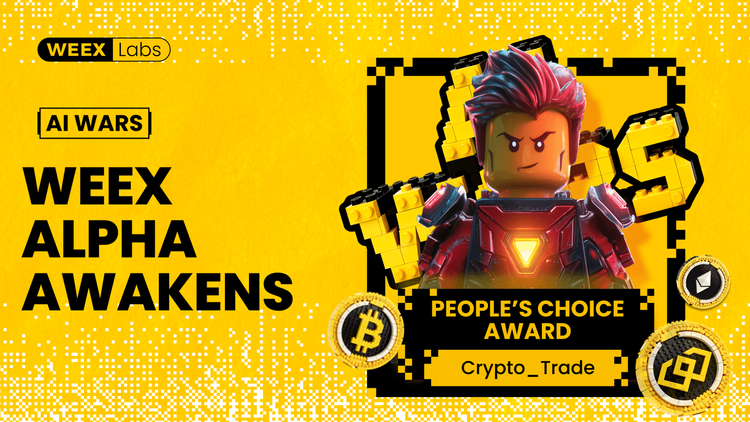
How a Structured AI Crypto Trading Bot Won at the WEEX Hackathon
Crypto_Trade shows how structured inputs and controlled adaptability can build a more stable and reliable AI crypto trading bot within the WEEX AI Trading Hackathon, highlighting a practical path toward scalable AI trading systems.

AI Starts to Devour the Manufacturing Industry | Rewire News Morning Edition

When Scaling Meets Speed, Ethereum Foundation Introduces "Hardness" to Safeguard the Base Layer
Google, Circle, Stripe Flock Together to Let AI Spend Money: Payment Giants' Joys and Worries in 2026 Q1

$100 Billion Factory Purchase: Bezos and Middle Eastern Capital Shift AI Money from Cloud to Shop Floor

Xiaomi and MiniMax both unleash their ultimate moves, signaling the start of the Agent Pricing War.



 App
App