
- Buy Crypto
- Markets
 Futures
- Spot
- Copy Trade
- Earn
- More
Aptos Accuses Monad of Plagiarism: Tech Theft or Traffic Riding?

Perhaps influenced by the official announcement of HyperEVM launching, Monad, a competitor in the L1 space, finally couldn't sit still. Just one day after the launch of HyperEVM, this project which raised a $225 million investment led by Paradigm in April last year finally launched its testnet.
However, amid a wave of community excitement and various airdrop tutorials, another L1 competitor, Aptos, directly posted on the social media platform X, accusing Monad of copying Aptos's technology. Thus, a war of words began.
The Debate
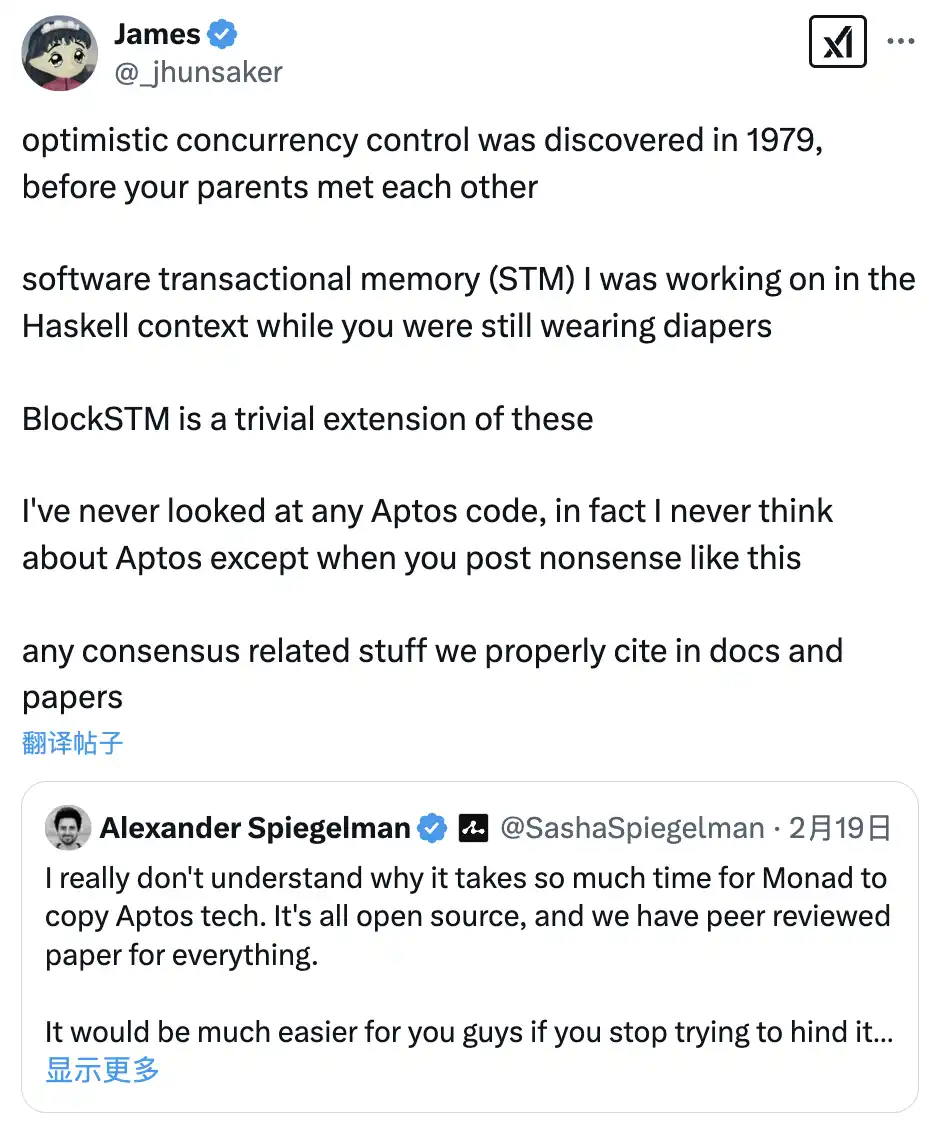
This dispute over technical originality was first sparked by Aptos's Research Director, Alexander Spiegelman: "I don't understand why Monad is spending so much time copying Aptos's technology. Everything is open source, and there have already been many peer-reviewed papers. Instead of being secretive, it's better to shamelessly copy directly."
At a time when Monad was in the spotlight, co-founder James Hunsaker naturally couldn't stand someone ruining the party and directly fired back in the comments: "Optimistic Concurrency Control (OCC) was discovered in 1979 when your parents hadn't even met. I had already been studying Software Transactional Memory (STM) in a Haskell environment long ago, while you were still in diapers. BlockSTM is a simple extension of these things. I have never seen any Aptos code. In fact, if you hadn’t spread this nonsense, I wouldn’t have even thought about Aptos. Anything related to consensus, we will correctly reference in documentation and papers."
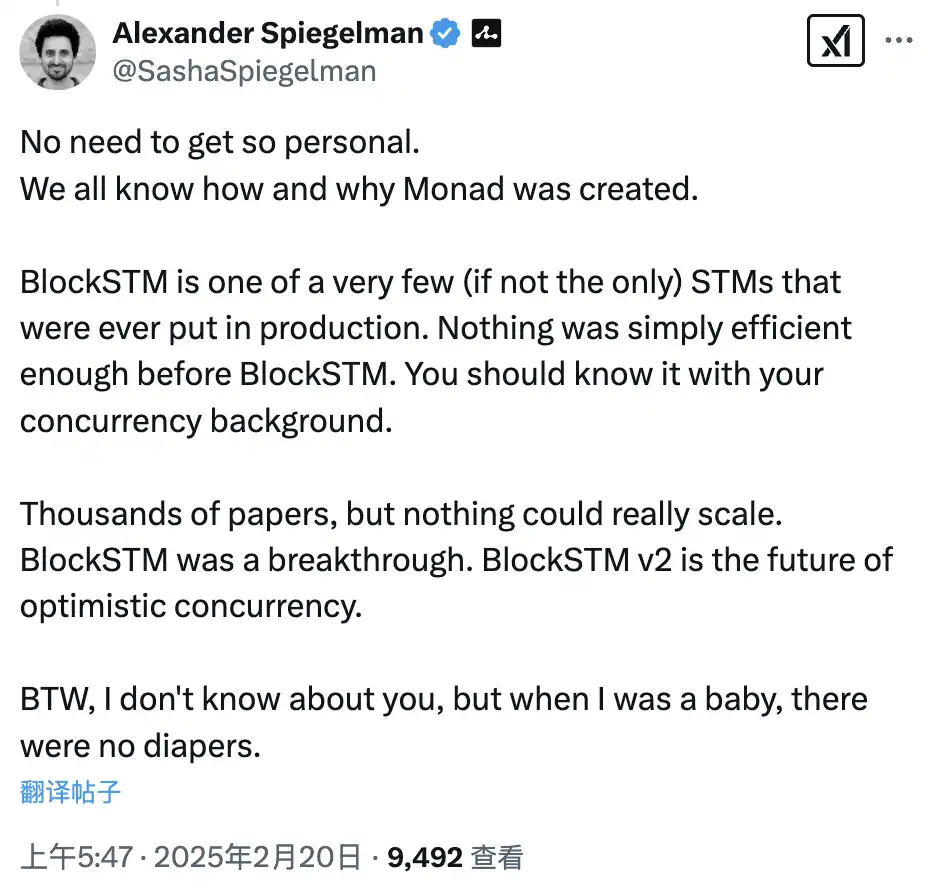
Seeing Hunsaker's denial, Spiegelman once again presented the facts and reasoned: "There's no need to attack individuals instead of addressing the issue. We all know how and why Monad was created. BlockSTM is one of the very few (if not the only one) STM put into production. Before BlockSTM, nothing could really achieve efficiency. With your background, you should know this. Although there are thousands of papers, nothing truly achieves scalability. BlockSTM is a breakthrough, and BlockSTM v2 is the future." Then, he didn't forget to show off his own qualifications: "By the way, I don’t know about you, but when I was a baby, I didn't even wear diapers yet."
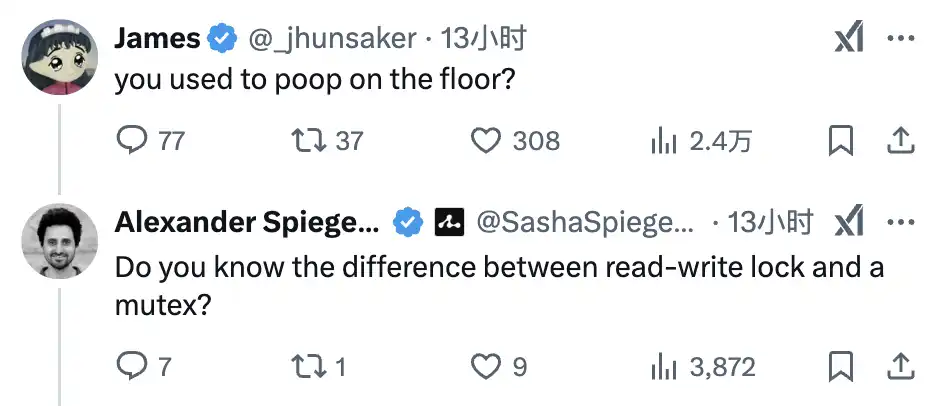
The smell of gunpowder grew stronger, Hunsaker directly skipped the technical issue and retorted, "Were you crawling on the ground before?" At this point, Spiegelman was already extremely speechless and helplessly countered, "Do you know the difference between a reader-writer lock and a mutex lock?" This time, Hunsaker on the other side did not reply anymore.
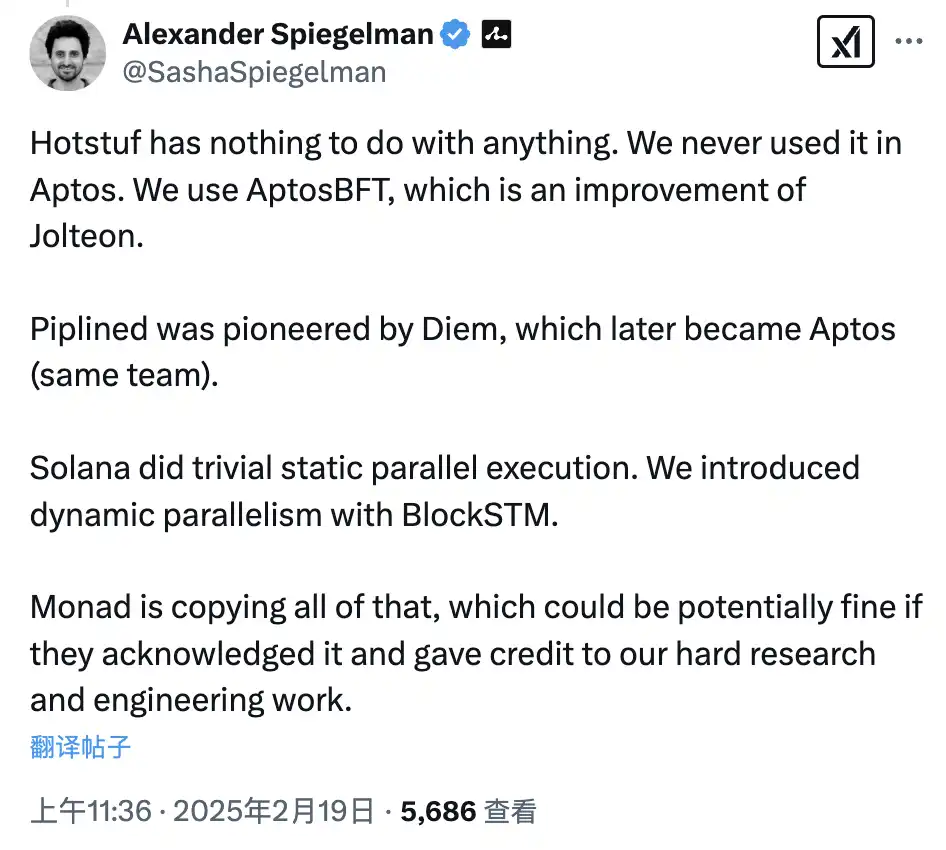
Later, in the comment section, Spiegelman joked, "I think by the time you finally go online in 2029, we will all know the truth." He then muttered, "Monad is replicating our technology. If they can acknowledge and give us due recognition for our hard work in research and engineering, then perhaps it can be accepted."

New Public Chain Plagiarism Incidents: Is It a "Crypto Sector Feature of Open Source Culture"?
Plagiarism controversies surrounding new public chains are not uncommon in the cryptocurrency field. Sonic's high-performance design was once questioned for imitating Solana's PoH and pipeline architecture. Sui and Aptos, sharing the same origin as Diem, saw disputes over the similarities between the Move language and parallel execution, igniting a "brotherly feud." Aleo's zk-SNARKs were accused of directly copying zkSync's ZKP framework. Berachain's modular architecture and IBC function were seen by the Cosmos community as a "luxury fork," while Mantra's RWA tokenization model was believed to have drawn inspiration from Ondo Finance's successful experience.
The crypto industry upholds the spirit of open source, with most projects making their code public. In the current cryptocurrency market where the saying "time is money" is manifested to the extreme, the phenomenon of "fast fish eating slow fish" is common. In such an environment, the open-source culture has fostered some projects that directly Ctrl C+Ctrl V code. Even in non-crypto fields, disputes have arisen in the early development of the Linux kernel over code contributions.
Related reading: "Blast Accused of Copying OP Code: Is There Chaos Behind the "L2 Pipeline"?"
This open-source culture has greatly reduced the barrier to entry for new public chains, allowing new projects to quickly iterate on the shoulders of giants. In the debate between Monad and Aptos, Aptos's BlockSTM open-sourcing has provided a reference for the industry, from which Monad may potentially draw. However, Hunsaker argues that their technology is based on earlier OCC and STM and represents the industry's overall progress, reflecting the common logic of new public chains: open-source achievements are public resources, and borrowing is natural. The open-source culture enables new public chains to launch high-performance solutions in a short period of time, but it has also made it difficult to resolve the issue of originality and ownership.
Airdrop occurring as Testnet Goes Live: Competing for Technology or Traffic?
The timing of this debate is quite coincidental as it coincides with the launch of the Monad testnet, adding a subtle layer of complexity. The testnet is a crucial moment for Monad to attract developers, validate the technology, and build community trust, yet Aptos's accusations have shifted the focus from Monad's technical showcase to the standoff between the two.
As an emerging L1 that has not yet launched its mainnet, Monad, backed by last year's Paradigm's $2.25 billion investment and the narrative of being the "Ethereum High-Performance Evolutionist," has accumulated a significant community expectation. For this testnet, the Monad team was well prepared, triggering a set of combos to maintain community attention and goodwill as soon as it went live. The Monad team announced on social media that they had sent test tokens to over 8.8 million active Ethereum addresses, Backpack Wallet had already supported the Monad testnet, and Wormhole had officially launched on the Monad testnet.
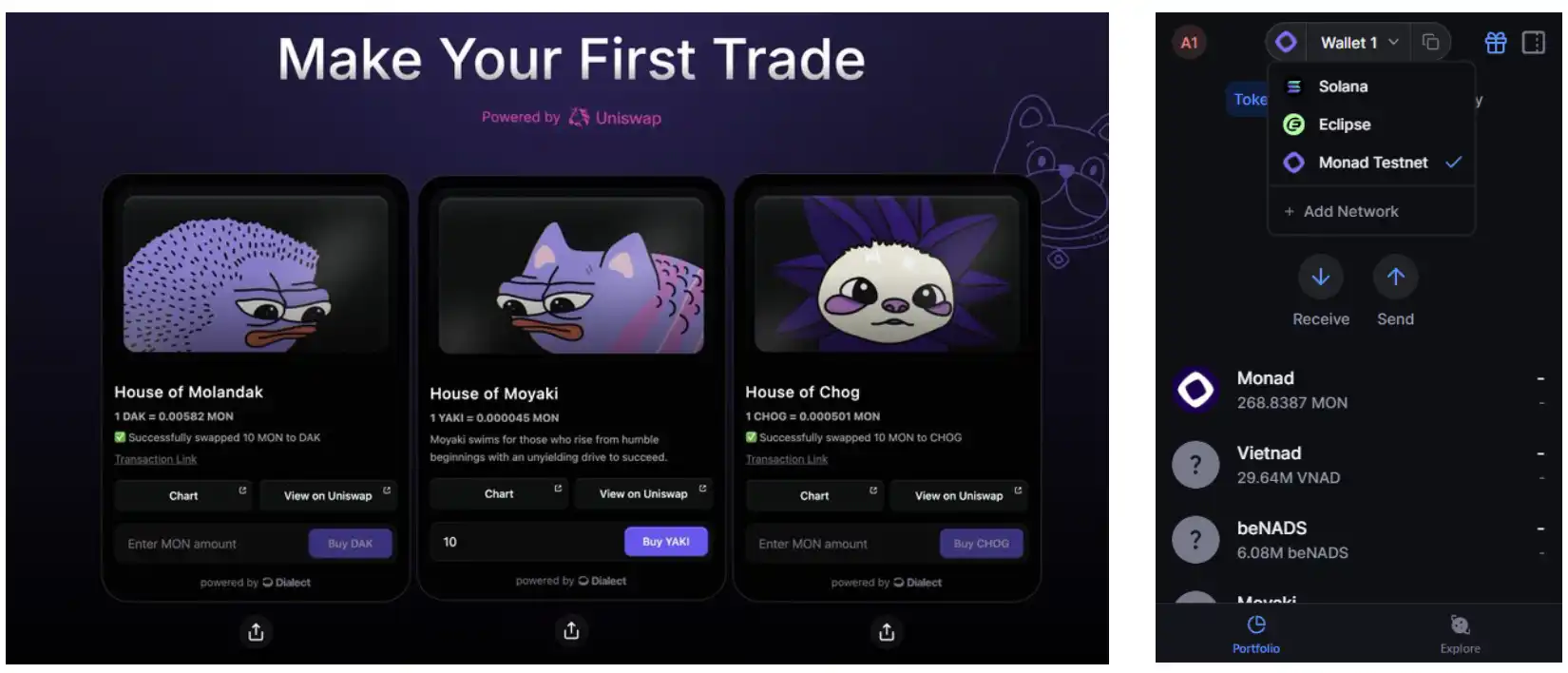
For Monad, the testnet launch is not only an opportunity for technical validation but also a critical window to attract EVM developers and users. If they can deliver on the promise of 10,000 TPS, Monad is poised to establish itself in the L1 race, potentially threatening the market position of high-performance chains like Aptos. On Platform X, the community's high expectations for the testnet have escalated the hype, with users calling it a "scientist's money-making project" and numerous airdrop tutorials popping up. This momentum is the narrative capital that Monad needs to protect and amplify.
On the other hand, Aptos's research director, Spiegelman, chose to launch the accusations on the day of the testnet, perhaps with considerations of market competition. Although the debate on who the true technology original is remains inconclusive, Aptos's decision to launch an attack when Monad was gaining a wave of traffic has clearly paid off. As the community eagerly watches, Aptos's native token APT has shown a strong price increase. At the time of writing, according to market data, APT has surged by 7% in the past 24 hours, briefly reaching $7.
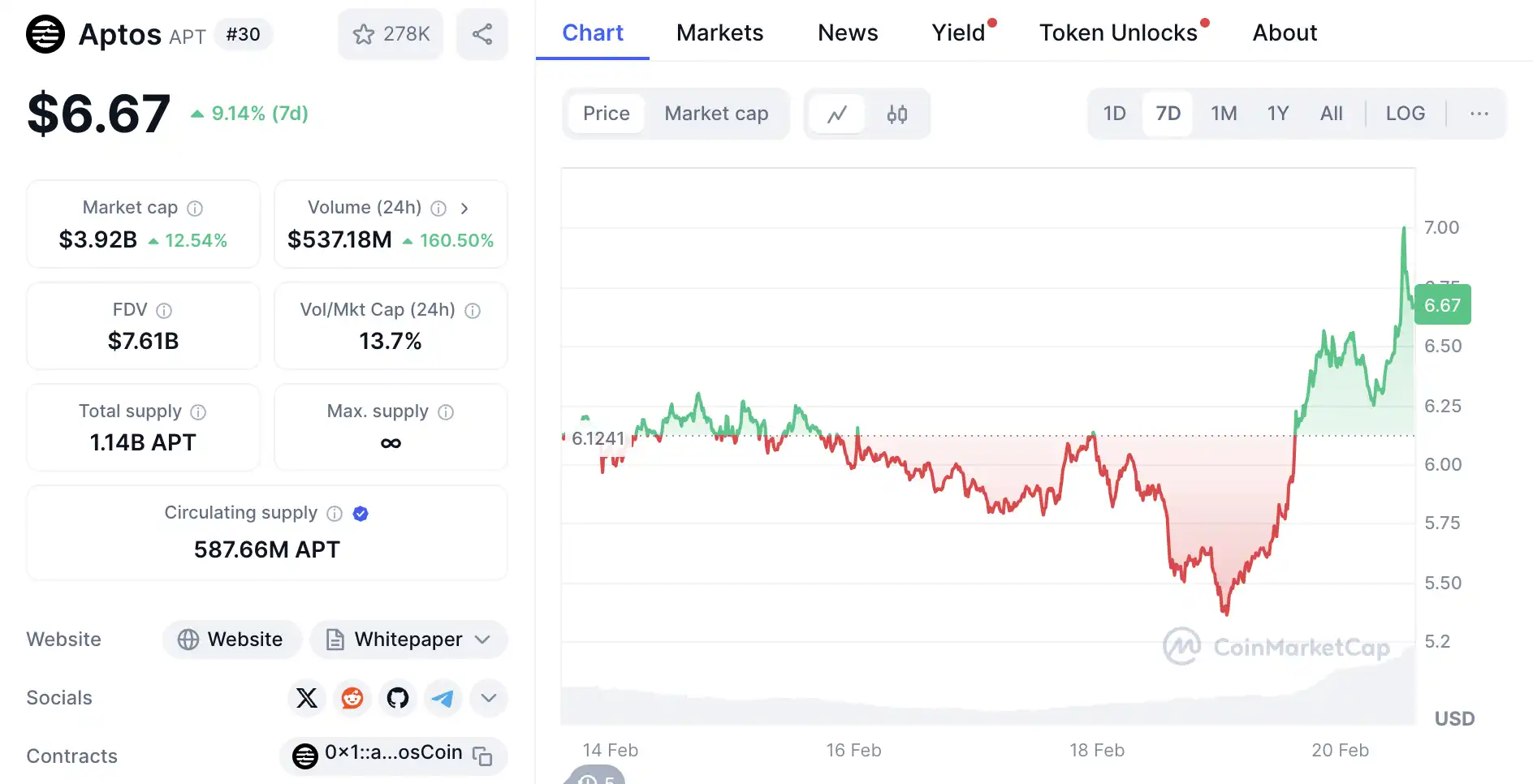
The recent Aptos move may win more than just a price pump. In the crypto market, attention is a scarce resource. Since January when Coinbase's listing roadmap added Aptos Network's USDC, there hasn't been much news about Aptos this year. This accusation has to some extent redirected the market's attention to Aptos's open-source contributions and technical expertise, throwing some shade on the hot project Monad.
In the face of this controversy, neither Monad nor Aptos's official accounts have made a statement yet. BlockBeats will continue to track the developments of this event.
You may also like

500% XAUT Staking, Zero-Fee Gold Futures and $100K Rewards: Why Traders Are Turning to WEEX for Tokenized Gold
Explore WEEX's $100,000+ gold campaign featuring 500% XAUT staking, zero-fee gold contracts, and $30,000 PAXG rewards. Trade tokenized gold today.

AI within artillery range
“The cloud” is a metaphor, but the data center isn’t.

March 4th Market Key Intelligence, How Much Did You Miss?

Taking Stock of Crypto's Washington Power Players: Who is Advocating for US Crypto Regulation?

DDC Enterprise Limited Announces 2025 Unaudited Preliminary Financial Performance: Record Revenue Achieved, Bitcoin Treasury Grows to 2183 Coins
On March 4, 2026, DDC Enterprise Limited (NYSE American: DDC) today announced preliminary, unaudited full-year financial performance for the year ended December 31, 2025. The company expects to achieve record revenue and record positive adjusted EBITDA, primarily driven by continued growth in its core consumer food business and overall margin improvement. The final audited financial report is expected to be released in mid-April 2026.
Revenue: Expected to be between $39 million and $41 million, reaching a new company high.
Organic Growth: Excluding the impact of the company's strategic contraction of its U.S. operations, core revenue is expected to grow 11% to 17% year over year.
Gross Profit Margin: Expected to be between 28% and 30%, reflecting continued operational efficiency improvements.
Adjusted EBITDA: The company expects to achieve a positive full-year result in 2025, a significant improvement from a $3.5 million loss in 2024, mainly due to rigorous cost controls and a higher-margin sales mix.
In 2025, DDC's core consumer food business maintained strong operational performance.
The company also disclosed Core Consumer Food Business Adjusted EBITDA, a metric that further excludes costs related to its Bitcoin reserve strategy and non-cash fair value adjustments related to its Bitcoin holdings from adjusted EBITDA to more accurately reflect the core business performance.
In 2025, Core Consumer Food Business Adjusted EBITDA is expected to be between $5.5 million and $6 million.
In the first half of 2025, DDC initiated a long-term Bitcoin accumulation strategy, holding Bitcoin as its primary reserve asset.
As of December 31, 2025: The company holds 1,183 BTC.
As of February 28, 2026: Holdings increased to 2,118 BTC
Today's additional purchase of 65 BTC brings the company's total holdings to 2,183 BTC
DDC Founder, Chairman, and CEO Norma Chu stated, "We are proud to have closed 2025 with record revenue and positive adjusted EBITDA, demonstrating the steady growth of the company's consumer food business and the ongoing improvement in profitability. We are building a disciplined, growth-oriented food platform and strategically allocating capital to Bitcoin assets with a long-term view, aligning with our core beliefs. We believe that this dual-track model of 'Steady Consumer Business + Strategic Bitcoin Reserve' will help DDC create lasting long-term value for shareholders."
For the full year 2025, the company defines "Adjusted EBITDA" (a non-GAAP financial measure) as: Net income / (loss) excluding the following items:· Interest expense· Taxes· Foreign exchange gains/losses· Long-lived asset impairment· Depreciation and amortization· Non-cash fair value changes related to financial instruments (including Bitcoin holdings)· Stock-based compensation
DDC Enterprise Limited (NYSE: DDC) is actively implementing its corporate Bitcoin Treasury strategy while continuing to strengthen its position as a leading global Asian food platform.
The company has established Bitcoin as a core reserve asset and is executing a prudent, long-oriented accumulation strategy. While expanding its portfolio of food brands, DDC is gradually becoming one of the public company pioneers in integrating Bitcoin into its corporate financial architecture.

Uncovering YZi Labs 229 Investment: Over 18% of the portfolio is already inactive, with an average project transparency score of 78

The business of crypto VC is becoming promising

China's AI Compute Power Counterstrike

Global Assets Plunge: Hormuz, Chips, and a South Korean Holiday

Bloomberg has reported twice, Hyperliquid once again in Wall Street's radar

Trump Backs Crypto Bill, SEC Halts Leveraged ETF, What Is the English-Speaking Crypto Community Talking About?

OpenClaw Floods Into Polymarket, Some Making Tens of Thousands Per Month
Understanding Trump's "Warfare Playbook": Ten Signals Investors Must Know

Iranian Missile Heading Toward UAE, Claude Also Within Range
Successive Core Team "Heroes" Depart, Has Aave's DAO Dream Crumbled?

Is This the Year of the Robot? A Deep Dive into Robotics Projects
When AI Takes Over Money: Bitcoin Becomes the "First Choice," Fiat Is Left Out

AI Trading in Live Markets: 4 Lessons From a WEEX Hackathon Top 10 Finalist
AI trading meets real markets. Explore 4 lessons from a WEEX Hackathon Top 10 finalist on surviving volatility, trusting AI models, and building smarter crypto trading systems.
500% XAUT Staking, Zero-Fee Gold Futures and $100K Rewards: Why Traders Are Turning to WEEX for Tokenized Gold
Explore WEEX's $100,000+ gold campaign featuring 500% XAUT staking, zero-fee gold contracts, and $30,000 PAXG rewards. Trade tokenized gold today.
AI within artillery range
“The cloud” is a metaphor, but the data center isn’t.
March 4th Market Key Intelligence, How Much Did You Miss?
Taking Stock of Crypto's Washington Power Players: Who is Advocating for US Crypto Regulation?
DDC Enterprise Limited Announces 2025 Unaudited Preliminary Financial Performance: Record Revenue Achieved, Bitcoin Treasury Grows to 2183 Coins
On March 4, 2026, DDC Enterprise Limited (NYSE American: DDC) today announced preliminary, unaudited full-year financial performance for the year ended December 31, 2025. The company expects to achieve record revenue and record positive adjusted EBITDA, primarily driven by continued growth in its core consumer food business and overall margin improvement. The final audited financial report is expected to be released in mid-April 2026.
Revenue: Expected to be between $39 million and $41 million, reaching a new company high.
Organic Growth: Excluding the impact of the company's strategic contraction of its U.S. operations, core revenue is expected to grow 11% to 17% year over year.
Gross Profit Margin: Expected to be between 28% and 30%, reflecting continued operational efficiency improvements.
Adjusted EBITDA: The company expects to achieve a positive full-year result in 2025, a significant improvement from a $3.5 million loss in 2024, mainly due to rigorous cost controls and a higher-margin sales mix.
In 2025, DDC's core consumer food business maintained strong operational performance.
The company also disclosed Core Consumer Food Business Adjusted EBITDA, a metric that further excludes costs related to its Bitcoin reserve strategy and non-cash fair value adjustments related to its Bitcoin holdings from adjusted EBITDA to more accurately reflect the core business performance.
In 2025, Core Consumer Food Business Adjusted EBITDA is expected to be between $5.5 million and $6 million.
In the first half of 2025, DDC initiated a long-term Bitcoin accumulation strategy, holding Bitcoin as its primary reserve asset.
As of December 31, 2025: The company holds 1,183 BTC.
As of February 28, 2026: Holdings increased to 2,118 BTC
Today's additional purchase of 65 BTC brings the company's total holdings to 2,183 BTC
DDC Founder, Chairman, and CEO Norma Chu stated, "We are proud to have closed 2025 with record revenue and positive adjusted EBITDA, demonstrating the steady growth of the company's consumer food business and the ongoing improvement in profitability. We are building a disciplined, growth-oriented food platform and strategically allocating capital to Bitcoin assets with a long-term view, aligning with our core beliefs. We believe that this dual-track model of 'Steady Consumer Business + Strategic Bitcoin Reserve' will help DDC create lasting long-term value for shareholders."
For the full year 2025, the company defines "Adjusted EBITDA" (a non-GAAP financial measure) as: Net income / (loss) excluding the following items:· Interest expense· Taxes· Foreign exchange gains/losses· Long-lived asset impairment· Depreciation and amortization· Non-cash fair value changes related to financial instruments (including Bitcoin holdings)· Stock-based compensation
DDC Enterprise Limited (NYSE: DDC) is actively implementing its corporate Bitcoin Treasury strategy while continuing to strengthen its position as a leading global Asian food platform.
The company has established Bitcoin as a core reserve asset and is executing a prudent, long-oriented accumulation strategy. While expanding its portfolio of food brands, DDC is gradually becoming one of the public company pioneers in integrating Bitcoin into its corporate financial architecture.


 App
App