
Between Risk and Hope: ETH Cali and the Colombian Ethereum Community


Original Title: "Between Risk and Hope: ETH Cali and the Colombian Ethereum Community"
Original Source: ShanhaiWoo Mountain & Sea Pavilion
Cali City, the salsa dance capital of Colombia, is also the birthplace and hometown of ETH Cali. Here lies a comprehensive offshore industrial and service park called Zonamerica, where an innovative ecosystem, an active community of entrepreneurs, and tax benefits for resident companies have attracted ETH Cali to establish its presence. In addition to the office area, the Universidad del Valle (Valle University) and Universidad ICESI (ICESI University), located within five kilometers of Zonamerica, have also become important hubs for ETH Cali to hold events and connect with student communities.

Growth Trajectory of the Colombian Ethereum Community
William Martinez, who prefers to call himself a core member rather than a founder, tells us about the current development status of the Ethereum community in Colombia. The Ethereum Colombian community has adopted a geographically and locally based organizational structure, forming an Ethereum local community network consisting of multiple nodes such as ETH Medellin, ETH Bogota, ETH Caribe, ETH Eje Cafetero, ETH Arauca, and ETH Cali.
Among them, both ETH Arauca and ETH Cali were established after Devcon VI in Bogota in October 2022. Unfortunately, Emerson David Silva, the community leader of ETH Arauca, was tragically killed last year while promoting Ethereum in a high-risk area. Currently, the active Colombian Ethereum community mainly includes ETH Bogotá, ETH Medellín, and ETH Cali.

ETH Arauca Community Leader Emerson David Silva
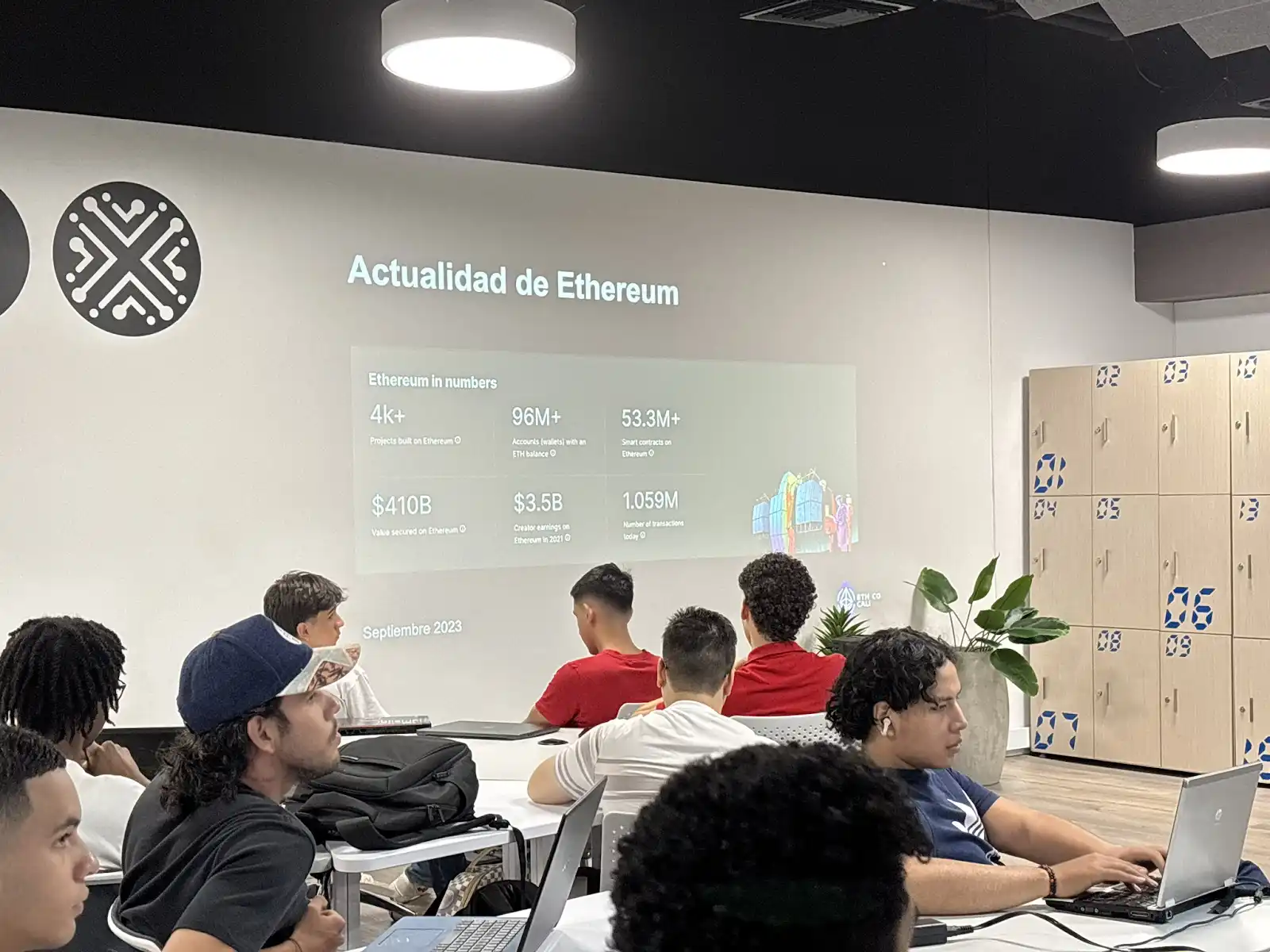
Like other Ethereum communities in Colombia, ETH Cali aims to promote Ethereum adoption in the local community. William stated that Cali City has a strong pool of technical talent, but they know very little about Web3. Therefore, ETH Cali focuses on education, developer meetups, and practical activities such as integrating Web3 frameworks and tools into cutting-edge fields like artificial intelligence, attempting to open a window to a new technological paradigm for local tech talent.
"The story of Emerson and ETH Arauca is heartbreaking," William said, "but it has also strengthened our resolve to continue building the developer community."
ETH Cali Wallet: An Open-Source Wallet for Real-World Use Cases
A tech-driven approach has always been the hallmark of the ETH Cali community development, reflected not only in numerous tech-related activities but also in the team members who have collectively participated in building the community. Today, the community consists of 9 core members and 6 contributors, almost all of whom have a deep developer background.
At Devconnect's ETH Latam Hub, we met Cristobal Valencia, a core community developer. He is working on a new ReFi project: ReFiUP. According to Cristobal, ReFiUP aims to create an on-chain protocol, ReFi Universe Protocol, that coordinates global efforts to clean the Earth. Users can earn tokens and verifiable certificates by collecting various types of waste, while companies can reduce their carbon footprint by purchasing these certificates. The entire process involves AI agents to verify user work and uses zero-knowledge proof technology to protect user privacy data.
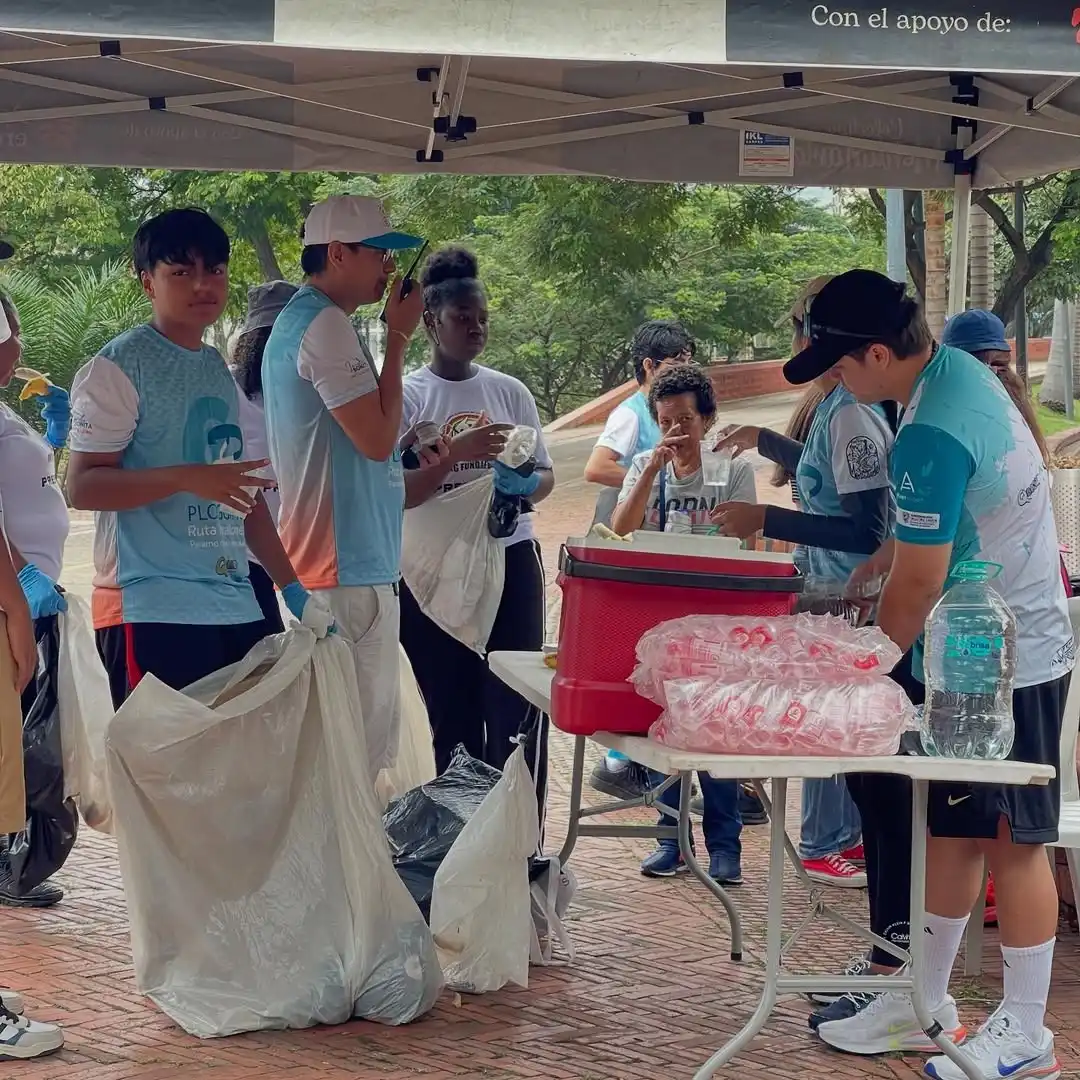
The inspiration for ReFiUP came from an offline event supported by ETH Cali. In June of this year, ETH Cali partnered with the local environmental organization Lapapaya to provide technical and logistical support for a small marathon event held in Cali. During the race, participants could earn tokens and NFT certificates as rewards based on the amount of garbage they collected. The event collected over 150 kilograms of recyclable waste, and more than 60 participants successfully claimed their on-chain rewards through the ETH Cali Wallet.
"Our goal is to engage community members and new users, allowing them to explore the possibilities of cryptocurrency through this open-source wallet designed for real-world use cases," William explained. The ETH Cali Wallet is built on the Privy account system, supports email registration, introduces zkPassport.id as an anti-whale mechanism, and implements gas sponsorship transactions through account abstraction. ETH Cali has open-sourced the codebase of this wallet, enabling other developers to focus on building application logic without having to redevelop user authentication or anti-whale mechanisms.
From Events to Impact: ETH Cali's 2026 Roadmap
Looking back at the past three years, ETH Cali has held over 40 offline meetups, attracting over 100 Web2 developers to join, and growing its Web3 membership from 5 people to over 250. At the same time, the community has supported over 10 local Web3 projects, established partnerships with 5 universities, and gradually engaged in dialogues with senior leadership, government agencies, and key institutions to help them understand this technology through practice.
"We focus on real builders, not hype." Looking to the future, William listed specific goals for ETH Cali by 2026:
• Establish an ETH Cali center or hacker space for the local tech community as a long-term space for developer interaction and collaboration.
• Partner with universities such as ICESI, USB Cali, Universidad Santiago de Cali to drive research focused on cryptography, blockchain, and artificial intelligence.
• Cultivate over 100 Web2 developers to transition to Web3 through structured projects like Speed Run Ethereum, Cyfrin Updraft.
• Collaborate with the Ethereum Foundation Secretariat to transform a university DeFi course into a free, open Web3 learning project for local developers and the community.
• Build and operate their own RPC infrastructure to provide stable and reliable technical support for the local ecosystem.
• Explore new technologies including robotics to create a more practical learning and experimental environment.
• Strengthen cooperation with Ethereum communities in Cluj, Prague, Naples, Rome, India, and China to make Cali an active node in the global Ethereum network.
These goals are not merely about numbers or scale expansion but revolve around the question of "how to make technology truly effective." For ETH Cali, the culmination of community development is not the events themselves but whether the technology can address broader real-world needs.
The Next Inflection Point for Ethereum: Real Products and Services
In William's view, the Latin American region faces some structural challenges such as cross-border payments, global currency access, currency devaluation risks, and limited participation in the global tech community, where Ethereum technology can provide real value.
He believes that the next stage of breakthrough will come from shifting the focus from speculation to truly global products and services. With improving Internet access, mature data infrastructure, and widespread use of artificial intelligence tools, Latin America is poised to accelerate its pace of innovation and play a more important role in open-source technologies and global collaboration.
“The end of 2026 or the beginning of 2027 might be an appropriate time window,” William suggested. “We may hold a flash city event, bringing together local builders, institutions, governments, entrepreneurs, developers, and researchers to collectively envision the next phase of Cali's development through open collaboration.”
Conclusion
Technological advancement has never been a straight upward line but more like a spiral ascent. The Colombian Ethereum community, represented by ETH Cali, is no different: despite setbacks and ups and downs, it has continued to build strength, continuously spreading core Web3 values such as collaboration, permissionless innovation, and open-source culture to more people.
You may also like

Mastercard Launches Agent Pay for AI, Plans to Record AI Agent Payment Authorizations on Polygon
Mastercard launched Agent Pay for AI, a new payment protocol designed to help AI agents make small payments such as pay-per-use access to data and APIs. The system plans to record human-granted AI agent permissions on Polygon, focusing on verifiable authorization, identity, and payment controls.

Curve Deploys Llamalend v2 on Optimism With 250,000 OP Incentives
Curve launched Llamalend v2 on Optimism with 250,000 OP incentives from the Optimism Foundation. The upgrade expands Llamalend beyond its earlier crvUSD-focused model, adding broader collateral support, LlamaRisk market reviews, and the ability to use Curve LP tokens as collateral.

Raydium Old Liquidity Pool Reportedly Exploited, With $1.34 Million Moved to Ethereum and Tornado Cash
An old Raydium liquidity pool was reportedly exploited for around $1.34 million in USDC, RAY, and wSOL, with the stolen funds bridged to Ethereum and deposited into Tornado Cash. The incident highlights the tail risks of legacy DeFi pools, old contracts, and cross-chain fund laundering paths.

Kalshi Executive Challenges “SBF Backed AI Unicorns” Narrative, Says Leopold Aschenbrenner Was Key Figure
Kalshi executive John Wang questioned the “SBF backed AI unicorns” narrative, saying Leopold Aschenbrenner was the key figure behind major AI investment decisions.

Pantera Capital Partner: How Tokenization is Restructuring the Private Equity and Early Investment Ecosystem?

New York Proposes Stricter Stablecoin Issuer Rules Aligned With Federal GENIUS Act
NYDFS proposed stricter stablecoin issuer rules aligned with the GENIUS Act, covering reserves, custody, redemption timelines, audits, and capital buffers.
Every exchange is a "Universal Exchange."

The counterattack of traditional finance: Alliance chains are quietly reviving

CryptoQuant Says Bitcoin Profitable Supply Is Near 45% Pressure Zone as On-Chain Data Points to Market Repricing
CryptoQuant said Bitcoin’s profitable supply is nearing the 45% pressure zone, signaling rising market stress, unrealized losses, and a possible on-chain repricing phase.

Bitcoin Falls Below 200-Week Moving Average as On-Chain Data Shows Over Half of Supply in Loss
Bitcoin dropped below its 200-week moving average as on-chain data showed over 50% of circulating supply is now in loss, signaling rising market stress.

CFTC Reportedly Plans New Prediction Market Rules Focused on Manipulation Risk and Public Interest Review
The CFTC is reportedly preparing new prediction market rules focused on manipulation risk, public interest review, and retail trader protections.

Meet the new WEEX trial fund—your gateway to greater profits

WEEX Labs Lands at Dutch Blockchain Week: A Disruptive Crypto × AI Conversation Sets Sail in Amsterdam
SK Hynix Reportedly Plans U.S. ADR Listing as Early as August, With SEC Approval Possible in Late June
SK Hynix may pursue a U.S. ADR listing as early as August, with SEC approval reportedly possible in late June amid strong AI chip supply chain demand.

SpaceX vs Tesla vs xAI: Which Elon Musk Trade Has the Biggest Upside in 2026?
OpenAI Reveals It Has Confidentially Submitted an S-1 to the SEC, Keeping the Door Open for a Future IPO
On June 9, according to an OpenAI announcement, the company recently confidentially submitted a draft S-1 registration statement to the U.S. Securities and Exchange Commission (SEC), beginning the preliminary compliance process for a potential initial public offering. OpenAI said it chose to disclose this proactively because it expected the news might leak; however, the company has not yet set a specific listing timeline, and related arrangements may still take some time.
Latest research from 13 top universities including Cornell University: The current state, challenges, and misconceptions of the fusion of Crypto and AI
Deconstructing Anthropic: The Best AI Company, Possibly Also a Type of Organizational Invention
Mastercard Launches Agent Pay for AI, Plans to Record AI Agent Payment Authorizations on Polygon
Mastercard launched Agent Pay for AI, a new payment protocol designed to help AI agents make small payments such as pay-per-use access to data and APIs. The system plans to record human-granted AI agent permissions on Polygon, focusing on verifiable authorization, identity, and payment controls.
Curve Deploys Llamalend v2 on Optimism With 250,000 OP Incentives
Curve launched Llamalend v2 on Optimism with 250,000 OP incentives from the Optimism Foundation. The upgrade expands Llamalend beyond its earlier crvUSD-focused model, adding broader collateral support, LlamaRisk market reviews, and the ability to use Curve LP tokens as collateral.
Raydium Old Liquidity Pool Reportedly Exploited, With $1.34 Million Moved to Ethereum and Tornado Cash
An old Raydium liquidity pool was reportedly exploited for around $1.34 million in USDC, RAY, and wSOL, with the stolen funds bridged to Ethereum and deposited into Tornado Cash. The incident highlights the tail risks of legacy DeFi pools, old contracts, and cross-chain fund laundering paths.
Kalshi Executive Challenges “SBF Backed AI Unicorns” Narrative, Says Leopold Aschenbrenner Was Key Figure
Kalshi executive John Wang questioned the “SBF backed AI unicorns” narrative, saying Leopold Aschenbrenner was the key figure behind major AI investment decisions.
Pantera Capital Partner: How Tokenization is Restructuring the Private Equity and Early Investment Ecosystem?
New York Proposes Stricter Stablecoin Issuer Rules Aligned With Federal GENIUS Act
NYDFS proposed stricter stablecoin issuer rules aligned with the GENIUS Act, covering reserves, custody, redemption timelines, audits, and capital buffers.


