
- Buy Crypto
- Markets
 Futures
- Spot
- Copy Trade
- Earn
- More
CLARITY Act Stalls: Why Has the Interest-Bearing Stablecoin Become a Bank’s “Thorn in the Side”?

Key Takeaways
- The debate surrounding the CLARITY Act is primarily focused on interest-bearing stablecoins and their implications for the banking sector.
- Interest-bearing stablecoins could potentially disrupt the current deposit structure of traditional banks by altering how funds are held within the banking system.
- The banking industry fears that interest-bearing stablecoins could lead to increased costs and decreased revenues from fees historically monopolized by banks.
- Stablecoins’ competition with traditional transactional bank deposits is a core focus of the current financial landscape discussions.
WEEX Crypto News, 2026-01-20 15:38:10
The cryptocurrency world is often a swirling storm of innovation pitted against established financial norms. At the heart of this tempest today lies the CLARITY Act, a piece of legislature that, amidst all its complexities, has seen the spotlight shift heavily onto the answer demanded by both proponents and opponents of cryptocurrency: the interest-bearing stablecoin. The friction between stablecoins and traditional banks isn’t just about a potential loss of control but also about the very structure of bank deposits that have long lined the pockets of financial institutions.
The CLARITY Act and Its Struggle
The CLARITY Act, a widely discussed legislative proposal, aims to regulate various facets of the cryptocurrency ecosystem, notably focusing on stablecoins. The journey of this bill has been tumultuous, consistently stalling due to significant debates and adjustments, with the interest-bearing stablecoin being the centerpiece of current deliberations. To dissect why this financial product is contentious, it’s crucial to understand the existing dynamics between cryptocurrency innovations and traditional banking interests.
Interest-Bearing Stablecoins: A Banking Nightmare?
At the core of the CLARITY Act is a provision initially set forth by the GENIUS Act, which was passed the previous year. This act explicitly banned interest-bearing stablecoins—a move made to garner favor from the banking sector, hence preventing stablecoin issuers from directly offering interest to their holders. Yet, banks realized that this did not entirely align with their interests, as it allowed third-party entities to step in and offer returns, circumventing the intended restrictions.
The banking industry, represented vocally by entities like Bank of America, expressed severe discontent over this loophole. They argued that allowing stablecoins to bear interest would drive funds away from conventional bank deposits. Brian Moynihan, the CEO of Bank of America, has been vocal about the potential risks of deposit migration towards stablecoins, suggesting that this could drastically limit the financial system’s lending capacity.
Misconceptions of Deposit Outflow
A thorough analysis of stablecoin mechanics reveals that these fears might be overstated. When funds are invested in stablecoins like USDC, those funds don’t permanently exit the banking system. Instead, they reside temporarily in the stablecoin reserve, eventually reintegrating into banks as cash deposits or other liquid financial instruments such as government bonds. Therefore, it’s essential to understand that the primary financial flow of stablecoins involves reserved assets, reinforcing that they do not inherently drain the banking system of liquidity.
Critically, many in the financial sector fail to recognize that this movement does not alter the total amount of reserves within the banking system. However, it does herald a potential shift in the composition and location of these funds while maintaining their economic utility within the broad financial ecosystem.
The Profit Structures of Banking
To fully grasp why interest-bearing stablecoins hold the perceived threat of disruption, understanding the core profit structures of banks and their reliance on certain types of deposits is essential. In the aftermath of the 2008 financial crisis, U.S. banks recalibrated their approach to deposits, leading to a divergence into two broad categories: high-rate banks, which entice customers with attractive interest rates, and low-rate banks, which leverage their extensive networks to keep interest expenses minimal.
The Distinction between High-Rate and Low-Rate Banks
High-rate banks are frequently digital-first institutions or ones focused on wealth and capital market management that offer competitive interest rates to attract more deposits for reinvestment opportunities. Conversely, low-rate banks, including giants like JPMorgan Chase and Wells Fargo, maintain an extensive customer base through established reputations, robust networks, and customer convenience.
These low-rate banks primarily manage transactional deposits—funds frequently used for everyday customer needs, such as payments and settlements. These deposits are typically low-cost for the banks because of their minimal interest rate obligations. On the other hand, non-transactional deposits, aimed at savings or investments, tend to be more interest-sensitive and thus costlier for banks to maintain.
The Implications for Interest-Bearing Stablecoins
Stablecoins inherently mirror these transactional deposits’ functionalities; they facilitate payments, transfers, and settlements, effectively serving as modern transactional mediums. However, the core apprehension among banking institutions arises when stablecoins potentially offer interest, rendering these traditional funds more interest-sensitive. Should this functionality become widespread, stablecoins could entice funds away from banks’ zero-cost transactional deposits and into potentially remunerated stablecoins. This shift would compel banks to engage with these funds under market-driven interest rates and witness a potential decline in revenue from traditional transaction-based fee structures.
A Stagnant Paradigm – The True Loss for Banks?
Instead of causing a reduction in total bank deposits, the emergence of interest-bearing stablecoins likely brings about significant redistribution of profits tied to these funds. As these stablecoins gain traction, banks that have been able to capitalize on almost invisible interest costs and heftily capitalize on transactional fees might find their models under threat.
Without stablecoins, banks maintain an unyielding grip over transactional deposits, leveraging these “free” funds to yield returns with little interest payouts. Additionally, they charge for basic services vital to the economy. The introduction of stablecoins deteriorates this model, engaging directly with consumers and drawing transactions and potential yields away from banks.
Navigating the Uncertain Road Ahead
Interest-bearing stablecoins are, at their core, reshaping the power dynamics of how money flows and is managed within the economy. While traditional banks anticipate threats from diminished financial control, crypto platforms, such as Coinbase, are presenting sustainable and investor-friendly alternatives designed to alleviate modern financial inefficiencies. The ongoing friction and discourse at the core of the CLARITY Act exemplify a broader change in the financial ecosystem where adaptability and acceptance are cornerstone dilemmas.
Ultimately, it’s not a question of whether the banking system as a whole faces an existential threat from stablecoins—the funds remain entrenched within traditional financial systems albeit through modern vehicles—but more about the profitability and structural realities banks have long relied upon. Interest-bearing stablecoins have emerged as a critical focal point, challenging old doctrines and pushing banks to reconsider their roles in an increasingly complex and decentralized economy.
Frequently Asked Questions (FAQs)
What are interest-bearing stablecoins?
Interest-bearing stablecoins are a type of digital currency that not only maintain a stable value linked to an asset like the dollar but also provide interest returns to the holders.
Why are traditional banks concerned about stablecoins?
Banks perceive interest-bearing stablecoins as a threat because they can potentially alter the traditional deposit structure by offering competitive interest rates, thereby increasing their operational costs and reducing revenue streams.
How do stablecoins interact with the traditional banking system?
Stablecoins, when purchased, ultimately funnel back deposited funds into traditional bank reserves or equivalent instruments like government bonds, maintaining overall liquidity but altering its management.
What is the role of the CLARITY Act in regulating stablecoins?
The CLARITY Act is a proposed legislative framework aimed at providing clearer guidelines on the issuance and regulation of stablecoins, particularly focusing on their interest-bearing capabilities.
Will stablecoins replace traditional banking systems?
While stablecoins offer new transactional and financial avenues, they are more likely to complement rather than completely replace the current banking system, encouraging a shift towards more integrated and customer-friendly approaches within financial services.
You may also like

Social Capital CEO: How Equity Tokenization is Reshaping Capital Markets from US Stocks to SpaceX?

CoinGecko Report: Surge of 346% vs Dip of 20.8%, The Wild Rise of DEX

a16z: The Real Opportunity of Stablecoins Lies Not in Disruption but in Filling Gaps

Mining Exodus: Someone Holds $12.8 Billion AI Order

March 6 Market Key Intelligence, How Much Did You Miss?

a16z: The True Opportunity of Stablecoins is in Complementing, Not Disrupting

Predict LALIGA Matches, Shoot Daily & Win BTC, USDT and WXT on WEEX
The WEEX × LALIGA campaign brought together football excitement and crypto participation through a dynamic interactive experience. During the event, users predicted matches, completed trading tasks, and took daily shots to compete for rewards including BTC, USDT, WXT, and exclusive prizes.

Ray Dalio Dialogue: Why I'm Betting on Gold and Not Bitcoin

Who Took the Money in the AI Era? A Must-See Investment Checklist for HALO Asset Trading
Wall Street Bears Target Ethereum: Vitalik In the Know Takes Flight, Tom Lee Remains Bullish
Pump.fun Hacker Steals $2 Million, Receives 6-Year Prison Sentence, Opts for 'Self-Detonation'

6% Annual Percentage Yield as Musk Declares War on Traditional Banks
36 years, 4 wars, 1 script: How does capital price the world in conflict?

Mining Companies' Great Migration: Some Have Already Secured $12.8 Billion in AI Orders
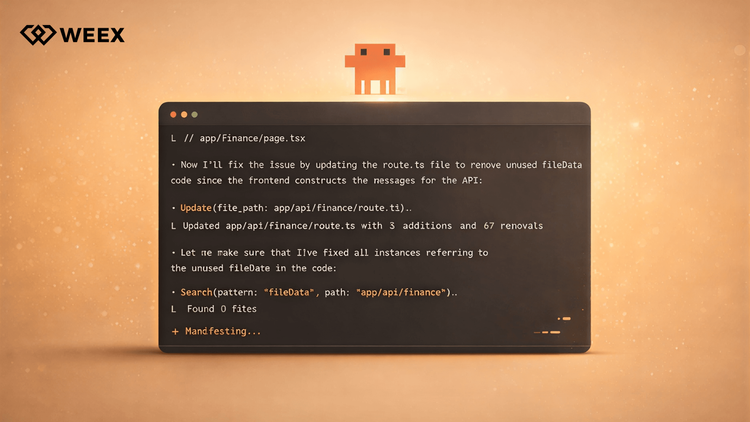
What Is Vibe Coding? How AI Is Changing Web3 & Crypto Development
What is vibe coding? Learn how AI coding tools are lowering the barrier to Web3 development and enabling anyone to build crypto applications.
The parent company of the New York Stock Exchange strategically invests in OKX: The intentions behind the $25 billion valuation

WEEX P2P update: Country/region restrictions for ad posting
To improve ad security and matching accuracy, WEEX P2P now allows advertisers to restrict who can trade with their ads based on country or region. Advertisers can select preferred counterparty locations for a safer, smoother trading experience.
I. Overview
When publishing P2P ads, advertisers can now set the following:
Allow only counterparties from selected countries or regions to trade with your ads.
With this feature, you can:
Target specific user groups more precisely.Reduce cross-region trading risks.Improve order matching quality.
II. Applicable scenarios
The following are some common scenarios:
Restrict payment methods: Limit orders to users in your country using supported local banks or wallets.Risk control: Avoid trading with users from high-risk regions.Operational strategy: Tailor ads to specific markets.
III. How to get started
On the ad posting page, find "Trading requirements":
Select "Trade with users from selected countries or regions only".Then select the countries or regions to add to the allowlist.Use the search box to quickly find a country or region.Once your settings are complete, submit the ad to apply the restrictions.
When an advertiser enables the "Country/Region Restriction" feature, users who do not meet the criteria will be blocked when placing an order and will see the following prompt:
If you encounter this issue when placing an order as a regular user, try the following solutions.
Choose another ad: Select ads that do not restrict your country/region, or ads that allow users from your location.Show local ads only: Prioritize ads available in the same country as your identity verification.
IV. Benefits
Compared with ads without country/region restrictions, this feature provides the following improvements.
Aspect
Improvement
Trading security
Reduces abnormal orders and fraud risk
Conversion efficiency
Matches ads with more relevant users
Order completion rate
Reduces failures caused by incompatible payment methods
V. FAQ
Q1: Why are some users not able to place orders on my ad?
A1: Their country or region may not be included in your allowlist.
Q2: Can I select multiple countries or regions when setting the restriction?
A2: Yes, multiple selections are supported.
Q3: Can I edit my published ads?
A3: Yes. You can edit your ad in the "My Ads" list. Changes will take effect immediately after saving.



 App
App