
- Buy Crypto
- Markets
 Futures
- Spot
- Copy Trade
- Earn
- More
CME’s Coin Issuance, Wall Street Giants Also Looking to “Hunt” the Stablecoin Market?

Original Title: "CME to Issue Coin? Wall Street Giant's 'New Hunt'"
Original Author: Seed.eth, via Bitpush News
In the power game of Wall Street, giants never miss out; they only wait for the right moment to reap the benefits.
This morning, Terry Duffy, CEO of the world's largest derivatives exchange platform, CME Group, made a statement during the fourth-quarter earnings call that stirred the entire market.
Duffy revealed that CME is actively exploring the issuance of its digital asset: "CME Coin."

This time, it is not merely a technical experiment. Under the narrative of "tokenizing everything," CME's move seems more like a deep "hunt" by traditional finance (TradFi) on crypto-native infrastructure.
1. Positioning Mystery: Chip or Ammunition?
Despite being named "Coin," CME Coin is not the same as the cryptocurrencies known in the crypto sphere. From Duffy's brief response, the following information can be distilled:
The token is intended to operate on a decentralized network.
CME distinguishes it from the developing "Tokenized Cash" project (in collaboration with Google Cloud), labeling them as two separate initiatives.
The CEO emphasized that as a "Systemically Important Financial Institution (SIFI)," the tokens issued by CME far exceed similar products in the market in terms of security. (Editor's Note: SIFI usually refers to large banks, and SIFMU refers to entities like CME that provide clearing and settlement services, with CME's SIFMU status granting it access to a Federal Reserve account.)
It can be observed that the underlying logic of CME Coin leans more towards the digital upgrade of financial infrastructure, with its core functions likely being the following:
· Settlement Tool: Similar to an internal advanced "chip," used for achieving 24/7 instant settlement between institutions.
· Tokenized Collateral: Transforming collateral into liquid tokens, enabling previously locked funds to become active on the blockchain.
2. Why Now? CME's Triple Strategy
The timing of CME's entry is not a coincidence but is based on a triple strategy for its 2026 digitalization initiative:
Addressing "Weekend Liquidity Drought"
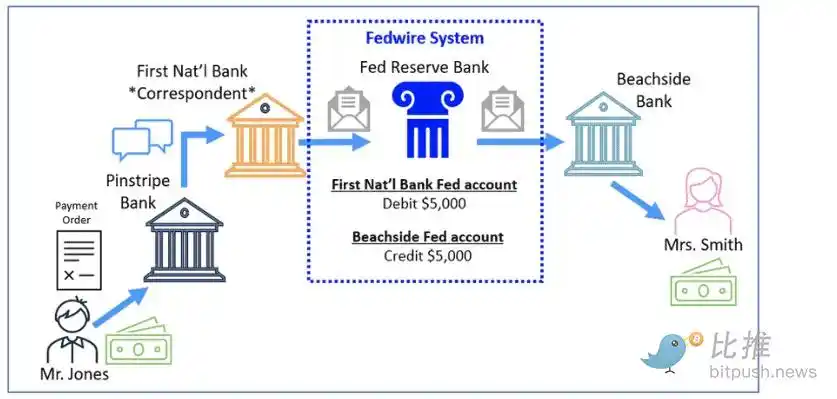
CME plans to fully open cryptocurrency futures trading 24/7 by 2026. The traditional bank wire system (FedWire) does not process transactions on weekends. If Bitcoin were to experience a significant drop on a Saturday night, institutions would be unable to transfer funds to top up margin requirements, significantly increasing the risk of liquidation. The emergence of CME Coin, a blockchain-based token that operates around the clock, serves as a "fast-acting lifesaver" for the margin system.
Reclaiming Lost "Interest Profits"
Currently, institutions participating in the crypto market typically need to hold USDT or USDC. This means that tens of billions of dollars are sitting idle with companies like Tether and Circle, allowing these companies to exclusively benefit from the hundreds of millions of dollars in interest generated. The introduction of CME Coin signifies CME's attempt to retain this substantial fund flow within its own balance sheet.
Building a "Compliance Moat"
With BlackRock launching the BUIDL fund and JPMorgan Chase diving into JPM Coin, the giants have reached a consensus: the future of financial competition lies not in securing a position but in the "collateral efficiency" battle.
CME's CEO put it bluntly: compared to tokens issued by third-tier banks or private companies, they trust more in "systemically important" financial behemoths like JPMorgan Chase. While this may sound like risk management, it's actually about setting standards. By raising the requirements for collateral "pedigree," CME is effectively squeezing out existing "private" stablecoins, creating a higher threshold and a more secure "members-only" playground for the core traditional financial sector. The future game plan will have to abide by their rules.
Therefore, CME Coin appears more like a "door-opener" for traditional financial giants seeking to regain control of the narrative in the crypto world. This drama has only just begun.
3. Erosion of Existing Stablecoins?
For a long time, Tether (USDT) and Circle (USDC) have dominated the stablecoin market due to their first-mover advantage and liquidity momentum. However, CME's entry is now dismantling their moat from two perspectives:
It's an Asset, But More Importantly a 'Liquidity Move Right'
USDT or USDC is primarily a 'capital ferryman,' while CME deals with derivative positions covering trillions of dollars in interest rates, commodities, equities, and more.
· Heartland Status: Once CME Coin becomes an officially recognized margin asset, it will plug directly into the 'heart' of the global financial system—an underpinning of price discovery and stability assurance.

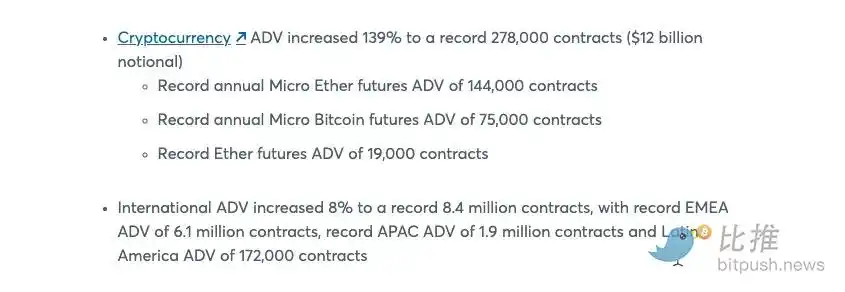
· Mandatory Holding: CME Coin captures the 'clearing flow.' As long as banks operate on CME, they must become 'mandatory holders' of the token to meet immediate margin calls. This systemically mandated demand is beyond the reach of any native cryptocurrency. According to the January financial report, CME's cryptocurrency daily average trading volume has already reached $12 billion by 2025, with Micro Bitcoin (MBT) and Micro Ethereum (MET) futures contracts showing particular strength.
Collateral is Sovereignty: Reshaping the Market's 'Digital Throat'
In modern finance, collateral is the real throat. It determines who can enter trades and how much leverage they can take.
· Enhanced Intermediary: Contrary to blockchain's advocated 'decentralization,' CME is actually using a digital shell to strengthen its monopoly as a top-tier intermediary.
· Walled Garden: Unlike the seamless DeFi, CME Coin is highly likely to be an institution-exclusive closed-loop game. It lacks open governance and only possesses legally protected clearing rights.
Yield 'Siphon': Tokens launched by Wall Street giants usually come with an 'interest-bearing' feature or fee rebate capability. Faced with over 5% risk-free Treasury yields, institutions have no reason to hold onto non-dividend-paying traditional stablecoins long-term.
Conclusion
In the bigger picture, CME's strategy is not solitary. Recently, JPMorgan introduced tokenized deposit services on Coinbase's Layer 2 blockchain Base through its token called JPM Coin (JPMD). Unlike traditional transfers taking several days to process, JPMD achieves settlement in seconds, quietly altering the position allocation between large financial institutions. The paths of these financial behemoths are eerily similar: embracing blockchain efficiency while holding fast to traditional power structures.
This is not the decentralized finance victory many crypto natives have been waiting for; it is more like a "digital upgrade" of the traditional financial order, where giants are cleverly transforming their former "settlement monopoly" into a future "digital passport."
Once this rule-making, led by them, is completed, the battlefield will be redrawn. At that time, not only today's stablecoins but also tokens issued by many small and medium-sized banks may lose eligibility to compete under this new "compliant" standard.
You may also like

AI within artillery range
“The cloud” is a metaphor, but the data center isn’t.

March 4th Market Key Intelligence, How Much Did You Miss?

Taking Stock of Crypto's Washington Power Players: Who is Advocating for US Crypto Regulation?

DDC Enterprise Limited Announces 2025 Unaudited Preliminary Financial Performance: Record Revenue Achieved, Bitcoin Treasury Grows to 2183 Coins
On March 4, 2026, DDC Enterprise Limited (NYSE American: DDC) today announced preliminary, unaudited full-year financial performance for the year ended December 31, 2025. The company expects to achieve record revenue and record positive adjusted EBITDA, primarily driven by continued growth in its core consumer food business and overall margin improvement. The final audited financial report is expected to be released in mid-April 2026.
Revenue: Expected to be between $39 million and $41 million, reaching a new company high.
Organic Growth: Excluding the impact of the company's strategic contraction of its U.S. operations, core revenue is expected to grow 11% to 17% year over year.
Gross Profit Margin: Expected to be between 28% and 30%, reflecting continued operational efficiency improvements.
Adjusted EBITDA: The company expects to achieve a positive full-year result in 2025, a significant improvement from a $3.5 million loss in 2024, mainly due to rigorous cost controls and a higher-margin sales mix.
In 2025, DDC's core consumer food business maintained strong operational performance.
The company also disclosed Core Consumer Food Business Adjusted EBITDA, a metric that further excludes costs related to its Bitcoin reserve strategy and non-cash fair value adjustments related to its Bitcoin holdings from adjusted EBITDA to more accurately reflect the core business performance.
In 2025, Core Consumer Food Business Adjusted EBITDA is expected to be between $5.5 million and $6 million.
In the first half of 2025, DDC initiated a long-term Bitcoin accumulation strategy, holding Bitcoin as its primary reserve asset.
As of December 31, 2025: The company holds 1,183 BTC.
As of February 28, 2026: Holdings increased to 2,118 BTC
Today's additional purchase of 65 BTC brings the company's total holdings to 2,183 BTC
DDC Founder, Chairman, and CEO Norma Chu stated, "We are proud to have closed 2025 with record revenue and positive adjusted EBITDA, demonstrating the steady growth of the company's consumer food business and the ongoing improvement in profitability. We are building a disciplined, growth-oriented food platform and strategically allocating capital to Bitcoin assets with a long-term view, aligning with our core beliefs. We believe that this dual-track model of 'Steady Consumer Business + Strategic Bitcoin Reserve' will help DDC create lasting long-term value for shareholders."
For the full year 2025, the company defines "Adjusted EBITDA" (a non-GAAP financial measure) as: Net income / (loss) excluding the following items:· Interest expense· Taxes· Foreign exchange gains/losses· Long-lived asset impairment· Depreciation and amortization· Non-cash fair value changes related to financial instruments (including Bitcoin holdings)· Stock-based compensation
DDC Enterprise Limited (NYSE: DDC) is actively implementing its corporate Bitcoin Treasury strategy while continuing to strengthen its position as a leading global Asian food platform.
The company has established Bitcoin as a core reserve asset and is executing a prudent, long-oriented accumulation strategy. While expanding its portfolio of food brands, DDC is gradually becoming one of the public company pioneers in integrating Bitcoin into its corporate financial architecture.

Uncovering YZi Labs 229 Investment: Over 18% of the portfolio is already inactive, with an average project transparency score of 78

The business of crypto VC is becoming promising

China's AI Compute Power Counterstrike

Global Assets Plunge: Hormuz, Chips, and a South Korean Holiday

Bloomberg has reported twice, Hyperliquid once again in Wall Street's radar

Trump Backs Crypto Bill, SEC Halts Leveraged ETF, What Is the English-Speaking Crypto Community Talking About?

OpenClaw Floods Into Polymarket, Some Making Tens of Thousands Per Month
Understanding Trump's "Warfare Playbook": Ten Signals Investors Must Know

Iranian Missile Heading Toward UAE, Claude Also Within Range
Successive Core Team "Heroes" Depart, Has Aave's DAO Dream Crumbled?

Is This the Year of the Robot? A Deep Dive into Robotics Projects
When AI Takes Over Money: Bitcoin Becomes the "First Choice," Fiat Is Left Out

AI Trading in Live Markets: 4 Lessons From a WEEX Hackathon Top 10 Finalist
AI trading meets real markets. Explore 4 lessons from a WEEX Hackathon Top 10 finalist on surviving volatility, trusting AI models, and building smarter crypto trading systems.

MegaETH Co-founder: 48 Hours After Leaving Dubai, I Reassessed the Entire Crypto Space
AI within artillery range
“The cloud” is a metaphor, but the data center isn’t.
March 4th Market Key Intelligence, How Much Did You Miss?
Taking Stock of Crypto's Washington Power Players: Who is Advocating for US Crypto Regulation?
DDC Enterprise Limited Announces 2025 Unaudited Preliminary Financial Performance: Record Revenue Achieved, Bitcoin Treasury Grows to 2183 Coins
On March 4, 2026, DDC Enterprise Limited (NYSE American: DDC) today announced preliminary, unaudited full-year financial performance for the year ended December 31, 2025. The company expects to achieve record revenue and record positive adjusted EBITDA, primarily driven by continued growth in its core consumer food business and overall margin improvement. The final audited financial report is expected to be released in mid-April 2026.
Revenue: Expected to be between $39 million and $41 million, reaching a new company high.
Organic Growth: Excluding the impact of the company's strategic contraction of its U.S. operations, core revenue is expected to grow 11% to 17% year over year.
Gross Profit Margin: Expected to be between 28% and 30%, reflecting continued operational efficiency improvements.
Adjusted EBITDA: The company expects to achieve a positive full-year result in 2025, a significant improvement from a $3.5 million loss in 2024, mainly due to rigorous cost controls and a higher-margin sales mix.
In 2025, DDC's core consumer food business maintained strong operational performance.
The company also disclosed Core Consumer Food Business Adjusted EBITDA, a metric that further excludes costs related to its Bitcoin reserve strategy and non-cash fair value adjustments related to its Bitcoin holdings from adjusted EBITDA to more accurately reflect the core business performance.
In 2025, Core Consumer Food Business Adjusted EBITDA is expected to be between $5.5 million and $6 million.
In the first half of 2025, DDC initiated a long-term Bitcoin accumulation strategy, holding Bitcoin as its primary reserve asset.
As of December 31, 2025: The company holds 1,183 BTC.
As of February 28, 2026: Holdings increased to 2,118 BTC
Today's additional purchase of 65 BTC brings the company's total holdings to 2,183 BTC
DDC Founder, Chairman, and CEO Norma Chu stated, "We are proud to have closed 2025 with record revenue and positive adjusted EBITDA, demonstrating the steady growth of the company's consumer food business and the ongoing improvement in profitability. We are building a disciplined, growth-oriented food platform and strategically allocating capital to Bitcoin assets with a long-term view, aligning with our core beliefs. We believe that this dual-track model of 'Steady Consumer Business + Strategic Bitcoin Reserve' will help DDC create lasting long-term value for shareholders."
For the full year 2025, the company defines "Adjusted EBITDA" (a non-GAAP financial measure) as: Net income / (loss) excluding the following items:· Interest expense· Taxes· Foreign exchange gains/losses· Long-lived asset impairment· Depreciation and amortization· Non-cash fair value changes related to financial instruments (including Bitcoin holdings)· Stock-based compensation
DDC Enterprise Limited (NYSE: DDC) is actively implementing its corporate Bitcoin Treasury strategy while continuing to strengthen its position as a leading global Asian food platform.
The company has established Bitcoin as a core reserve asset and is executing a prudent, long-oriented accumulation strategy. While expanding its portfolio of food brands, DDC is gradually becoming one of the public company pioneers in integrating Bitcoin into its corporate financial architecture.


 App
App