
- Buy Crypto
- Markets
 Futures
- Spot
- Copy Trade
- Earn
- More
Ethereum Gets a Speed Boost: Millisecond Preconfirmations Arrive via FAST RPC

Imagine waiting in line at a bustling coffee shop, only for your order to zip through in the blink of an eye—that’s the kind of thrill Ethereum users are now experiencing with Primev’s innovative FAST RPC. This breakthrough lets transactions on the Ethereum mainnet hit preconfirmation speeds as quick as 200 milliseconds, transforming what used to feel like a sluggish crawl into a seamless sprint. Whether you’re transferring Ether (ETH), diving into smart contracts, or snagging the latest non-fungible tokens (NFTs), this tech promises to make your onchain interactions feel lightning-fast, rivaling the zip of high-speed layer-1 blockchains like those known for sub-second confirmations.
How FAST RPC Supercharges Ethereum Transactions
Picture Ethereum’s mainnet as a busy highway that’s finally getting express lanes. Primev’s FAST RPC acts like a turbocharged engine, connecting your crypto wallet directly to blockchain nodes for rapid transaction handling. Preconfirmation here means getting an early thumbs-up from block builders that your transaction is queued up for the next block, often in under 200 milliseconds, with full inclusion following swiftly. This isn’t just hype; it’s backed by real demos, like the one shared by Primev’s founder Murat Akdeniz on X back in that memorable post, where an ETH transfer preconfirmed in 377 milliseconds and landed in the same block—all via a familiar wallet like MetaMask.
What sets this apart? Traditional RPCs, while reliable, often lag behind, especially under heavy loads. But FAST RPC flips the script, offering a compelling reason to stick with Ethereum’s Layer 1 instead of jumping to alternatives. After more than two years of dedicated development, the Primev team has fine-tuned this to deliver “millisecond” performance right on the mainnet, as showcased in Akdeniz’s quick 18-second video demo. It’s like upgrading from a bicycle to a sports car, making everyday tasks on Ethereum feel exhilarating and efficient.
Scaling Up: Challenges and Real-World Testing of FAST RPC
Of course, speed is one thing, but reliability under pressure is another. While FAST RPC shines in controlled settings, it’s still building its reputation compared to established players that handle massive transaction volumes—think billions in annual throughput across global users. As of October 23, 2025, recent updates from Primev indicate ongoing tests with increased node distribution to match these heavyweights, ensuring it can withstand peak network demands without skipping a beat. This evolution draws from real-world data, where Ethereum’s transaction speeds have historically hovered around 12-15 seconds per block, but FAST RPC slashes that wait dramatically for users prioritizing velocity.
On social fronts, Twitter buzz as of late 2025 highlights discussions around Ethereum’s scalability, with users raving about how such innovations reduce the “painfully slow” label that once plagued the network. Popular Google searches like “How fast is Ethereum now?” or “Best RPC for quick ETH transfers” often lead back to solutions like this, underscoring a growing demand for mainnet enhancements. Latest official announcements from Primev, including a recent X thread on expanded integrations, confirm partnerships that boost accessibility, keeping the community abuzz with excitement.
Easy Integration and Brand Alignment with Cutting-Edge Exchanges
Setting up FAST RPC is straightforward, much like swapping out an old phone charger for a faster one. Just link it to your wallet via MetaMask or WalletConnect, top up a dedicated gas tank at the specified address, and you’re ready to roll with minimal friction. This simplicity aligns perfectly with forward-thinking platforms that prioritize user experience and innovation.
Speaking of alignment, if you’re looking to trade ETH or explore NFTs with the same blazing efficiency, consider WEEX exchange. As a trusted player in the crypto space, WEEX stands out for its seamless integration of high-speed tools, robust security features, and user-centric design that complements advancements like FAST RPC. With a track record of handling billions in volume and a commitment to Ethereum’s ecosystem, WEEX empowers traders to capitalize on these millisecond edges, fostering a reliable environment where speed meets reliability—truly elevating your crypto journey.
Why This Matters: Comparisons and Future Outlook
Contrast this with Ethereum’s past, where users endured waits that felt eternal, especially during network congestion. FAST RPC bridges that gap, making mainnet interactions comparable to the swiftness of optimized layer-2 solutions but without the need to migrate. Evidence from Primev’s demonstrations and user feedback on platforms like X shows tangible improvements: transactions that once took seconds now resolve in fractions, backed by metrics like that 200-millisecond benchmark. As Ethereum evolves, this could redefine onchain efficiency, drawing in more builders and everyday users alike.
Looking ahead, with the crypto landscape heating up—think recent trends in decentralized finance and NFT minting—innovations like FAST RPC position Ethereum as a frontrunner. It’s not just about speed; it’s about creating an ecosystem where you, the user, feel empowered and excited to engage.
FAQ: Your Questions on Ethereum’s Millisecond Preconfirmations
What exactly is preconfirmation in Ethereum transactions?
Preconfirmation is like an early assurance from block builders that your transaction will make it into the next block, happening in as little as 200 milliseconds with tools like FAST RPC, speeding up everything from ETH transfers to NFT mints.
How does FAST RPC compare to traditional Ethereum RPCs?
Unlike slower traditional RPCs that can lag under heavy use, FAST RPC delivers sub-second preconfirmations, making it ideal for users who want mainnet speed without switching layers—think of it as an upgrade for quicker, more responsive interactions.
Is FAST RPC ready for widespread use as of 2025?
Yes, with ongoing scaling tests and integrations, it’s gaining traction, though it’s still building up to handle massive loads like established providers. Recent updates show improved node distribution for better reliability.
You may also like

Particle Founder: The entrepreneurial insights I have gained the most from in the past year

Huang Renxun's latest podcast transcript: The future of Nvidia, the development of embodied intelligence and agents, the explosion of inference demand, and the public relations crisis of artificial intelligence

OKX Ventures Research Report: AI Agent Economic Infrastructure Research Report (Part 1)

The migration of settlement rights: B18 and the institutional starting point of on-chain banks

From Tencent and Circle: Looking at the Simple and Difficult Questions of Investment

The second half of stablecoins no longer belongs to the crypto circle

Cursor "Shell" Kimi Controversy Reversed: From Copyright Infringement Allegations to Authorized Collaboration, China's Open Source Model Once Again Becomes a Global AI Foundation

The Real Reason Tokens Don't Sell: 90% of Crypto Projects Overlook Investor Relations

Is the income of pump.fun real, earning a million dollars a day despite the market downturn?

The real reason why tokens are not selling: 90% of crypto projects neglect investor relations

Who is the true winner of the "Tokenization" narrative?

Moss: The Era of AI-Traded by Anyone | Project Introduction

Chip Smuggling Case Exposes Regulatory Loophole | Rewire News Evening Update

How a Structured AI Crypto Trading Bot Won at the WEEX Hackathon
Ritmex demonstrates how disciplined risk control and structured signals can make an AI crypto trading bot more stable and reliable on WEEX, highlighting the importance of combining execution discipline with scalable AI trading systems.

Old Indicator Fails, Three Major New Signals Emerge: BTC True Bottom May Still Be Below $60K

Meeting OpenClaw Founder at a Hackathon: What Else Can Lobsters Do?
Huang Renxun's Latest Podcast Transcript: NVIDIA's Future, Embodied Intelligence and Agent Development, Soaring Demand for Inferencing, and AI's PR Crisis
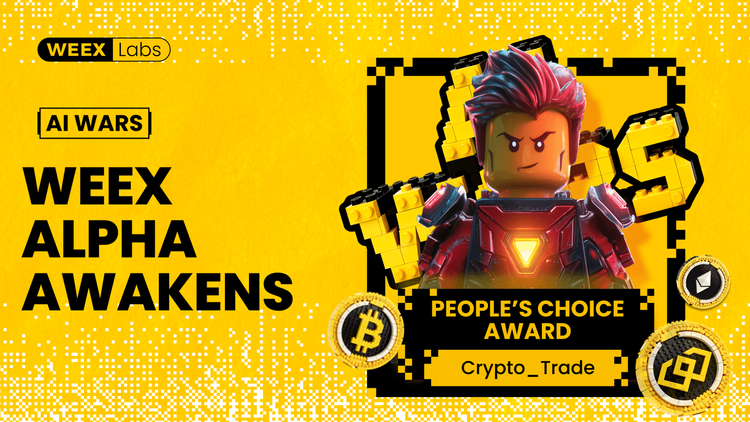
How a Structured AI Crypto Trading Bot Won at the WEEX Hackathon
Crypto_Trade shows how structured inputs and controlled adaptability can build a more stable and reliable AI crypto trading bot within the WEEX AI Trading Hackathon, highlighting a practical path toward scalable AI trading systems.


 App
App