
- Buy Crypto
- Markets
 Futures
- Spot
- Copy Trade
- Earn
- More
Fact Check: How Much Money Did the University of Chicago Lose in its Crypto Investment?

Original Article Title: "Fact Check: How Much Money Did the University of Chicago Really Lose in Crypto Trading?"
Original Article Author: Darren Terminator
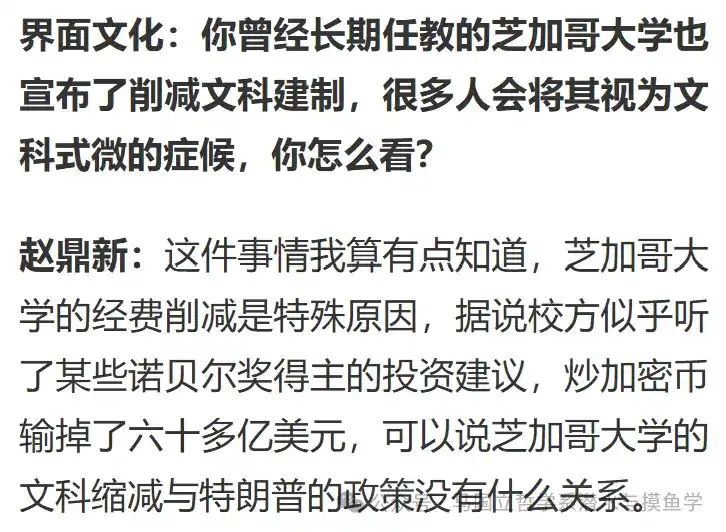
Recently, Jiemian News seized the opportunity of the publication of Professor Zhao Dingxin's "Lectures on Society and Political Movements" (the second edition of this book is really good) to interview Professor Zhao. In the interview, Professor Zhao said that the University of Chicago's recent various budget cuts were because "it is said that the school seemed to have listened to investment advice from certain Nobel laureates, traded cryptocurrencies, and lost over six billion dollars. It can be said that the University of Chicago's reduction in liberal arts has nothing to do with Trump's policies."
So did the University of Chicago really lose over six billion dollars in crypto trading?
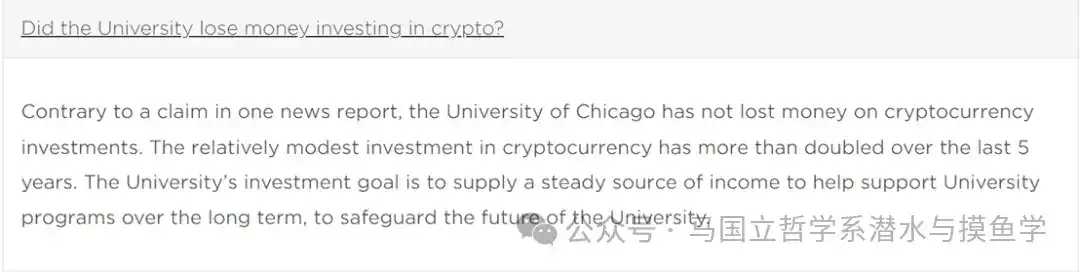
Coincidentally, in the FAQ updated by the University of Chicago in December 2025 [1], the matter of cryptocurrency trading was mentioned. According to the official website: "Contrary to a claim in a news report, the University of Chicago did not suffer losses in cryptocurrency investments. Our school's investment in cryptocurrency is relatively small but has more than doubled in the past five years. Our investment goal is to provide a stable source of income to long-term support our school's various projects and secure our school's future."
So is the University of Chicago's Provost definitely telling the truth?
Hard to say. However, intuitively speaking, the total amount of the University of Chicago's donation funds in the last five years is approximately around $100 billion (a record high in the 2021 fiscal year, around $116 billion; in the 2025 fiscal year, around $109 billion [2]). Unless the University of Chicago is really crazy enough to take at least 60% of its own donation funds to trade crypto (which obviously violates various regulations), or embezzle a large amount of operating funds to trade crypto and lose it all, it should not have lost as much as sixty billion.
So how much was actually lost? Or did they actually make a killing as stated in the official FAQ?
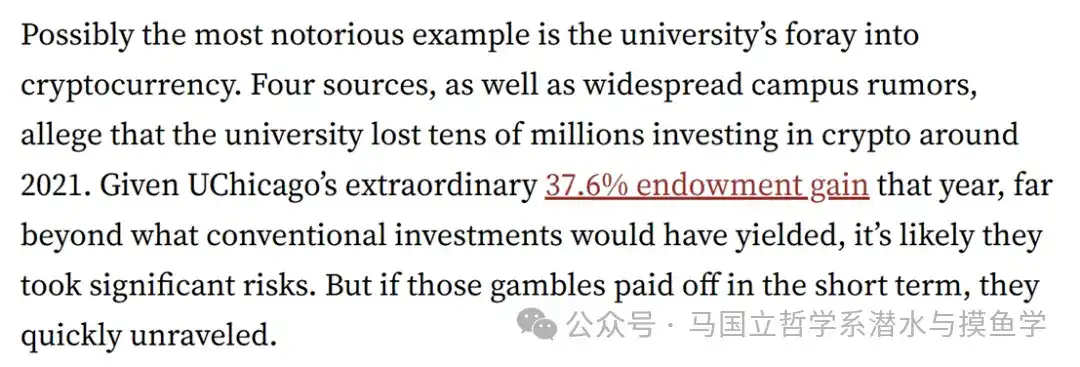
The Stanford Daily [3], Financial Times [4], and Investopedia [5] reported on this last year. According to The Stanford Daily, their four sources said: "The University of Chicago lost tens of millions of dollars in cryptocurrency investment around 2021."
So what does the University of Chicago's financial report [6] say?
Unfortunately, the financial report did not directly tell us how much money was lost in crypto trading. However, in the 2022 fiscal year report, the University of Chicago disclosed its cryptocurrency investment (fair market value): around $64 million as of June 2021 and around $45 million as of June 2022 (a difference of approximately $19 million). In subsequent reports, perhaps due to either significant gains or losses, the University of Chicago changed its reporting method and no longer disclosed its cryptocurrency investments. However, according to a 2025 Q&A session, the University of Chicago is still cautiously investing in cryptocurrency.
Of note, the 2022 financial report indicated that as of June that year, the University of Chicago endowment fund had incurred a total loss of approximately $1.5 billion. The 2023 financial report then showed that the University of Chicago's investments only incurred a small loss. In the following two years, the University of Chicago turned a profit.
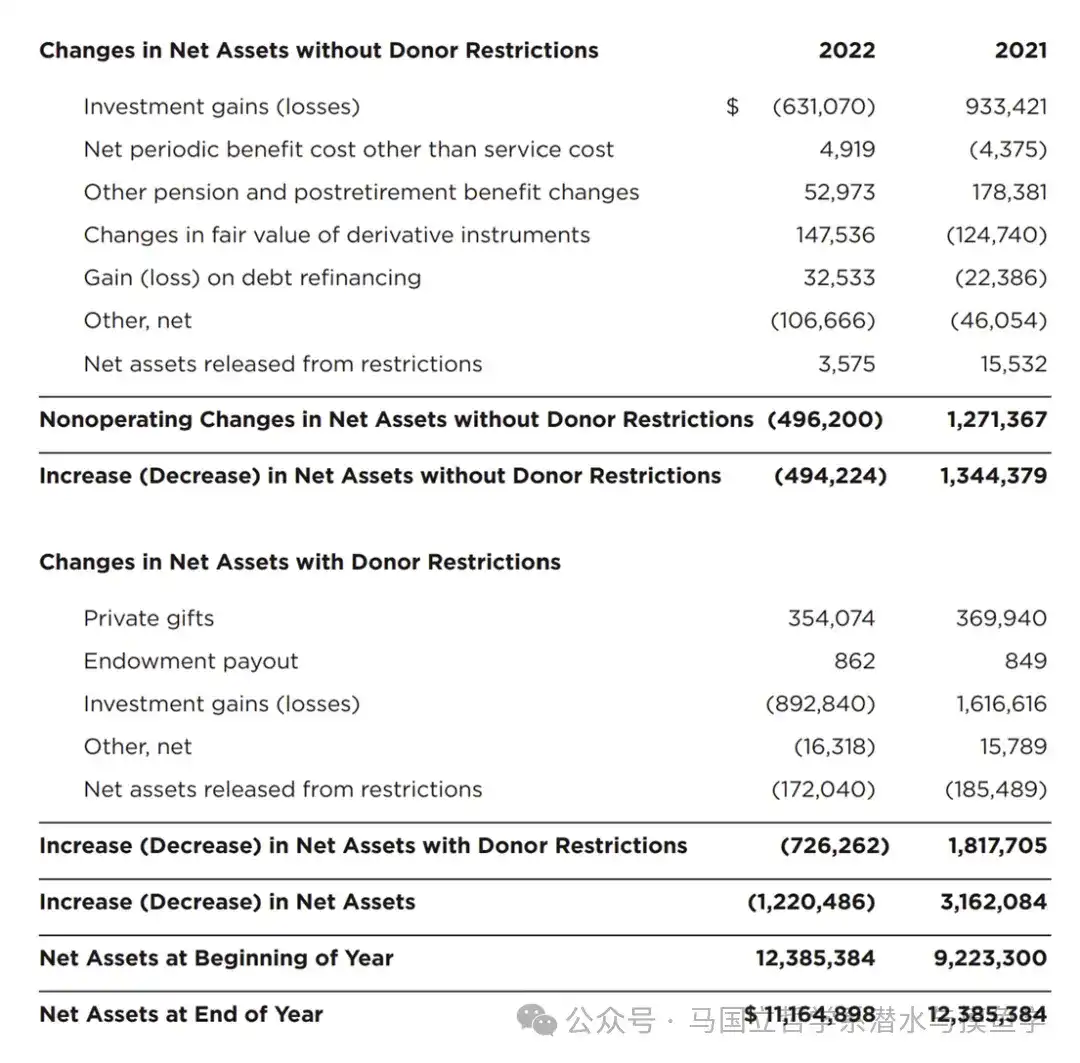
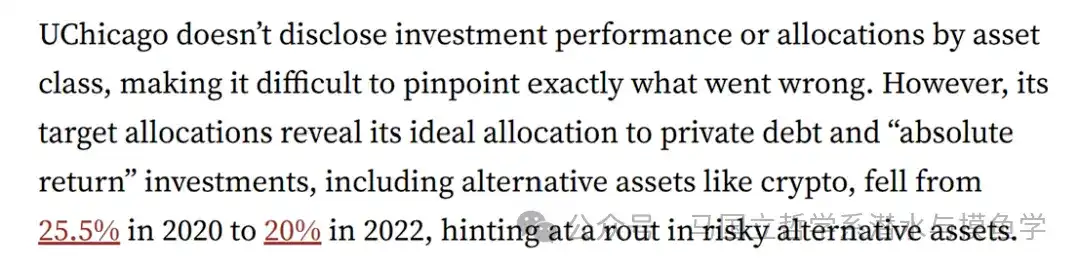
However, we do not know the specific sources of these losses and gains, especially how much was related to crypto trading. The Stanford University newspaper provided a somewhat unreliable clue: "[The University of Chicago's] target asset allocation shows that the University's ideal mix for private debt and 'absolute return' investments (which include alternative assets like cryptocurrency) has decreased from 25.5% in 2020 to 20% in 2022, implying a significant retreat (or downturn) in high-risk alternative assets."
However, the Stanford University newspaper also made an interesting observation: "From 2013 to 2023, the University of Chicago endowment fund's annualized return rate was only 7.48%, while the stock market's annualized return rate for the same period was 12.8%, and the Ivy League average was 10.8%. If the University of Chicago had simply followed the market performance, its endowment fund would now have an additional $6.45 billion. This (dreamy) sum of money would have been more than enough to pay off all of the school's debt. Of course, universities cannot simply replicate market indices as they must hedge during economic downturns to maintain financial stability. But even if the University of Chicago had only achieved the average level of its Ivy League peer group, its endowment fund size would still be $3.69 billion higher today. This would be enough to cover the school's current budget deficit for the next 15 years."
However, apart from crypto trading and investment losses, what other reasons could explain the University of Chicago's budget cuts?
A common explanation, besides calling Trump a rogue, often emphasizes the University of Chicago's own strategic mistakes: debt leveraging, extensive infrastructure projects, and aggressive expansion. As of the end of June 2025, the University of Chicago's debt is around $9.2 billion, approximately 90% of the endowment fund. Although the financing cost of this debt is relatively low, unlike across the pond, the University of Chicago still needs to pay over $200 million in interest this fiscal year.
Such a high level of debt is certainly not coming out of thin air. Since the turn of the century, the University of Chicago has spent a lot of money on new laboratories, libraries, dormitories, technology, and other facilities to enhance its reputation, attract students, and compete with various long-standing prestigious schools. However, these expansions have been largely supported by significant borrowing. Yet, new infrastructure brings ongoing operating costs, and the university has not figured out how to sustainably fund these expenses in the long term.
The University of Chicago's student newspaper [10] quotes Professor Clifford Ando of the university, who suggests that any parents who are considering sending their child to the University of Chicago need to think about whether the high tuition fees they are paying are contributing to their child's education or to the university's debt. The reckless expansion and the resulting debt issue are clearly the responsibility of a management team that acted irrationally and overly ambitiously. What's even more ironic is that between 2006 and 2022, the university president's base salary increased by 285%. Now, faced with some financial challenges, the university's leadership has shifted the burden onto students and regular faculty members: even in years when assets are sold, staff are laid off, and admissions are frozen, executive compensation continues to rise.
So, what should be the University of Chicago's next steps?
In addition to continuing cost-cutting measures, the university, of course, needs to increase revenue. Evidently, a common trick used by U.S. universities to generate more income is to admit more undergraduate students. The University of Chicago is now following suit, but the justification is sure to be noble.

[1]https://provost.uchicago.edu/actions-budget
[2] Throughout this article, the University of Chicago's budget, endowment, and debt are all calculated by combining the main university campus, the Medical Center, and the Marine Biological Laboratory. Common news reports (especially the university's own press releases) usually combine these figures for the endowment but only consider the main campus for the debt.
[3]https://stanfordreview.org/uchicago-lost-money-on-crypto-then-froze-research-when-federal-funding-was-cut/
[4]https://www.ft.com/content/4501240f-58b7-4433-9a3f-77eff18d0898?utm_source=chatgpt.com
[5]https://www.msn.com/en-us/money/careersandeducation/university-s-investment-losses-spark-outrage-resulting-in-drastic-program-cuts/ar-AA1Nxhgx
[6]https://intranet.uchicago.edu/en/tools-and-resources/financial-resources/accounting-and-financial-reporting/financial-statements
[7]https://www.wsj.com/us-news/education/colleges-face-a-financial-reckoning-the-university-of-chicago-is-exhibit-a-8918b2b0
[8]https://www.ft.com/barrier/corporate/d5c7c0f4-abf1-4469-8dca-87ff01cbebf6
[9] The main campus's debt is around $6 billion. Perhaps this is the source of Professor Zhao's $6 billion.
[10]https://chicagomaroon.com/40486/news/uchicago-professor-sounds-alarm-over-troubling-university-finances/
You may also like

Wall Street Shorts ETH: Vitalik is aware and has front-run, while Tom Lee remains oblivious

Social Capital CEO: How Equity Tokenization is Reshaping Capital Markets from US Stocks to SpaceX?

CoinGecko Report: Surge of 346% vs Dip of 20.8%, The Wild Rise of DEX

a16z: The Real Opportunity of Stablecoins Lies Not in Disruption but in Filling Gaps

Mining Exodus: Someone Holds $12.8 Billion AI Order

March 6 Market Key Intelligence, How Much Did You Miss?

a16z: The True Opportunity of Stablecoins is in Complementing, Not Disrupting

Predict LALIGA Matches, Shoot Daily & Win BTC, USDT and WXT on WEEX
The WEEX × LALIGA campaign brought together football excitement and crypto participation through a dynamic interactive experience. During the event, users predicted matches, completed trading tasks, and took daily shots to compete for rewards including BTC, USDT, WXT, and exclusive prizes.

Ray Dalio Dialogue: Why I'm Betting on Gold and Not Bitcoin

Who Took the Money in the AI Era? A Must-See Investment Checklist for HALO Asset Trading
Wall Street Bears Target Ethereum: Vitalik In the Know Takes Flight, Tom Lee Remains Bullish
Pump.fun Hacker Steals $2 Million, Receives 6-Year Prison Sentence, Opts for 'Self-Detonation'

6% Annual Percentage Yield as Musk Declares War on Traditional Banks
36 years, 4 wars, 1 script: How does capital price the world in conflict?

Mining Companies' Great Migration: Some Have Already Secured $12.8 Billion in AI Orders
What Is Vibe Coding? How AI Is Changing Web3 & Crypto Development
What is vibe coding? Learn how AI coding tools are lowering the barrier to Web3 development and enabling anyone to build crypto applications.
The parent company of the New York Stock Exchange strategically invests in OKX: The intentions behind the $25 billion valuation

WEEX P2P update: Country/region restrictions for ad posting
To improve ad security and matching accuracy, WEEX P2P now allows advertisers to restrict who can trade with their ads based on country or region. Advertisers can select preferred counterparty locations for a safer, smoother trading experience.
I. Overview
When publishing P2P ads, advertisers can now set the following:
Allow only counterparties from selected countries or regions to trade with your ads.
With this feature, you can:
Target specific user groups more precisely.Reduce cross-region trading risks.Improve order matching quality.
II. Applicable scenarios
The following are some common scenarios:
Restrict payment methods: Limit orders to users in your country using supported local banks or wallets.Risk control: Avoid trading with users from high-risk regions.Operational strategy: Tailor ads to specific markets.
III. How to get started
On the ad posting page, find "Trading requirements":
Select "Trade with users from selected countries or regions only".Then select the countries or regions to add to the allowlist.Use the search box to quickly find a country or region.Once your settings are complete, submit the ad to apply the restrictions.
When an advertiser enables the "Country/Region Restriction" feature, users who do not meet the criteria will be blocked when placing an order and will see the following prompt:
If you encounter this issue when placing an order as a regular user, try the following solutions.
Choose another ad: Select ads that do not restrict your country/region, or ads that allow users from your location.Show local ads only: Prioritize ads available in the same country as your identity verification.
IV. Benefits
Compared with ads without country/region restrictions, this feature provides the following improvements.
Aspect
Improvement
Trading security
Reduces abnormal orders and fraud risk
Conversion efficiency
Matches ads with more relevant users
Order completion rate
Reduces failures caused by incompatible payment methods
V. FAQ
Q1: Why are some users not able to place orders on my ad?
A1: Their country or region may not be included in your allowlist.
Q2: Can I select multiple countries or regions when setting the restriction?
A2: Yes, multiple selections are supported.
Q3: Can I edit my published ads?
A3: Yes. You can edit your ad in the "My Ads" list. Changes will take effect immediately after saving.


 App
App