
Forbes: In-Depth Analysis of How Trump's Crypto Policy is Reshaping the US Digital Economy Landscape


Original Article Title: How Trump's Bitcoin Policies Are Making The U.S. A Crypto Superpower
Original Article Author: Leigh Cuen, Forbes
Original Article Translation: Luffy, Foresight News
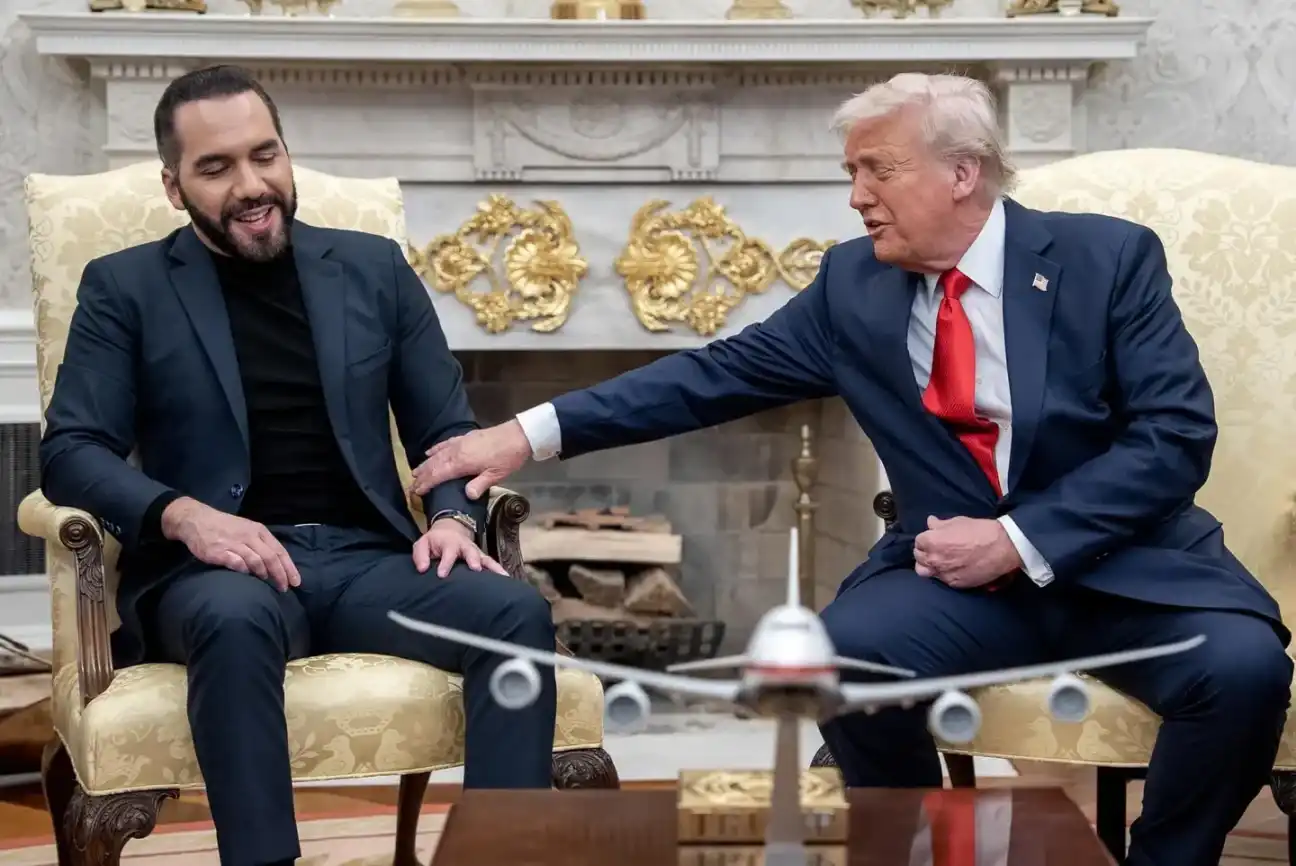
U.S. President Donald Trump (right) and Salvadoran President Nayib Bukele both champion pro-Bitcoin economic strategies, setting themselves apart in the global crypto market. Image Source: Bloomberg
Trump is undergoing a comprehensive overhaul of cryptocurrency regulation, updating tax policies, and embarking on establishing a national Bitcoin reserve strategy, setting the U.S. on the path to becoming the first Group of Seven (G7) economy to fully embrace cryptocurrency.
Forbes' author Sandy Carter wrote, "Trump's second term government has been reshaping America's cryptocurrency landscape."
Small countries like El Salvador have attracted Bitcoin companies by establishing strategic Bitcoin reserves and crypto-friendly policies. The International Monetary Fund (IMF) recently constrained El Salvador's future Bitcoin purchases, but it has already amassed around 6,101 Bitcoins as a strategic reserve. Reportedly, one of the world's most profitable crypto companies, Tether, has also relocated its headquarters to El Salvador.
Similar to El Salvador's President Bukele, Trump courted the crypto constituency during his 2024 election campaign. Last July, he made a striking commitment to the enthusiastic crypto crowd at the Nashville Bitcoin conference.
Forbes' author Susie Violet Ward, who attended the conference, wrote that Trump stated, "The U.S. will become a 'Bitcoin mining powerhouse,' and urged supporters to never sell their Bitcoin."
Susie Violet Ward wrote, "The fusion of political resolve and financial innovation marks a pivotal moment in the Trump era and signifies a broader acceptance of Bitcoin in mainstream politics."
Despite Trump's erratic tariff policies causing market turmoil, his crypto-friendly policies have helped the Bitcoin price remain above the previous cycle's high of around $73,000. The relative stability of cryptocurrency prices may partly be attributed to the U.S. government's newly adopted more lenient regulatory stance.

The Republican Party has seen Singapore's success through a minimalist regulatory approach and is adjusting this crypto strategy to suit the U.S. situation
Trump's Crypto Policy Emulates Singapore and Dubai's Light Regulatory Model
Zennon Kapron, a fintech writer in Singapore and Director of the Asia Securities and Financial Markets Association, wrote that Singapore has established itself as a crypto hub by avoiding complex regulation, not even needing to establish a Bitcoin strategic reserve.
Kapron stated: "Crypto companies flocked to Singapore not so much because of what the country did specifically but because of what it didn't prohibit."
He added that through a minimalist regulatory approach, Singapore became the world's third-largest blockchain investment center in 2023, behind only the U.S. and the U.K.
Trump saw the rapid rise of Singapore through a light regulatory model and implemented a similar regulatory framework within his administration. This relatively laissez-faire strategy is more akin to the hands-off policies enjoyed by crypto investors in places like the Cayman Islands and Hong Kong. Following this line of thought, Trump signed H.J. Res. 25 on April 10, simplifying the tax paperwork originally complex (sometimes practically impossible to complete operationally) for decentralized finance (DeFi) brokers.
Forbes tax writer Robert Woods explained: "Taxpayers need to know when they acquired cryptocurrency, how much they paid, and what they received. Whereas this might be simple for stocks and real estate, it could be much more complicated for cryptocurrency. Many crypto investors make multiple purchases at different times over several years."
While crypto users and companies still need to report taxable events, streamlining paperwork makes it easier for Americans to comply with the law. Before this new tax guidance was introduced, the U.S. Treasury's Office of the Comptroller of the Currency had sent a letter in March that repealed guidance making it difficult for banks and thrifts to offer crypto services.
Earlier this month, a Department of Justice memorandum revealed that the government had disbanded a prosecutorial team focused on crypto companies. Forbes writer Andrea Tinianow noted that this shift at the DOJ could positively impact pending court cases related to privacy tools like Tornado Cash, which will determine "whether developers should face criminal liability for providing open-source code used by others to commit financial crimes." According to a memorandum from U.S. Deputy Attorney General Todd Blanche, law enforcement will no longer act as "regulators through prosecution" as "digital asset overseers" but will focus on combating "bad actors."
The memorandum notes: "The Department of Justice will no longer target cryptocurrency exchanges, coin mixing services, and offline wallets for inadvertent or unknowing violations by their end users." In short, the Department of Justice will not hold responsible the developers of encryption tools or taxpaying businesses providing legitimate crypto services. The Trump administration hopes that the government will no longer intervene in the crypto industry.
Forbes tax contributor Joshua Smeltzer wrote: "This action aims to reduce regulatory burdens, encourage responsible innovation, and ensure that regardless of whether the underlying technology involves blockchain, banking activities are treated consistently."
This move may have been inspired by smaller countries taking a more lenient approach to crypto regulation. Dubai-based lawyer and Forbes contributor Irina Heaver wrote that hundreds of crypto companies have flocked to the UAE, regulated by Dubai DMCC. They now contribute 7% of the UAE's Gross Domestic Product (GDP).
Heaver wrote: "Clear regulation has been a cornerstone of Dubai's success as a crypto hub."
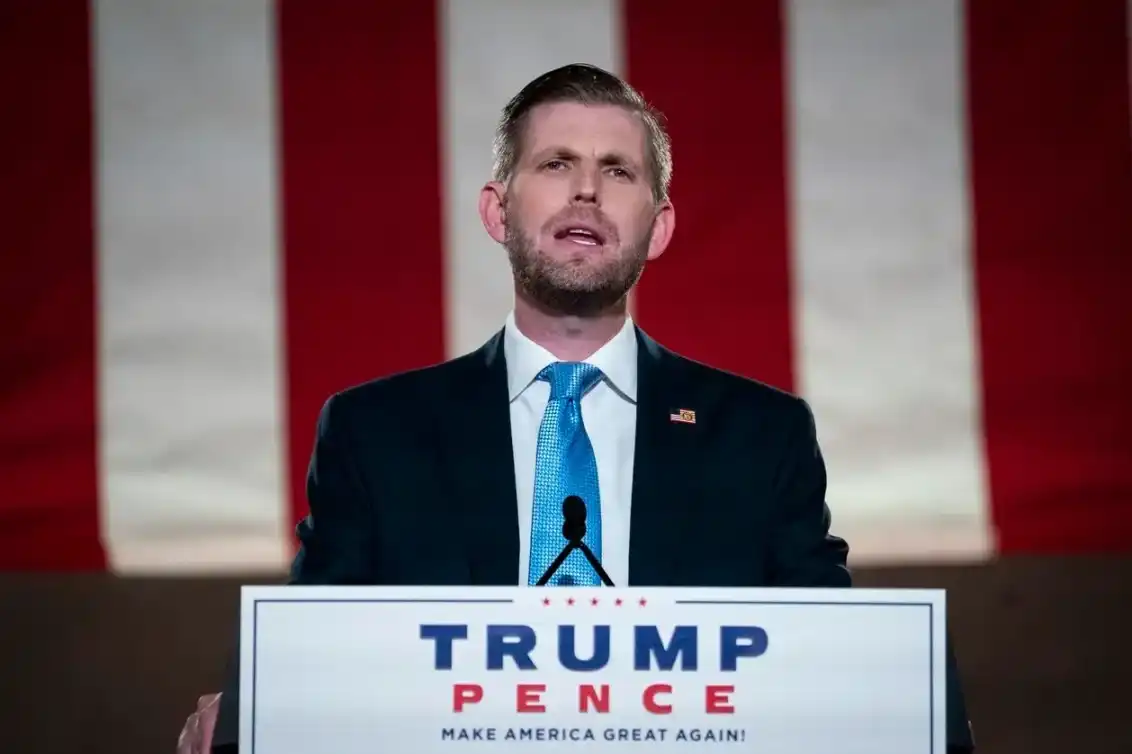
Recently, President Trump's son Eric Trump, along with his brother Donald Trump Jr., announced the formation of a new Bitcoin mining company called American Bitcoin
Bitcoin Mining Dominance
Trump makes no secret of his reasons for clearing the way for the crypto industry: to bring high-paying jobs and dominance in crypto mining to the United States.
According to the Cambridge Bitcoin Electricity Consumption Index, the most powerful crypto mining companies in 2022 come from China or Russia. Since then, dozens of companies have moved to Texas, but this shift stalled during the Biden administration.
Now, Trump's second term coincides with the once-every-four-years bull market cycle of the crypto market; since Trump's victory six months ago, the price of Bitcoin has risen by nearly 30%.
Forbes contributor, Bitcoin Core developer, and venture capitalist Abubakar Nur Khalil wrote: "The price of Bitcoin surges in every halving cycle, whether in the halving year or two years later. Unlike previous halvings, investors can now take advantage of an increasing array of financial tools and methods to capture Bitcoin's price movements, from directly purchasing Bitcoin, investing in stocks of Bitcoin mining companies, or holding stocks of publicly traded companies with Bitcoin on their balance sheets, to Bitcoin ETFs."
Pennsylvania State University Dickinson Law School former professor and Forbes contributor Tonya Evans, among other legal experts, also pointed out how the Trump family's extraction of personal gain from a cryptocurrency project is an unprecedented move for a former president. In addition to various altcoin companies, Eric Trump and Donald Trump Jr. announced earlier this month their new Bitcoin mining company, American Bitcoin.

Trump Hopes to Include Assets Such as BTC, ETH, ADA, and XRP in Strategic Cryptocurrency Reserve
Bipartisan Support for Strategic Crypto Reserve
So far, Trump's Bitcoin reserve strategy seems to have garnered bipartisan support. Forbes contributor Sam Lyman described California Representative Ro Khanna as "an important voice within the Democratic Party's core group on crypto issues," while Alabama Democratic Representative Shomari Figures and Arizona Democratic Representative Yassamin Ansari have also made public statements indicating potential support for the strategy. Ansari pledged that she would "lead the way in blockchain and crypto innovation."
Furthermore, 14 Democratic lawmakers, including New York Representative Ritchie Torres, wrote to the Democratic National Committee chair last year asking the party to "take a forward-looking approach to digital assets and blockchain technology." Even Trump, in March, expressed a desire to include high-risk assets like ETH, ADA, and XRP in the strategic crypto reserve.
In addition to welcoming Bitcoin mining companies, holding various cryptocurrencies in the strategic reserve, and pausing enforcement actions against small industry participants, the Trump administration has also capitalized on the bipartisan interest in safeguarding dollar-backed stablecoins. If widely adopted crypto assets remain pegged to the dollar, this could indirectly benefit the U.S. economy.
Cleve Mesidor, Executive Director of the Blockchain Foundation and Forbes contributor, stated, "The recent 13-hour marathon amendment of the Stablecoin Transparency and Accountability to Promote a Better Ledger Economy Act may suggest the need for longer-term bipartisan cooperation."
It is now too early to claim whether these policies will attract new companies to the U.S., but industry giants like Coinbase CEO Brian Armstrong are now criticizing the previous administration in favor of the Trump administration's policies. Many crypto companies like Coinbase, Kraken, Ripple, Robinhood, and Circle also donated to Trump's transition team. Shortly after Ripple's donation, U.S. regulatory agencies dropped legal charges related to the company's involvement with XRP, and the Trump administration also included XRP in the strategic reserve plan.
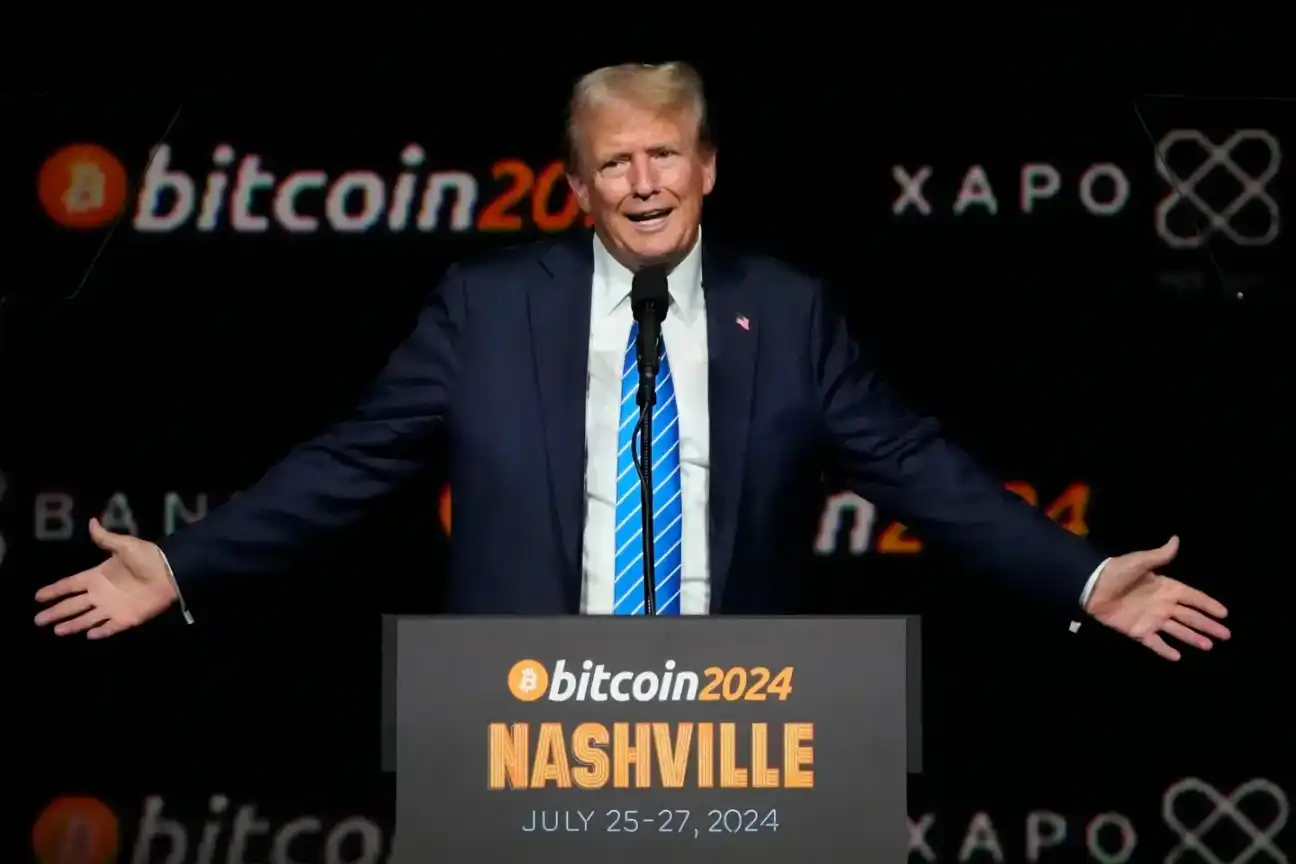
Trump Attended Bitcoin 2024 Conference in Nashville, Tennessee Last Year
The Future of US Cryptocurrency Companies and Bitcoin Price Trends
The bipartisan efforts to ease regulations and establish a strategic reserve of crypto assets seem to be insulating the cryptocurrency market from the turmoil on Wall Street. The current price trend of Bitcoin appears to be more stable compared to the US stock market.
The current halving cycle may conclude in early 2026, and the policies of the Trump administration could further impact the Bitcoin market. This includes the normalization of conflicts of interest. The Trump family is now actively involved in the crypto business, as well as reallocating law enforcement resources and pardoning Bitcoin "OGs" like Silk Road founder Ross Ulbricht and BitMEX exchange founders Arthur Hayes, Benjamin Delo, Samuel Reed, and Gregory Dwyer.
Looking ahead, conducting crypto business in the US may face less legal risk.
You may also like

A valuation of 8 billion dollars, doubling in 8 months! What makes the crypto-friendly bank Erebor Bank stand out?
340 billion valuation: Li Yanhong's largest IPO, a seat in Kunlunxin's shares is hard to come by
Stablecoins are the "royalists" of the crypto world: Open USD brings the old currency system into play
Semiconductor stocks plummet, yet Anthropic wants to create a 2nm chip
Where is Zhao Changpeng's billion-dollar investment going? YZi Labs' investment landscape fully revealed
Ethereum Foundation Report: A Basic Guide to Ethereum for Governments and Financial Institutions
A pre-announced harvesting case: After the cryptocurrency price dropped by 99%, the public chain Saga exited to transform into AI
When American giants collectively "defect" from Chinese AI models
BIS Report Compliance Observation: The Real Risks of Stablecoins, Not Just "Depegging"
Portugal 2-1 Croatia: Ronaldo's 20-Year Knockout-Stage Drought Ends With a Debt Finally Collected
Portugal beat Croatia 2-1 in the 2026 global football championship's knockout rounds as Ronaldo scored his first-ever knockout-stage goal, Gonçalo Ramos struck a stoppage-time winner, and VAR ruled out a late equalizer for offside.
Bitcoin Price Prediction July 2026: Will BTC Recover to $70K or Drop Below $55K?
A South Korean company that learned the strategy of hoarding coins, from a bull market to delisting?
WEEX API Broker Program: Turn Your Trading Platform Into a Revenue Engine
How to choose between buying discounted ETH, Bitmine, and SharpLink?
Wosh: Inflation has cooled in recent weeks, AI is reshaping the economy, and forward guidance has lost its necessity
From Pump.fun to Collector Crypt: Has Solana's income throne changed hands?
Dan Bin's latest speech: Don't miss out on a great era
Robinhood launches its own blockchain, no longer wanting to be a tenant on others' chains
A valuation of 8 billion dollars, doubling in 8 months! What makes the crypto-friendly bank Erebor Bank stand out?
340 billion valuation: Li Yanhong's largest IPO, a seat in Kunlunxin's shares is hard to come by
Stablecoins are the "royalists" of the crypto world: Open USD brings the old currency system into play
Semiconductor stocks plummet, yet Anthropic wants to create a 2nm chip
Where is Zhao Changpeng's billion-dollar investment going? YZi Labs' investment landscape fully revealed
Ethereum Foundation Report: A Basic Guide to Ethereum for Governments and Financial Institutions