
- Buy Crypto
- Markets
 Futures
- Spot
- Copy Trade
- Earn
- More
From "Token Hype" to "Revenue Reality," the logic of crypto investment is undergoing a brutal shift

BlockBeats News, February 9th, Bloomberg published an article stating that the plummet in cryptocurrency prices, coupled with the emergence of market consolidation, has exposed issues in the crypto industry. It had thrived during a speculative frenzy but struggled to build sustainable, revenue-generating businesses. Now, crypto venture capital is being pushed toward a more traditional startup logic: product-market fit, profitability, and long-term user retention.
Despite facing a pro-crypto stance from the White House and a relaxed regulatory environment, the retail-driven venture capital logic that once fueled the token economy has run dry. Native crypto funds are shifting focus to areas performing better in the market, including stablecoin infrastructure and on-chain prediction markets. Some funds are also expanding into adjacent fields like fintech and artificial intelligence. However, as traditional institutions continue to enter the space, mere expertise in native crypto is no longer sufficient.
“The market is consolidating around things that are truly effective,” said Santiago Roel Santos, Founder and CEO of crypto venture equity firm Inversion. “As a category, Web3 currently lacks significant investment value. People have moved away from NFTs, gaming, and the next DeFi platform that merely exists without innovation. Even crypto-native venture capital with funds is heavily shifting toward fintech, stablecoins, and prediction markets. Everything else is struggling to get attention.”
Native crypto funds like Mechanism Capital and Tangent have started to pivot towards deep tech sectors, including investments in robotics startups like Apptronik and Figure, signaling a shift in investment focus away from the core of crypto.
Funds are stepping back from high-risk bets like NFTs, Web3 social platforms, and blockchain games that once defined the early speculative narrative. Metrics now in focus—revenue, user retention, and willingness to pay—were often overlooked in the early cycles when narrative hype, token liquidity, and market share were used as proxies to gauge project appeal.
Catrina Wang, General Partner at Portal Ventures, stated that this has led some native crypto venture funds to expand into fintech or artificial intelligence.
“If we see more funds quietly closing or downsizing next, I wouldn’t be surprised at all,” said Tom Schmidt, General Partner at venture fund Dragonfly. “They also face fierce competition from traditional VCs in the Web 2.5 space for the hottest deals.”
You may also like

Particle Founder: The entrepreneurial insights I have gained the most from in the past year

Huang Renxun's latest podcast transcript: The future of Nvidia, the development of embodied intelligence and agents, the explosion of inference demand, and the public relations crisis of artificial intelligence

OKX Ventures Research Report: AI Agent Economic Infrastructure Research Report (Part 1)

The migration of settlement rights: B18 and the institutional starting point of on-chain banks

From Tencent and Circle: Looking at the Simple and Difficult Questions of Investment

The second half of stablecoins no longer belongs to the crypto circle

Cursor "Shell" Kimi Controversy Reversed: From Copyright Infringement Allegations to Authorized Collaboration, China's Open Source Model Once Again Becomes a Global AI Foundation

The Real Reason Tokens Don't Sell: 90% of Crypto Projects Overlook Investor Relations

Is the income of pump.fun real, earning a million dollars a day despite the market downturn?

The real reason why tokens are not selling: 90% of crypto projects neglect investor relations

Who is the true winner of the "Tokenization" narrative?

Moss: The Era of AI-Traded by Anyone | Project Introduction

Chip Smuggling Case Exposes Regulatory Loophole | Rewire News Evening Update

How a Structured AI Crypto Trading Bot Won at the WEEX Hackathon
Ritmex demonstrates how disciplined risk control and structured signals can make an AI crypto trading bot more stable and reliable on WEEX, highlighting the importance of combining execution discipline with scalable AI trading systems.

Old Indicator Fails, Three Major New Signals Emerge: BTC True Bottom May Still Be Below $60K

Meeting OpenClaw Founder at a Hackathon: What Else Can Lobsters Do?
Huang Renxun's Latest Podcast Transcript: NVIDIA's Future, Embodied Intelligence and Agent Development, Soaring Demand for Inferencing, and AI's PR Crisis
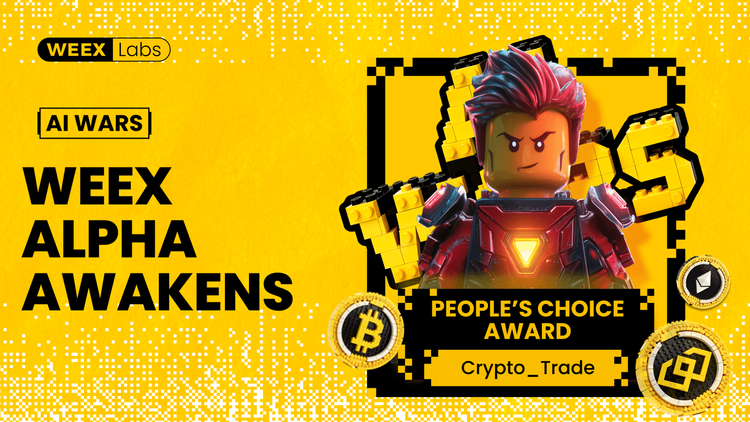
How a Structured AI Crypto Trading Bot Won at the WEEX Hackathon
Crypto_Trade shows how structured inputs and controlled adaptability can build a more stable and reliable AI crypto trading bot within the WEEX AI Trading Hackathon, highlighting a practical path toward scalable AI trading systems.


 App
App