
- Buy Crypto
- Markets
 Futures
- Spot
- Copy Trade
- Earn
- More
OpenAI May Integrate Iris Recognition: WLD Surges 20% in One Day, Receives Major Endorsement?

Original Title: "WLD Skyrockets 20%, Iris Scanning to be OpenAI's Trust Savior?"
Original Author: Mach, Foresight News
On January 29, World token WLD soared over 18% in the past 24 hours, jumping from around $0.46 to near $0.65, with a current market cap of around $25 billion. The price surge was directly attributed to a Forbes report: OpenAI is developing a new social networking app considering using iris scanning technology similar to World's to verify user identities, aiming to address the issue of online bot proliferation.
According to The Information, Nvidia, Amazon, and Microsoft are in talks to invest up to $60 billion in OpenAI. This new round of funding could value OpenAI at $730 billion.
Rampant Bot Fakery Sparks Need for Human-Verified OpenAI
OpenAI hopes to achieve "proof of personhood" through biometric means to filter out AI-generated fake accounts. The rapid advancement of AI is creating challenges that it cannot solve on its own, and World is stepping in to fill that void. Sam Altman's dual role is a key link. He is not only the head of OpenAI but also a co-founder of World.
Altman foresaw as early as 2020 that AI would blur the line between humans and machines, leading to a collapse of online trust. OpenAI's AI models like the GPT series have infiltrated social media, recruiting, financial fields, but the accompanying wave of misuse includes fake accounts spreading false information, AI agents manipulating markets, and even fabricating resumes on recruiting platforms.
OpenAI needs a reliable "personality filter" to maintain the purity of its ecosystem; otherwise, its products will face regulatory pressure and user attrition.
OpenAI's social app is said to aim to create a "bot-free" online space, but traditional CAPTCHAs or phone verifications have failed - AI can easily bypass them. World's Orb provides zero-knowledge proof through iris scanning, allowing users to prove they are human without revealing personal information. This technology has been implemented in the World App, covering 15 million users and expanding into the payment and gaming sectors. If OpenAI integrates a similar system, it could significantly enhance the competitiveness of its applications.
For example, embedding World ID verification in the ChatGPT interface allows users to securely engage in encrypted payments or identity authentication, avoiding AI-generated fake interactions. This can also open up new revenue streams for OpenAI: charging verification fees or sharing data infrastructure with World.
Integrating with Tokenomics to Benefit Everyone from AI Prosperity
Altman has publicly stated that AGI (Artificial General Intelligence) will reshape the global economy, but only if wealth distribution is ensured to be fair. World's design intent is to distribute "Universal Basic Income" (UBI) through WLD, allowing everyone to benefit from AI prosperity.
OpenAI can embed World's tokenomics into its platform to drive user adoption. For instance, social networking users who undergo iris verification can earn WLD rewards for AI service subscriptions. This creates a commercial loop: OpenAI provides AI tools, World handles identity and payments, jointly combating the monopolization of centralized platforms.
On the regulatory front, collaboration between World and OpenAI can also mitigate risks. World has already faced privacy inquiries in Europe and Asia (such as bans in Spain and Kenya), but with OpenAI's collaboration, it can leverage the latter's influence in Washington to advocate for policy loosening. Altman has lobbied the White House to discuss digital identity standards, paving the way for cooperation.
Currently, OpenAI has not disclosed specific details, but insiders have revealed that the application may integrate biometric hardware to ensure that every user on the platform is a real human.
Of course, there are also critics who point out that iris scanning poses privacy risks, especially in the AI era where data could be misused. OpenAI itself is under antitrust scrutiny, and its union with World may attract more regulatory scrutiny. However, from a business perspective, this move benefits OpenAI: it can benefit from World's blockchain infrastructure while injecting utility value into WLD, driving tokens from speculation to practical applications.

By 2025, World is pushing the protocol from a controversial project to mainstream adoption. In May, World officially launched in the United States. In early October, the World Chain mainnet went live, designed as a blockchain optimized for human activities, prioritizing verified user transactions. On October 21, World partnered with Mythical Games to integrate Orb technology into the game economy, allowing users to participate in the on-chain economy through iris verification and prevent reward farming by bots.
In addition, World has partnered with platforms such as Razer and Tinder to embed World ID into hardware and dating apps, allowing users to verify their identity to prevent fraud.
Next-Gen ID Authentication 4.0
In January 2026, World released the product and technical specifications for the next generation identity authentication protocol.
At its core is the OPRF node (Oblivious Pseudorandom Function), which generates a "pseudonym" for users when they log into different apps, making their identity more difficult to trace.
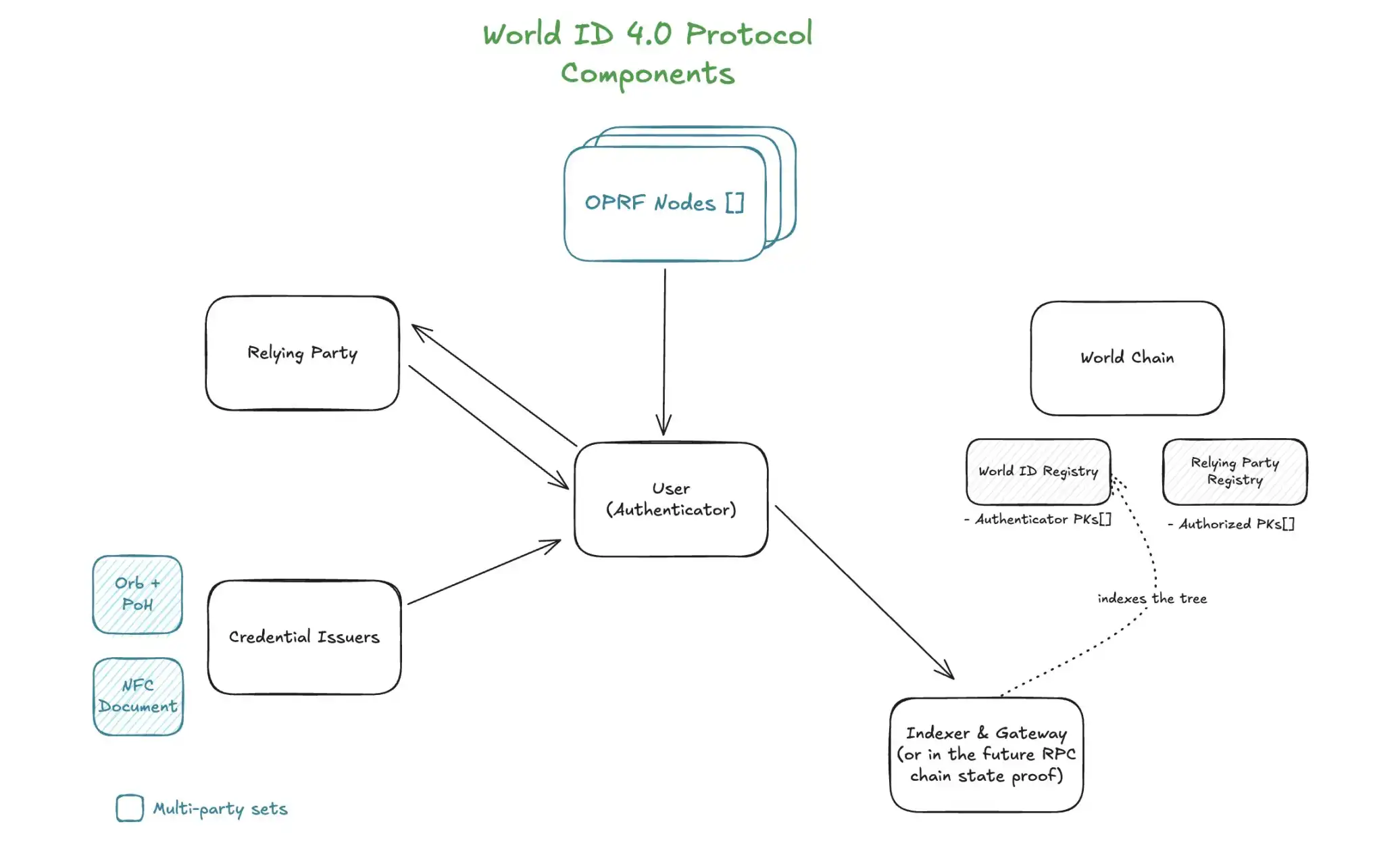
Compared to version 3.0, the new 4.0 version is a true "cloud-based identity account":
· Loss-proof: Supports multi-device login, so if you lose your phone, you can recover.
· More private: Introduces multiple nodes (OPRF), making it harder to trace your behavioral path than reaching the sky.
· More flexible: In a no-phone-scanning area, you can still get in with a passport swipe.
In the future, if the collaboration with OpenAI materializes, World may transition from an edge project to a core AI infrastructure.
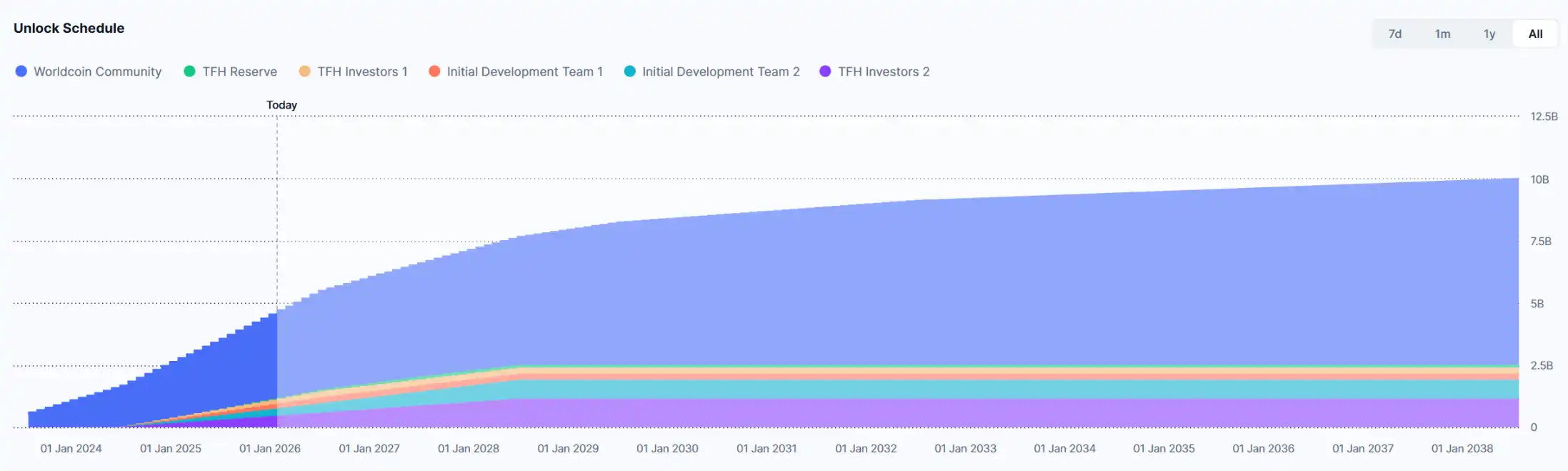
However, due to the sluggish overall market, lack of token demand, and unlocking sell pressure, the WLD price is currently about 20 times lower than its historical high, so investors should pay attention to risk control.
You may also like

Morning News | NYSE parent company invests in OKX; Morgan Stanley provides $500 million loan to Core Scientific; Western Union partners with Crossmint to launch stablecoin USDPT

These former crypto builders have transitioned to the hottest AI projects globally

Ethereum Overhaul 2026 Blueprint, this time to abandon "gradualism"
What Is OpenClaw? How AI Agents Could Change Crypto Exchange Trading
OpenClaw is a rapidly growing open-source AI agent that can autonomously execute tasks and interact with software, including connecting to crypto exchanges through APIs to analyze markets and automate trading strategies. While this creates new opportunities for smarter trading, it also introduces security and operational risks. Through this article, WEEX aims to help users better understand the potential and risks of AI trading agents so they can explore new technologies while trading more safely and responsibly.
Ethereum 2029 Strawmap Guide: Ultra-Fast Consensus, Native Privacy, and the "Acceleration Variables" Brought by AI

Altcoin ETF Surge: SOL and XRP Inflows Total $23 Million as Institutions Diversify
Key Takeaways Institutional interest in altcoin ETFs is expanding, with SOL and XRP showing significant inflows on March…
Vitalik Drops Ethereum Endgame Bombshell: ETH USD to $3,000?
Key Takeaways Vitalik Buterin introduces the “Sanctuary Tech” manifesto to address Ethereum’s non-financial limitations. A current lack of…
Exclusive: Yuliya Barabash Predicts the Most Regulated Could Be the Biggest Crypto Winners
Key Takeaways The aftermath of FTX and Celsius collapses has ushered a new regulatory era, reshaping the crypto…

iPhone Crypto Wallets Under Threat from State-Grade Malware
Key Takeaways: The Coruna exploit kit exploits 23 iOS vulnerabilities, threatening iPhone users’ crypto wallets. Initially state-level surveillance,…

Bitcoin Nears Two-Year ‘Make-or-Break’ Resistance: Future Implications
Key Takeaways Bitcoin’s price is approaching key resistance levels around $73,000, observed for the first time since early…
Bitcoin Price Prediction: Analyst Says $220,000 BTC Is Coming — But Only After This Happens
Key Takeaways: Bitcoin may experience a significant drop before the next major rally begins, potentially revisiting the $50,000…

Solana Price Outlook: All Eyes Focused on $95 — Could This Trigger New SOL Highs?
Key Takeaways Solana’s price is approaching a pivotal $95 mark, which may indicate potential support or resistance for…

Advanced AI Predicts Future Prices for XRP, Solana, and Cardano by 2026
Key Takeaways: Claude AI predicts significant price increases for XRP, Solana, and Cardano by the end of 2026.…

Bitcoin Price Prediction: Fed Rate Cut Hints Propel Bitcoin Beyond $72K — Is a Mega Rally Starting?
Key Takeaways Bitcoin surged past the $72,000 mark, ignited by potential Federal Reserve interest rate cuts. The rally…

XRP Price Prediction: Ripple Just Turned to AI to Protect the XRP Ledger — Is This a Security Game-Changer?
Key Takeaways: Ripple is leveraging AI to enhance the security of the XRP Ledger after identifying vulnerabilities. AI…

Institutional Accumulation: US Bitcoin ETFs and MicroStrategy Drive $1.2B in Demand Surge
Key Takeaways: Institutional investments in Bitcoin have surged with US Bitcoin ETFs and MicroStrategy leading the charge, absorbing…

South Korea Tax Service Leaks Seed Phrases, Loses $4.8 Million in Seized Crypto
Key Takeaways The National Tax Service of South Korea inadvertently leaked private keys in a press release, resulting…
Current Crypto Predictions: XRP, Bitcoin, and Ethereum on the Rise
Key Takeaways Despite geopolitical tensions, Bitcoin hits a remarkable $71,500, reflecting market adaptability. Passage of the U.S. CLARITY…
Morning News | NYSE parent company invests in OKX; Morgan Stanley provides $500 million loan to Core Scientific; Western Union partners with Crossmint to launch stablecoin USDPT
These former crypto builders have transitioned to the hottest AI projects globally
Ethereum Overhaul 2026 Blueprint, this time to abandon "gradualism"
What Is OpenClaw? How AI Agents Could Change Crypto Exchange Trading
OpenClaw is a rapidly growing open-source AI agent that can autonomously execute tasks and interact with software, including connecting to crypto exchanges through APIs to analyze markets and automate trading strategies. While this creates new opportunities for smarter trading, it also introduces security and operational risks. Through this article, WEEX aims to help users better understand the potential and risks of AI trading agents so they can explore new technologies while trading more safely and responsibly.
Ethereum 2029 Strawmap Guide: Ultra-Fast Consensus, Native Privacy, and the "Acceleration Variables" Brought by AI
Altcoin ETF Surge: SOL and XRP Inflows Total $23 Million as Institutions Diversify
Key Takeaways Institutional interest in altcoin ETFs is expanding, with SOL and XRP showing significant inflows on March…


 App
App