
Pacifica Transaction Tutorial: Weekly 10 Million Point Reward, How Beginners Can Seize Early Bird Bonus

The rise of Perp DEX is unstoppable. Following Hyperliquid's lead in seizing the market, a group of emerging decentralized exchanges have also begun to make their mark. This year, Aster, backed by CZ and Yzi Labs, went live and started a trading competition, with its trading volume surpassing Hyperliquid at one point. Equally noteworthy is Pacifica, founded in January by three founders including former FTX COO Constance Wang—the project has made rapid progress, launching its testnet in just two months and officially mainnet on June 10th.
Currently, Pacifica has 30,000 active users, with a seven-day trading volume reaching as high as 59 billion USD. While Pacifica has developed rapidly, there is still significant room for growth in trading volume compared to current leaders like Lighter and Hyperliquid. Furthermore, since October 30th, the platform's standard points issuance has increased twentyfold, with the current total supply of points exceeding 135 million. For Pacifica, which has not yet issued coins, the attractiveness of the points activity to users is self-evident.
This article has compiled a registration and trading tutorial for Pacifica. The points activity was launched less than six months ago and is still in its early stages. If you also wish to participate in this points feast, please continue reading below.
1. Open the Pacifica website and complete registration and wallet linking
Pacifica Website: https://app.pacifica.fi/ 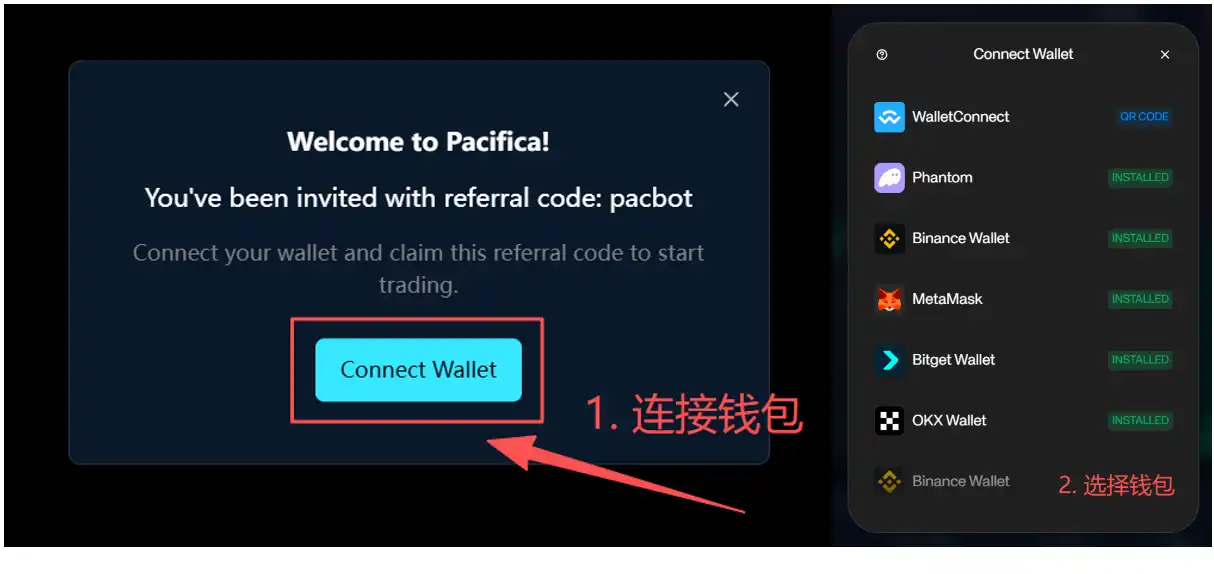
After linking your wallet, there will be 2-3 confirmations, follow the prompts to confirm.
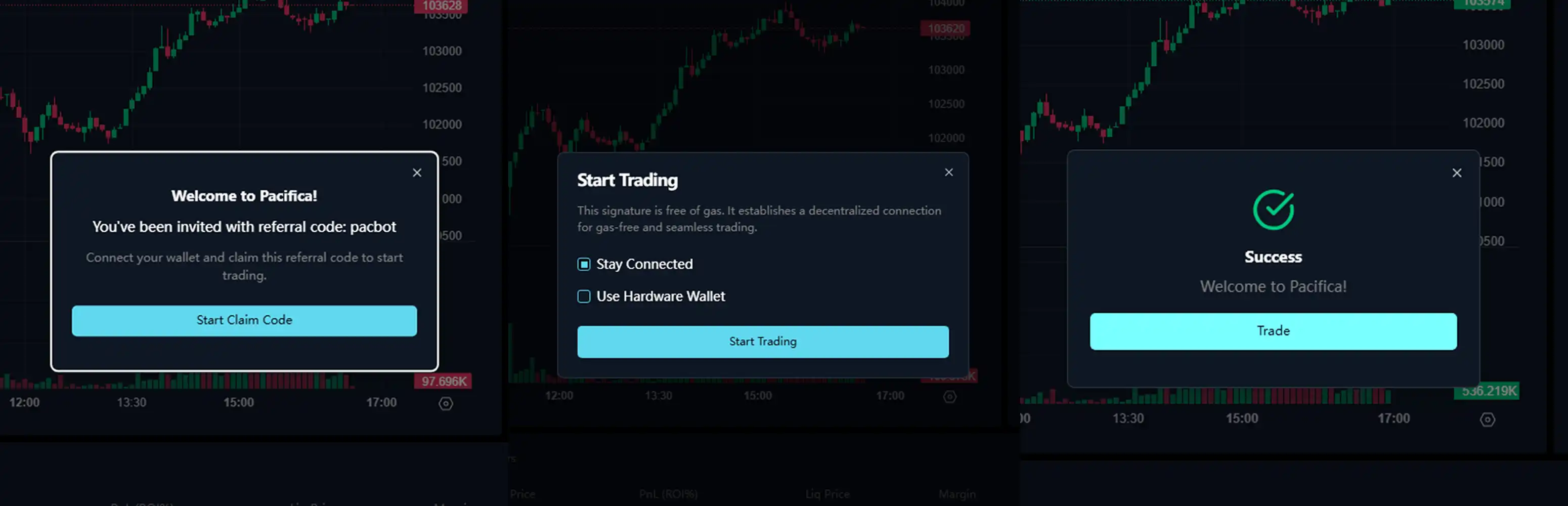
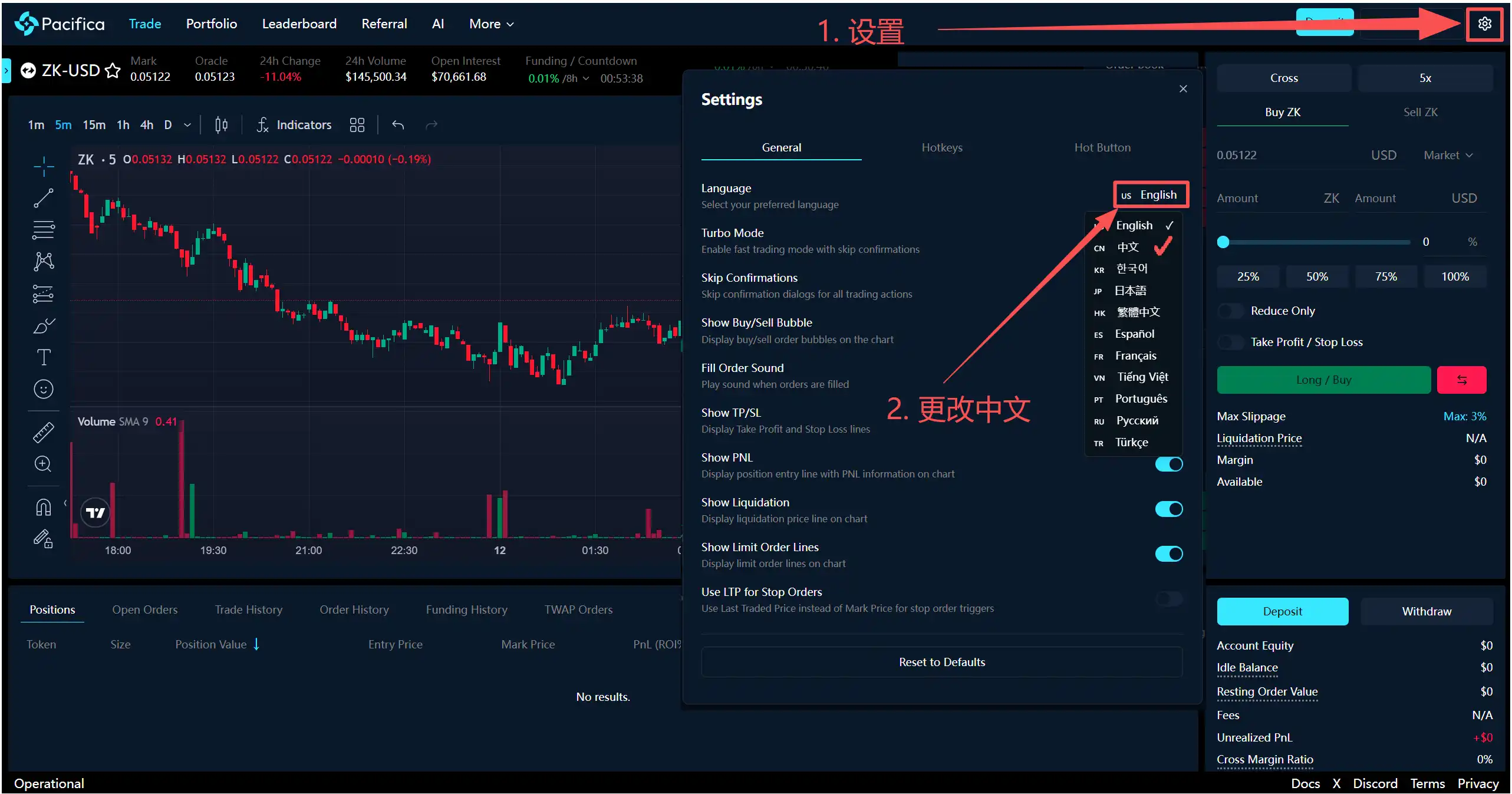
2. Set Language
The website currently supports multiple languages. If you are a Chinese user, click on "Chinese" or "Traditional Chinese"
If you prefer an English page, you can skip this step.
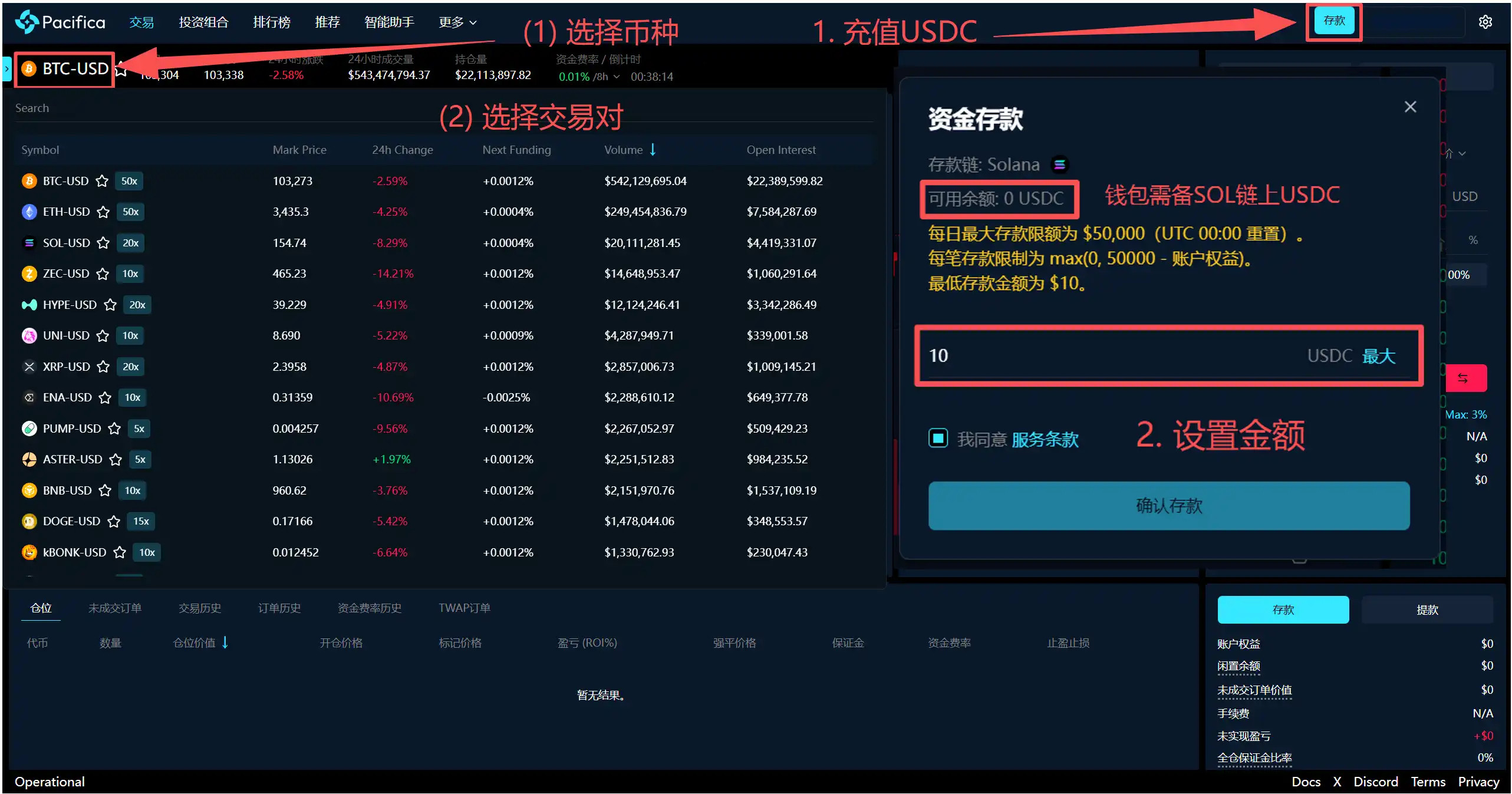
3. Deposit USDC and Select the Currency for Trading
Pacifica is built on Solana, so when depositing funds, you need to choose Solana's USDC on-chain and double-check the wallet address for on-chain transfers.
4. Initiate Your First Trade (Using BTC as an Example)
After completing the deposit, you can choose the cryptocurrency you want to trade in the top left corner. Currently, Pacifica supports most mainstream tokens and is continuously listing new tokens.
Based on the example in the image:
- Set the leverage multiplier (beginners are advised to use low leverage, avoid high leverage)
- Trading direction: Long/Short
- Opening amount/Market order
- Quantity of the trading asset
- Click "Confirm" to place the order
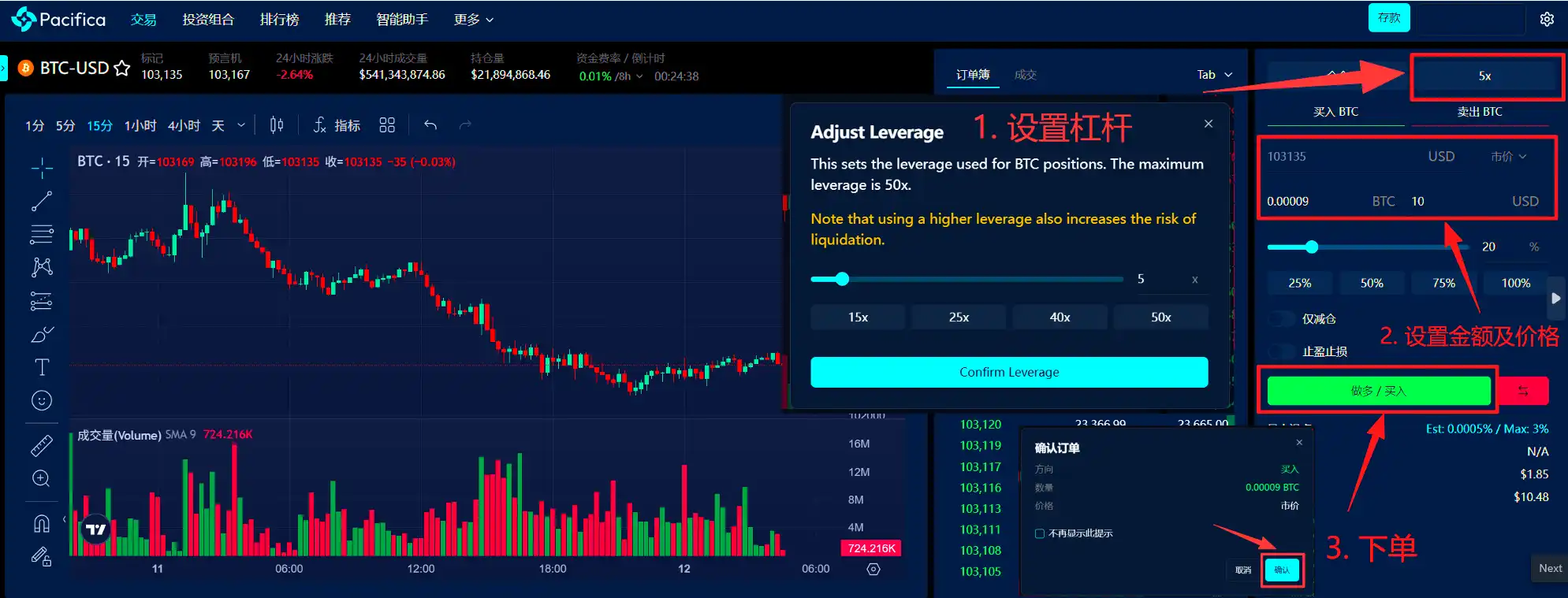
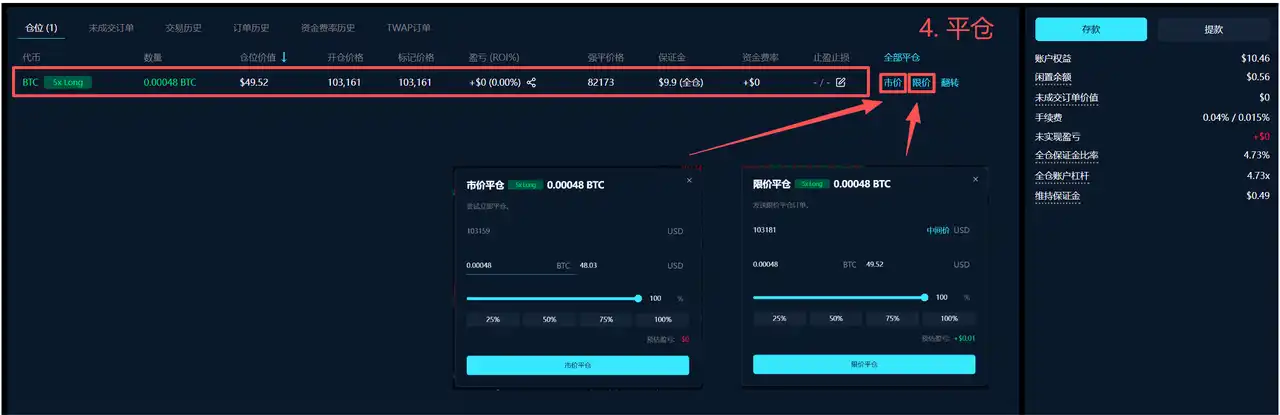
5. After placing an order, if you want to close the position or set a limit order to close, please refer to the following steps.
Finally, a reminder to everyone, this tutorial is designed to earn points through multiple means, contract trading can be addictive, so resist FOMO.
Pacifica's points program will launch on September 4, 2025, with a weekly snapshot every Thursday at 00:00 UTC. Distribution will be completed within 24 hours and will be allocated to eligible active users. The specific distribution formula is not yet public, mostly based on the total platform trading volume. Currently, 10,000,000 points are distributed weekly to trading users (previously 500,000 points, increased 20 times on October 30), distributed based on the total number of users and trading volume for the week, making point acquisition dynamic.
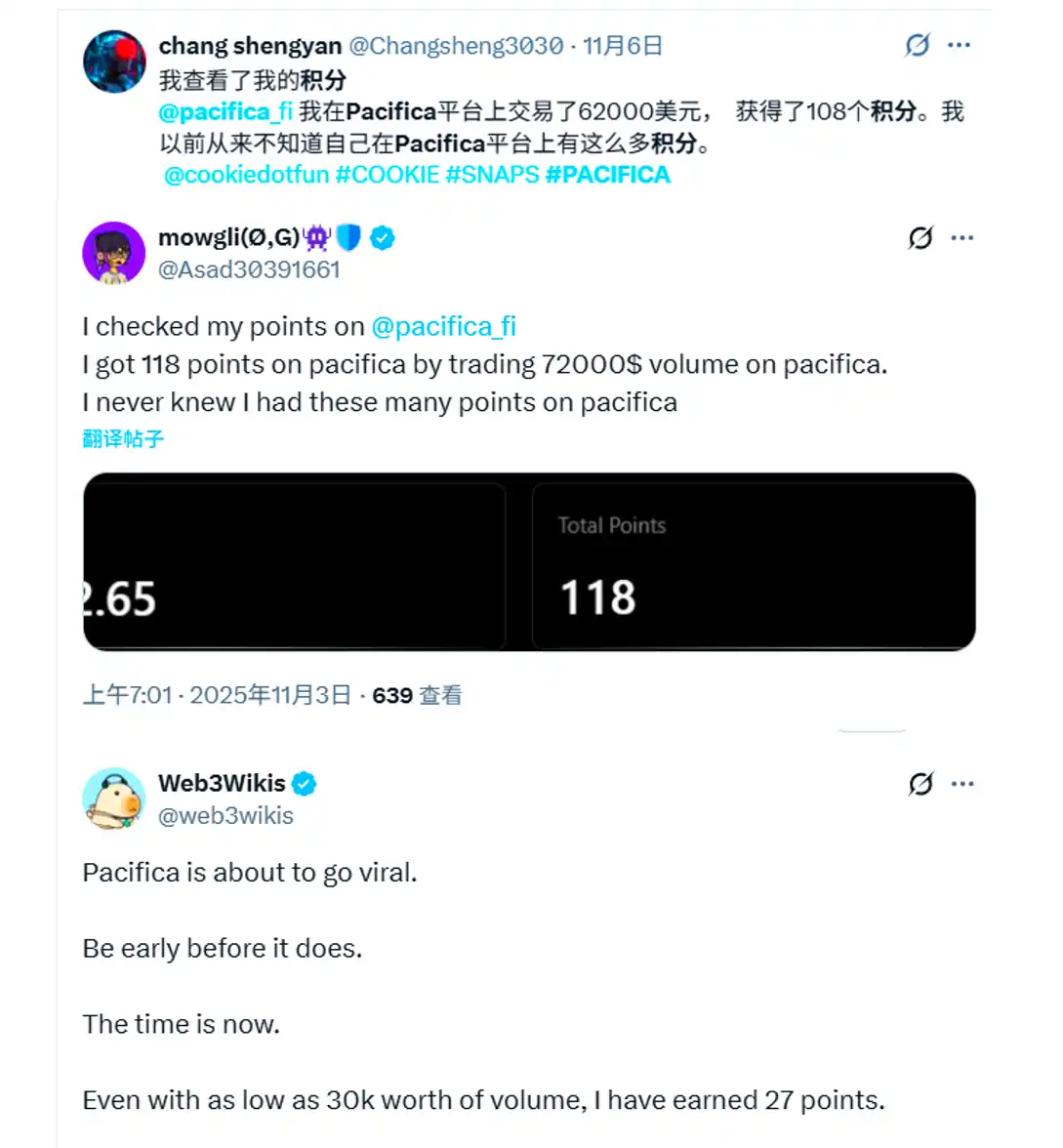
Based on data feedback from multiple traders online from November to the present month, an average trading volume of approximately $600 to $1000 can earn 1 point. Similarly, to reduce wear and tear, in terms of trading pairs, you can choose some low-volatility coins with low funding rates.
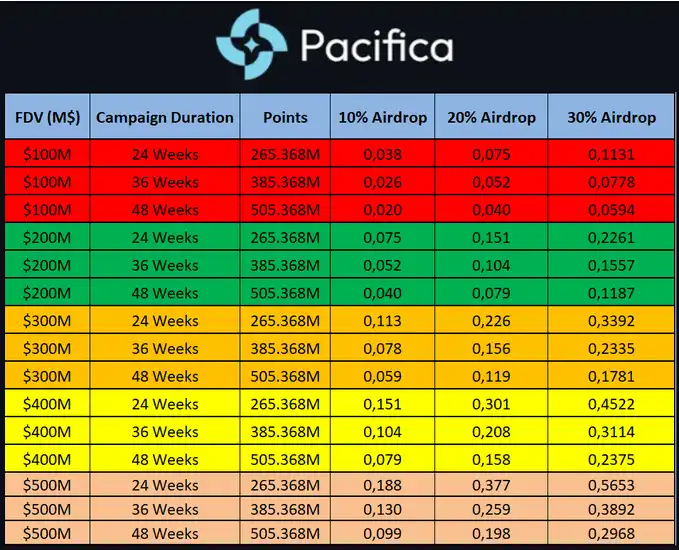
It is important to note that associating Pacifica points with token value is still a community speculation based on industry experience, and no official rules have been provided. However, based on the usual practices of past projects and community speculations, the community generally associates points with tokens. Under this speculative premise, the community has derived a widely circulated valuation logic, with the core formula being: Individual point price = (Fully Diluted Valuation FDV of the project × Token Airdrop Ratio) / Total Points Issued in the Point Program.
Application of this formula relies on several core variables: firstly, an estimate of the project's FDV; secondly, an assumption about the airdrop's proportion of total supply; and thirdly, the most variable factor—an estimate of the total period for point issuance (usually assumed to be 24, 36, or 48 months). The table below will show different scenarios of point price estimation based on these variables for reference:
You may also like

$75 billion in risk asset redistribution: How will SpaceX's IPO affect U.S. stocks and Bitcoin?

How TradeXYZ, xStocks, and Alpaca break down the SpaceX IPO into three different strategies

Why Is BlackRock Investing $5 Billion in the SpaceX IPO?

Cryptocurrency market makers collectively seek change as it becomes increasingly difficult to make money

a16z Crypto Partner: Cash flow is the moat

Citibank releases "2030 Asset Tokenization Market Outlook": 6 major trends may create a $8.2 trillion market

The trillion-dollar valuation test: Are the three major super IPOs a celebration for tech stocks or a nightmare for the crypto market?

Morning Report | Digital Asset completes $355 million financing led by a16z Crypto; Meta completes operational separation from Manus
Morning News | CME Group launches Nasdaq Cryptocurrency Index futures; Asset management giant Janus Henderson strategically invests in Ethena

Bitcoin Layer 2 Network Botanix: Why Did We Choose to Dissolve?

Why did Oracle deliver the strongest financial report in history, yet its stock price fell?
When the P2P illicit funds from ten years ago turned into 60,000 bitcoins

Dialogue with OmenX Founder: Why does the prediction market need an evolution from "spot" to "derivatives"?
Galaxy in-depth report: Is Solana still worth paying attention to?

Young people in South Korea make a "final effort" in the epic bull market
The pricing controversy of Trade.xyz exposes the fatal weakness of Pre-IPO perpetual contracts
How much longer can Ethereum's last big buyer hold on?
World Cup 2026 Coming – WEEX Celebrates with $1M Prize Pool & Michael Owen Live
$75 billion in risk asset redistribution: How will SpaceX's IPO affect U.S. stocks and Bitcoin?
How TradeXYZ, xStocks, and Alpaca break down the SpaceX IPO into three different strategies
Why Is BlackRock Investing $5 Billion in the SpaceX IPO?
Cryptocurrency market makers collectively seek change as it becomes increasingly difficult to make money
a16z Crypto Partner: Cash flow is the moat
Citibank releases "2030 Asset Tokenization Market Outlook": 6 major trends may create a $8.2 trillion market


