
Short the Prediction Market


I am not a gambler, nor do I understand the thrill of staring at a candlestick chart with an accelerated heartbeat. But when CNN and CNBC each announced integrating the digital odds of prediction markets into their live newsrooms, I felt like we were being toyed with by a new kind of "truth."
The Crypto bro preaches: traditional polls will be replaced, experts are the high priests of the old age, and only odds backed by real money can reflect the wisdom of the crowd and the reality of truth. However, the trading logic nurtured by prediction markets is in line with Keynes' "beauty contest," where you no longer care about who is the most beautiful; you only care about "who others think is the most beautiful." The concept of beauty itself has been "erased," just like Duchamp's urinal in the art museum. The prediction market will continue to accelerate, derail until more and more awakened individuals start to "short" this frenzy, "short" the narrative of the prediction market itself.

Exchanges and casinos are two distinct worlds. Farmers worry about a drop in food prices, downstream food processing plants worry about price increases, so they come to the derivatives market to find those willing to take on risk. Due to different demands, trading flows.
However, in the context of the prediction market, this natural counterparty does not exist. This leads to a market where, apart from market makers, there are only smart money with insider information and destined-to-be-harvested gamblers: if a counterparty with an informational advantage is willing to trade with you at this price, then this trade is likely to be a loss for you. Once the "dumb money" is exhausted, liquidity will quickly dry up. As insider traders are allowed to exist in large numbers, a prediction market without a continuous blood supply from gamblers is an unsustainable new Ponzi scheme.
In a natural system, the value of a thermometer will not change the temperature; no matter how we bet, Halley's Comet will still return on time. But in a social system, probability itself has the power to "distort reality stance," and the observer's greed can change the observed reality.
Ethereum can ensure the "economic security" of a blockchain network through a slashing mechanism, but a prediction market cannot guarantee "social security." On the contrary, it even rewards disruption.
If a billionaire bets heavily on an extreme event, he is actually providing financial support for that outcome and using the market's probability signal to sow panic or consensus. Huge funds can form a massive potential energy, coercively entwine media coverage to affect public confidence, forcibly collapsing an uncertain outcome into what the bettors desire.
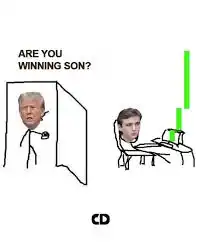
Kaito, who wanted to be a center for information distribution, eventually became a broadcasting station that only outputs noise. The prediction markets pride themselves on being a telescope to foresee the future but cannot prevent themselves from becoming billboards for creating the future.
Many people believe that with regulatory relaxation and an influx of capital, the prediction market is bound to be the next big thing. But things always tend to go too far.
People are gradually realizing that we are at the peak of a "gambling culture" cycle.
Absolute financialization will only bring emptiness. People will eventually tire of this high-frequency dopamine stimulation, returning to the experience of life. We start to turn off screens, go hiking, touch real soil, read paper books, and build deep relationships beyond the screen.

“Shorting” the prediction market is not only betting on “human subjectivity” but also on betting on “life”.
Since we can't go back to the past, perhaps the only way out is to stop wasting time on the virtual gambling table and turn around to walk into the sunlight.
You may also like

Galaxy in-depth report: Is Solana still worth paying attention to?

Young people in South Korea make a "final effort" in the epic bull market

Dialogue with OmenX Founder: Why does the prediction market need an evolution from "spot" to "derivatives"?
When the P2P illicit funds from ten years ago turned into 60,000 bitcoins

Morning News | CME Group launches Nasdaq Cryptocurrency Index futures; Asset management giant Janus Henderson strategically invests in Ethena

Why did Oracle deliver the strongest financial report in history, yet its stock price fell?

Bitcoin Layer 2 Network Botanix: Why Did We Choose to Dissolve?

Morning Report | OpenAI has submitted an S-1 registration statement draft to the U.S. SEC; Morpho completes $175 million financing

Galaxy Deep Research Report: How Hyperliquid's HIP-4 Upgrade Changes the Landscape of Prediction Markets?

Latest research from 13 top universities including Cornell University: The current state, challenges, and misconceptions of the fusion of Crypto and AI
Deconstructing Anthropic: The Best AI Company, Possibly Also a Type of Organizational Invention

Every exchange is a "Universal Exchange."

The counterattack of traditional finance: Alliance chains are quietly reviving
Pantera Capital Partner: How Tokenization is Restructuring the Private Equity and Early Investment Ecosystem?

Mastercard Launches Agent Pay for AI, Plans to Record AI Agent Payment Authorizations on Polygon
Mastercard launched Agent Pay for AI, a new payment protocol designed to help AI agents make small payments such as pay-per-use access to data and APIs. The system plans to record human-granted AI agent permissions on Polygon, focusing on verifiable authorization, identity, and payment controls.

Curve Deploys Llamalend v2 on Optimism With 250,000 OP Incentives
Curve launched Llamalend v2 on Optimism with 250,000 OP incentives from the Optimism Foundation. The upgrade expands Llamalend beyond its earlier crvUSD-focused model, adding broader collateral support, LlamaRisk market reviews, and the ability to use Curve LP tokens as collateral.

Raydium Old Liquidity Pool Reportedly Exploited, With $1.34 Million Moved to Ethereum and Tornado Cash
An old Raydium liquidity pool was reportedly exploited for around $1.34 million in USDC, RAY, and wSOL, with the stolen funds bridged to Ethereum and deposited into Tornado Cash. The incident highlights the tail risks of legacy DeFi pools, old contracts, and cross-chain fund laundering paths.
Kalshi Executive Challenges “SBF Backed AI Unicorns” Narrative, Says Leopold Aschenbrenner Was Key Figure
Kalshi executive John Wang questioned the “SBF backed AI unicorns” narrative, saying Leopold Aschenbrenner was the key figure behind major AI investment decisions.
Galaxy in-depth report: Is Solana still worth paying attention to?
Young people in South Korea make a "final effort" in the epic bull market
Dialogue with OmenX Founder: Why does the prediction market need an evolution from "spot" to "derivatives"?
When the P2P illicit funds from ten years ago turned into 60,000 bitcoins
Morning News | CME Group launches Nasdaq Cryptocurrency Index futures; Asset management giant Janus Henderson strategically invests in Ethena
Why did Oracle deliver the strongest financial report in history, yet its stock price fell?


