
- Buy Crypto
- Markets
 Futures
- Spot
- Copy Trade
- Earn
- More
The CLARITY Act Stalling is a Boon for the Crypto Industry

Key Takeaways
- The delay in passing the CLARITY Act is seen as beneficial for the crypto market.
- Coinbase’s withdrawal of support for the bill highlights significant industry concerns.
- The current version of the bill threatens aspects of decentralized finance and tokenized stocks.
- Ongoing negotiations are aimed at creating a more favorable regulatory framework.
- The case is compared to Europe’s MiCA, which underwent extensive negotiation before finalization.
WEEX Crypto News, 2026-01-20 15:40:08
The recent pause in advancing the CLARITY cryptocurrency market structure bill through the United States Congress has sparked discussions across the crypto industry. According to market analyst Michaël van de Poppe, this apparent stalling might actually be a positive step for the market. This is particularly true as overregulation poses a risk that could have disruptive effects on decentralized finance, commonly known as DeFi.
The CLARITY bill, designed to provide a robust framework for regulating the cryptocurrency market, includes several provisions that have raised alarm among industry leaders. Its inability to progress has offered a glimmer of hope to those wary of governmental overreach. Van De Poppe refers to the act’s current form as potentially damaging to the overall market landscape, echoing concerns that resonate throughout the industry.
Coinbase, a major player in the cryptocurrency exchange sphere, has publicly withdrawn its support from the CLARITY bill, amplifying concerns surrounding the legislative measures. CEO Brian Armstrong has specifically pointed out several problematic aspects within the bill. Among these are a “de facto ban” on tokenized stocks and worrisome provisions that would grant the government extensive access to user data maintained on DeFi platforms. Furthermore, the bill proposes restrictions on yield-bearing stablecoins, which are integral to many DeFi operations offering higher returns to users.
The Impact of Overregulation
The crypto landscape is vibrant and dynamic, comprising numerous components like traditional cryptocurrencies, blockchain technologies, and DeFi platforms. The latter, in particular, has revolutionized how financial transactions and lending occur by eliminating intermediaries. If legislative actions, such as those proposed in the CLARITY Act, lean toward excessive regulation, the space could find itself fettered by restrictive measures that inhibit innovation and growth.
It is crucial to recognize that decentralized finance thrives on the autonomy of users being able to execute transactions without oversight, which contrasts sharply with the traditional financial models. The imposition of stringent regulatory controls could reverse the strides made in financial democratization, impacting everything from user privacy to transaction efficiency.
The European MiCA Parallel
Michaël van de Poppe likens the CLARITY debate to the case of the Markets in Crypto Assets (MiCA) regulatory framework in Europe. MiCA’s passage was not straightforward; it underwent several rounds of debate and modification to strike a balance between regulation and innovation. Much like the CLARITY Act, MiCA initially caused unease among stakeholders in the European crypto space, but the iterative negotiation process eventually led to regulations that were better aligned with the market’s needs.
In both instances, the overarching goal is to cultivate an environment where on-chain finance can thrive within a protective legal framework. This involves meticulous negotiation processes to ensure that regulations are not only about compliance but also about offering pathways for growth and advancement in the digital finance sector.
A Broader Perspective: The Policy Objective
In the United States, securing a comprehensive regulatory structure for cryptocurrencies remains a major objective. Proponents of the CLARITY Act argue that clear regulations are necessary to establish guidelines that protect investors and facilitate the integration of digital finance within existing financial systems. However, the risks of hastily imposed regulations that do not account for the unique attributes of blockchain and cryptocurrencies could stall innovation.
Brian Armstrong, in addressing concerns about potential tensions between Coinbase and legislative bodies, indicates that the goal is to continue negotiations. The dialogue aims to result in a version of the CLARITY Act that appreciates the needs of the crypto industry, while simultaneously ensuring security and transparency for users and institutions.
Ongoing Dialogue and Industry Reactions
The White House’s involvement in the legislative process for the CLARITY Act suggests its significant implications. Eleanor Terrett, a noted independent crypto reporter, previously reported on potential White House withdrawal of support after Coinbase’s public dissent. In response, Armstrong clarified that such reports are misguided, assuring stakeholders that the process remains constructive. These assurances are crucial as they shape perceptions about future regulatory actions and highlight an ongoing commitment to achieving a balanced solution.
At the core of these discussions is the need to maintain the viability of yield-bearing stablecoins. This aspect, in particular, has garnered support from various industry proponents, like venture capitalist Nic Carter, who argue against measures that could hamper the future utility of these financial instruments. Stablecoins play a pivotal role by offering stability in a volatile market, bridging traditional finance and the decentralized economy.
Navigating the Path Forward
Critically, the stalling of the CLARITY Act reflects a moment of pause that allows for deeper evaluation of regulatory needs versus industry concerns. It serves as a testament to the complexities involved in regulating a rapidly evolving digital frontier. The path forward must involve a collaborative approach, one that respects the innovations DeFi has brought while safeguarding consumer interests.
This context also underscores the importance of frameworks that are adaptable and sensitive to technological advances. Just as the MiCA negotiations brought about significant adaptations, it is possible that the US will likewise navigate similar adjustments as it seeks to build a legislative environment that is both secure and conducive to innovation.
Conclusion
As the cryptocurrency industry inches toward achieving clear regulations, the discussions surrounding the CLARITY Act illustrate the nuances and tensions existing between innovation and regulation. The process reflects a broader struggle across global financial ecosystems to adapt traditional regulatory models to category-defining digital finance products. With concerted effort and continued dialogue, stakeholders can hopefully forge pathways that uphold transparency and security without stifling the transformative potential of cryptocurrencies and blockchain technology.
Frequently Asked Questions
What is the CLARITY Act?
The CLARITY Act is a proposed legislative framework in the United States aimed at establishing regulations for the cryptocurrency market. It seeks to provide clarity on digital finance operations but has faced criticism for proposals that could limit certain aspects of the industry.
Why has Coinbase withdrawn support from the CLARITY Act?
Coinbase, a major cryptocurrency exchange, withdrew its support due to concerns about the bill’s provisions, which include potential bans on tokenized stocks, government access to records on DeFi platforms, and prohibitions on yield-bearing stablecoins.
How does the CLARITY Act compare with Europe’s MiCA?
Similar to the CLARITY Act in the US, the Markets in Crypto Assets (MiCA) in Europe underwent extensive negotiation processes before becoming law. Both serve as regulatory frameworks intended to integrate digital finance within traditional structures while ensuring market safety.
What could be the impact of overregulation on DeFi?
Overregulation could inhibit innovation in DeFi by imposing stringent controls that counter the decentralized nature of these platforms. This could potentially reduce user privacy, limit financial innovation, and deter investment in blockchain technologies.
Are the negotiations for the CLARITY Act continuing?
Yes, despite initial tensions and public concerns, negotiations regarding the CLARITY Act continue. Stakeholders, including industry leaders and government entities, are working collaboratively to draft a version of the bill that supports both regulatory goals and market growth.
You may also like

Social Capital CEO: How Equity Tokenization is Reshaping Capital Markets from US Stocks to SpaceX?

CoinGecko Report: Surge of 346% vs Dip of 20.8%, The Wild Rise of DEX

a16z: The Real Opportunity of Stablecoins Lies Not in Disruption but in Filling Gaps

Mining Exodus: Someone Holds $12.8 Billion AI Order

March 6 Market Key Intelligence, How Much Did You Miss?

a16z: The True Opportunity of Stablecoins is in Complementing, Not Disrupting

Predict LALIGA Matches, Shoot Daily & Win BTC, USDT and WXT on WEEX
The WEEX × LALIGA campaign brought together football excitement and crypto participation through a dynamic interactive experience. During the event, users predicted matches, completed trading tasks, and took daily shots to compete for rewards including BTC, USDT, WXT, and exclusive prizes.

Ray Dalio Dialogue: Why I'm Betting on Gold and Not Bitcoin

Who Took the Money in the AI Era? A Must-See Investment Checklist for HALO Asset Trading
Wall Street Bears Target Ethereum: Vitalik In the Know Takes Flight, Tom Lee Remains Bullish
Pump.fun Hacker Steals $2 Million, Receives 6-Year Prison Sentence, Opts for 'Self-Detonation'

6% Annual Percentage Yield as Musk Declares War on Traditional Banks
36 years, 4 wars, 1 script: How does capital price the world in conflict?

Mining Companies' Great Migration: Some Have Already Secured $12.8 Billion in AI Orders
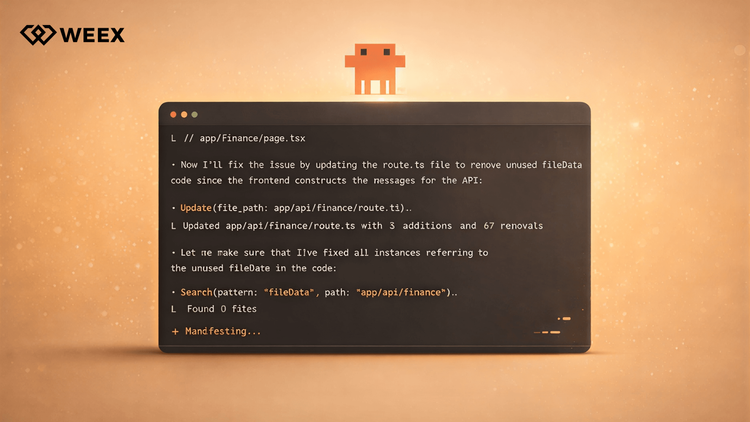
What Is Vibe Coding? How AI Is Changing Web3 & Crypto Development
What is vibe coding? Learn how AI coding tools are lowering the barrier to Web3 development and enabling anyone to build crypto applications.
The parent company of the New York Stock Exchange strategically invests in OKX: The intentions behind the $25 billion valuation

WEEX P2P update: Country/region restrictions for ad posting
To improve ad security and matching accuracy, WEEX P2P now allows advertisers to restrict who can trade with their ads based on country or region. Advertisers can select preferred counterparty locations for a safer, smoother trading experience.
I. Overview
When publishing P2P ads, advertisers can now set the following:
Allow only counterparties from selected countries or regions to trade with your ads.
With this feature, you can:
Target specific user groups more precisely.Reduce cross-region trading risks.Improve order matching quality.
II. Applicable scenarios
The following are some common scenarios:
Restrict payment methods: Limit orders to users in your country using supported local banks or wallets.Risk control: Avoid trading with users from high-risk regions.Operational strategy: Tailor ads to specific markets.
III. How to get started
On the ad posting page, find "Trading requirements":
Select "Trade with users from selected countries or regions only".Then select the countries or regions to add to the allowlist.Use the search box to quickly find a country or region.Once your settings are complete, submit the ad to apply the restrictions.
When an advertiser enables the "Country/Region Restriction" feature, users who do not meet the criteria will be blocked when placing an order and will see the following prompt:
If you encounter this issue when placing an order as a regular user, try the following solutions.
Choose another ad: Select ads that do not restrict your country/region, or ads that allow users from your location.Show local ads only: Prioritize ads available in the same country as your identity verification.
IV. Benefits
Compared with ads without country/region restrictions, this feature provides the following improvements.
Aspect
Improvement
Trading security
Reduces abnormal orders and fraud risk
Conversion efficiency
Matches ads with more relevant users
Order completion rate
Reduces failures caused by incompatible payment methods
V. FAQ
Q1: Why are some users not able to place orders on my ad?
A1: Their country or region may not be included in your allowlist.
Q2: Can I select multiple countries or regions when setting the restriction?
A2: Yes, multiple selections are supported.
Q3: Can I edit my published ads?
A3: Yes. You can edit your ad in the "My Ads" list. Changes will take effect immediately after saving.



 App
App