
The Fed Is Not Cutting Interest Rates Anymore? Quick Look at PPI, CPI Surging Above Expectations and Their Impact on the Crypto Market

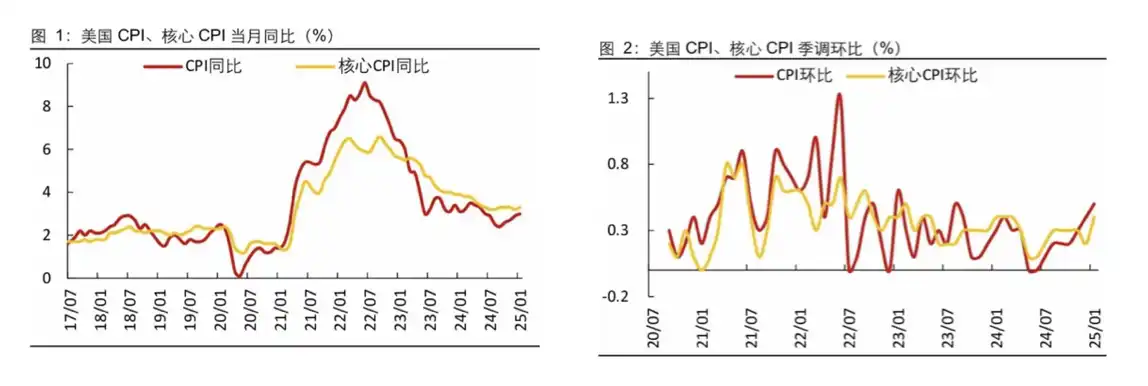
In January, wholesale prices in the United States rose, with food and energy costs increasing. According to the Producer Price Index (PPI) and Consumer Price Index (CPI) data for January 2025 released by the Bureau of Labor Statistics last week, the month-over-month PPI growth rate rose to 0.4%, lower than the revised previous value of 0.5%, but higher than the expected 0.3%. The year-over-year growth rate rose to 3.5%, exceeding the market expectation of 3.2%, marking the largest increase since February 2023. The core PPI rose by 0.3% month-over-month and 3.6% year-over-year; CPI increased by 3.0% year-over-year, up from the previous value of 2.9% and in line with market expectations of 2.9%. The core CPI rose by 3.3% year-over-year, up from the previous 3.2% and exceeding the market expectation of 3.1%.
Both CPI and PPI exceeded expectations, with a larger increase in food prices and a decrease in energy prices. CPI has rebounded for four consecutive months, indicating that the risk of inflation rebound remains strong. The second wave of inflation risks brought about by Trump's tariff hikes suggests that until inflationary pressures ease, a slowdown or reduction in interest rate cuts for the year is a high probability event.
How to Interpret Recent CPI and PPI Data?
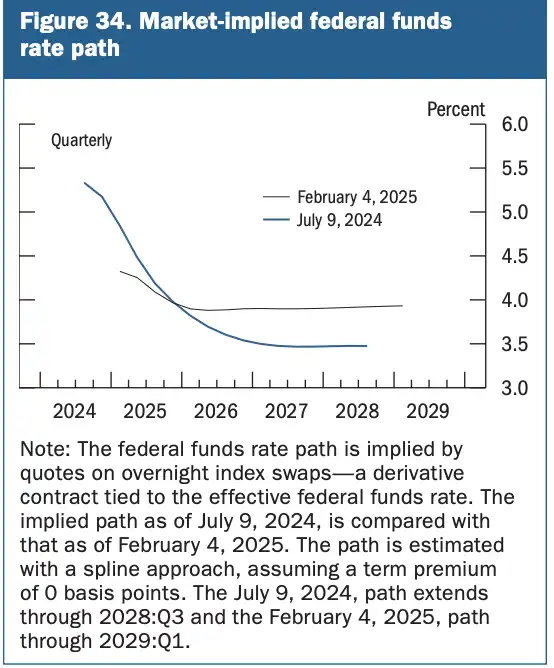
According to the monetary policy report submitted by Powell to Congress, the Federal Reserve's views on interest rates, inflation, employment, and the economy over the past year are detailed. The Fed mainly focuses on the PCE index and, when assessing inflation prospects, primarily considers: core goods, housing services, and core non-housing services. In a speech on February 11, Powell clearly outlined the Fed's rate adjustment pace, stating, "If the economy remains strong and inflation does not continue to fall back to 2%, the current policy constraints can be maintained for a longer period."
The high inflation data on February 12 has essentially laid the foundation for this. From an inflation perspective, a rate cut before mid-year is temporarily unnecessary. Based on detailed data, the decline in core goods has expanded, reducing inflationary pressures, with the stubborn point of inflation remaining in core non-housing services.
Wall Street traders have now shifted their expectations for the next rate cut to December this year. One point to note is that the January Los Angeles wildfires may impact market pricing on inflation. Currently, much of the market's concern about inflation rebound stems from four consecutive months of inflation increase. The CPI increase caused by the wildfires to some extent constitutes a systemic risk event. However, excluding the wildfire conditions may not necessarily lead to the conclusion of a four-month continuous rebound. Furthermore, from the perspective of the Trump administration's ongoing efforts to end the Russia-Ukraine war, a swift resolution to the conflict could lead to a decline in prices of construction materials, energy, and agricultural products, thereby reducing inflation. Future data is likely to slowly reverse pessimistic expectations, raising expectations for the number and intensity of rate cuts.
Transmission Mechanism of Inflation, Employment, and Interest Rate Reduction
Powell: "Our focus on whether to lower interest rates should continue to be on controlling inflation and promoting employment."
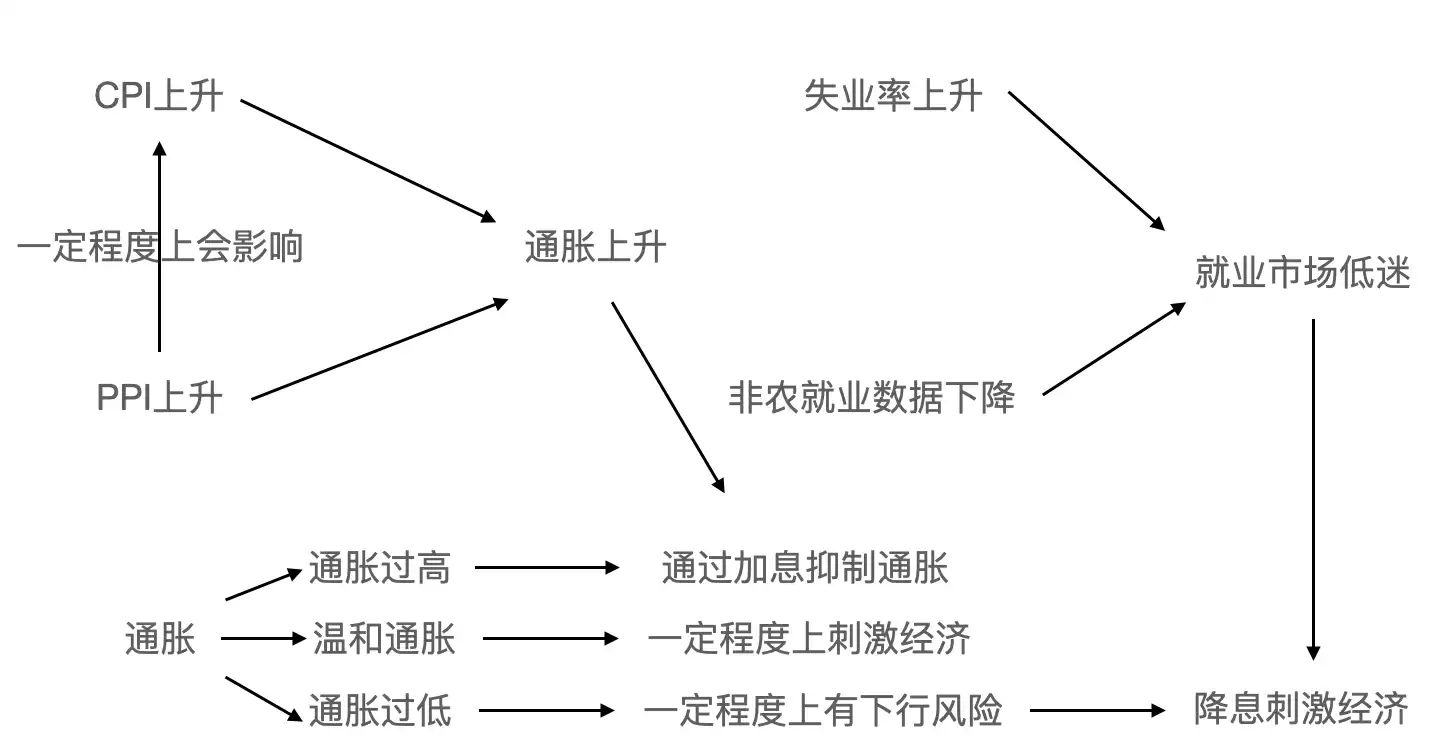
The Consumer Price Index (CPI) is a macroeconomic indicator that measures the level of price fluctuations of goods and services in residents' daily consumption. It reflects the degree of inflation or deflation by statistically calculating the changes in prices of a representative basket of goods and services. When the CPI continues to rise, it means that consumers need to pay more money for the same amount of goods and services, which is usually seen as a signal of inflation. On the other hand, the Producer Price Index (PPI) mainly measures the trend and extent of changes in industrial product prices. The changes in PPI affect CPI because changes in producer costs gradually transmit through the industry chain to the consumer end.
In general, moderate inflation has a certain stimulating effect on the economy. However, if inflation is too high, it can affect economic stability and residents' living standards. When the inflation rate is below the target level and is continually decreasing, it may indicate insufficient economic growth momentum. In this case, economic stimulation through interest rate reduction may be used to raise inflation expectations and bring inflation back to a reasonable range. However, if inflation is at a high level, central banks usually adopt contractionary monetary policies such as raising interest rates to suppress inflation.
Non-farm payroll data reflects changes in employment in industries other than the agricultural sector. An increase in this data indicates that businesses are expanding production or operations and need to hire more labor, implying a thriving job market and an overall positive employment situation. On the other hand, the unemployment rate refers to the ratio of the unemployed population to the labor force.
When the job market performs poorly, such as when the unemployment rate is high and non-farm payroll data continues to stagnate, economic growth may be hindered. In order to stimulate the economy and increase job opportunities, a monetary policy of interest rate reduction may be taken to lower a firm's financing costs, encourage business investment and production expansion, thereby creating more job positions.
Does BTC Have Other Price Surge Logics?
According to a report on February 13, the U.S. federal budget deficit expanded to a record $840 billion in the first 4 months of this fiscal year, and on February 14, Dalio also publicly stated that the U.S. must reduce the budget deficit from 7.5% of GDP to 3%, otherwise it will enter a debt death spiral. Currently, the United States is like a patient on the verge of a heart attack in need of urgent intervention.
At present, signs of a U.S. debt crisis have emerged. With a U.S. bond size exceeding $36 trillion, interest payments already account for 4% of annual GDP, 22% of annual fiscal revenue, and nearly a quarter of government revenue need to be used to pay interest. From this perspective, if the Fed continues to maintain high interest rates, the risk of a debt crisis explosion will increase. It is more likely that, ignoring the turbulence in the macro environment, abandoning short-term policy opportunities, and focusing on the main contradiction—the debt crisis—to implement interest rate cuts and liquidity injections.
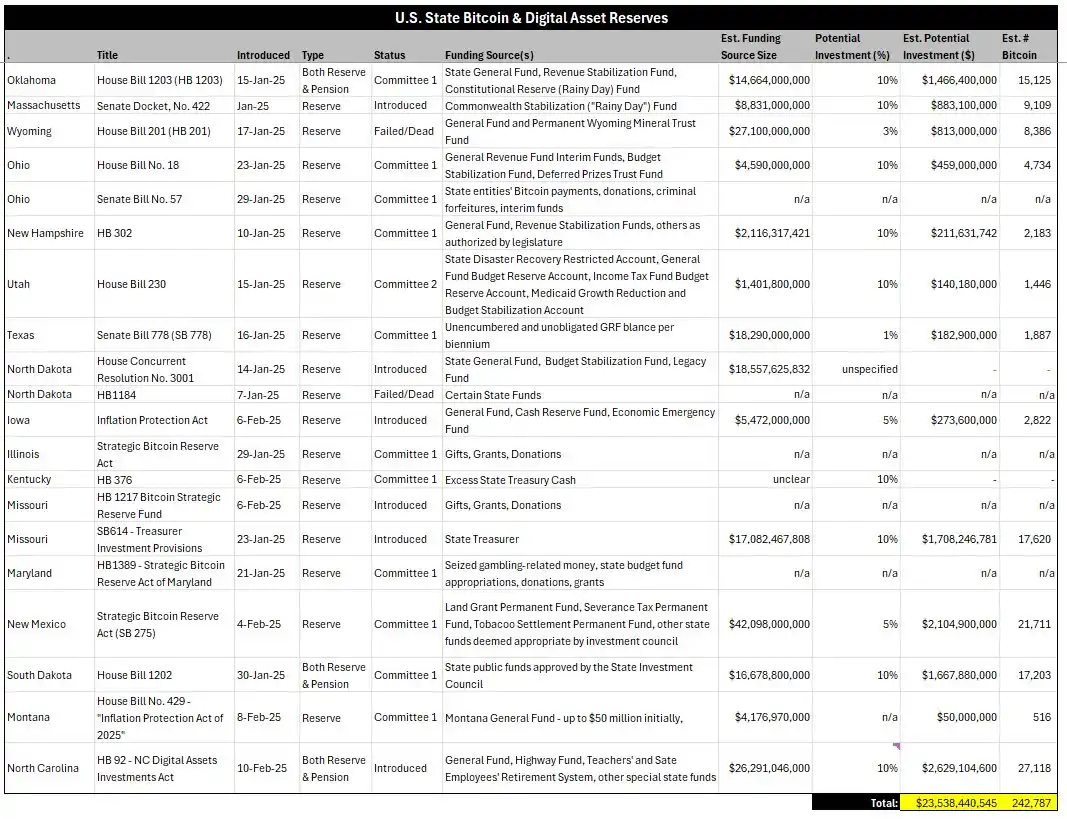
In addition to the macro interest rate cuts injecting liquidity into the risk markets, another very important narrative for the Crypto market is the inclusion of BTC in strategic reserves, not only at a national level but also at a state treasury level. This means that if this reserve is approved, state treasuries will directly purchase BTC, with a total purchasing power of 250,000 BTC, meaning that nearly 1% of BTC's liquidity will be locked up. The resulting sentiment boost and supply reduction effect may once again create a cycle of upward momentum in the cryptocurrency market.
You may also like

A company that was on the verge of bankruptcy has just surpassed Bitcoin in market value

B.AI partners with MiniMax to launch a limited-time free experience of M3, enabling zero-threshold implementation of Agentic productivity through full-stack infrastructure

The second half of the computing power battle: Intel CEO Pat Gelsinger reveals how AI is reshaping the global semiconductor supply chain

WEEX Live mode: Monitor 20 trading pairs at once and trade like a pro

Morning Report | Secret Network loses $4.67 million due to cross-chain vulnerability; Michael Saylor releases Bitcoin Tracker information again, may disclose increased holdings data next week

Kalshi's biggest competitor is not Polymarket
WEEX Makes Affiliate Access Easier on the Web and in the App
Customize Your Spot Trading Page: Drag Modules and Move the Order Panel Where You Want It

Perp DEX: The Next Generation Exchange "War"

10 Counterintuitive Insights on Latin American Payments

The AI gamble of mining companies: Valuations enter a phase of differentiation, and it's hard to turn the tide

A letter from Alliance to entrepreneurs: Written on the occasion of Cursor selling for 60 billion dollars
Stablecoins Finally Find Real Returns: On-Chain Reinsurance Re Explained | Interview with Re Founder Karan Saroya

The impossible triangle is simply a pseudo problem

Will MicroStrategy fall into a death spiral? What will the macro trend be in the second half of the year?

Blockchain Capital Partner: The Core Secret of Arbitrage
STRC unanchored by 11%, can the perpetual motion machine of Strategy still operate?

Bitcoin Market Analysis 2026: Can BTC Reach $150K by Year-End?
A company that was on the verge of bankruptcy has just surpassed Bitcoin in market value
B.AI partners with MiniMax to launch a limited-time free experience of M3, enabling zero-threshold implementation of Agentic productivity through full-stack infrastructure
The second half of the computing power battle: Intel CEO Pat Gelsinger reveals how AI is reshaping the global semiconductor supply chain
WEEX Live mode: Monitor 20 trading pairs at once and trade like a pro
Morning Report | Secret Network loses $4.67 million due to cross-chain vulnerability; Michael Saylor releases Bitcoin Tracker information again, may disclose increased holdings data next week
Kalshi's biggest competitor is not Polymarket


