
Explore topics
LUNA price chart
LUNA history & analysis
About LUNA
LUNA price prediction

Live Luna by Virtuals price
Not listed
Not listed
0.003964
Luna by Virtuals price chart
Luna by Virtuals (LUNA) is currently priced at 0.000000 USD, with a 24-hour change of +0.0144%. Last updated: 10/23/2026 22:39:15 (UTC+0). Track real-time prices of LUNA on WEEX, backed by our 1,000 BTC Protection Fund.
Luna by Virtuals (LUNA) price details
24h high
0.003980 USD
24h low
0.003894 USD
24h change
+0.0144%
24h trading vol.
- USD
Market cap
3.96M USD
Fully diluted market cap
3.96M USD
Total supply
1.00B
Max supply
1.00B
All-time high (10/16/2024)
12.76 USD
All-time low
0 USD
Ranking
1,349
Circulating supply
100.00%
3D change
+7.69%
7D change
+11.15%
30D change
+40.73%
1Y change
+86.21%
Luna by Virtuals price history
 Download dataDownload data
Date
Price
Open
High
Low
Volume
Change (%)
10/18/2026
0.0038 USD
0.0038 USD
0.0039 USD
0.0037 USD
2,188.21 USD
+0.11%
10/11/2026
0.0054 USD
0.0054 USD
0.0055 USD
0.0053 USD
0 USD
+1.07%
10/04/2026
0.0060 USD
0.0057 USD
0.0062 USD
0.0057 USD
7,352.13 USD
+5.69%
09/27/2026
0.0060 USD
0.0057 USD
0.0061 USD
0.0057 USD
14,387.43 USD
+5.26%
09/20/2026
0.0049 USD
0.0050 USD
0.0050 USD
0.0048 USD
0 USD
-1.44%
09/13/2026
0.0047 USD
0.0048 USD
0.0048 USD
0.0047 USD
863.23 USD
-1.7%
09/06/2026
0.0056 USD
0.0053 USD
0.0056 USD
0.0053 USD
13,505.78 USD
+5.12%
08/30/2026
0.0054 USD
0.0056 USD
0.0057 USD
0.0054 USD
6,207.02 USD
-4.31%
08/23/2026
0.0059 USD
0.0055 USD
0.0059 USD
0.0053 USD
8.20 USD
+6.27%
08/16/2026
0.0044 USD
0.0044 USD
0.0045 USD
0.0044 USD
0 USD
-1.22%
As of today, the average price of Luna by Virtuals (LUNA) is 6.38 USD. The all-time high was 12.76 USD on 10/16/2024, while the all-time low was 0 USD on --.
Luna by Virtuals technical analysis
Technical analysis leverages historical price patterns and trading volume to provide insights into potential Luna by Virtuals movements and help traders identify opportunities in the volatile crypto market.
Summary:
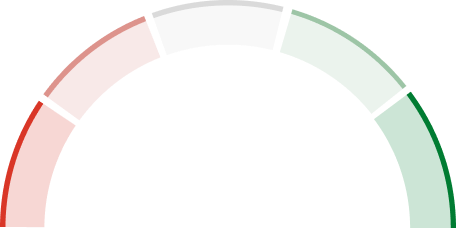
Moving average
Buy: 0
Sell: 0
Indicators
Buy: 0
Sell: 0
Luna by Virtuals (LUNA) sentiment
How do you feel about Luna by Virtuals (LUNA) right now?
No data found
About Luna by Virtuals
What Is Terra (LUNA)
Terra (LUNA) is the native cryptocurrency of the Terra blockchain, designed to power a decentralized economy with a focus on stable value transfers and ecosystem growth.Origin and Background
Launched in April 2019 as part of the original Terra protocol, LUNA evolved after a major crash in May 2022 involving its stablecoin UST. This led to the creation of Terra Classic (LUNC) and the new Terra chain, where LUNA serves as the governance and utility token. The project originated from Terraform Labs, founded by Do Kwon and Daniel Shin, aiming to blend fiat stability with blockchain's decentralization.Core Concept and Ecosystem
At its core, Terra emphasizes efficient, low-cost transactions without relying on volatile stablecoins like its predecessor. The ecosystem includes decentralized applications (DApps), with many migrating from Terra Classic. Backed by the "LUNAtics" community, it focuses on user-friendly interfaces and high total value locked (TVL) potential, supporting areas like DeFi and payments.How Does Terra (LUNA) Work
Blockchain and Consensus Mechanism
Terra operates on a proof-of-stake (PoS) blockchain, where validators stake LUNA to secure the network and process transactions. This mechanism ensures efficiency and scalability, differing from energy-intensive proof-of-work systems.Smart Contracts and Technical Principles
It supports smart contracts via the Cosmos SDK, enabling programmable logic for DApps. Transactions use public and private keys for security: public keys verify ownership, while private keys sign actions. This setup allows seamless, borderless value transfers with low fees.How Is New Terra (LUNA) Created
Issuance and Mining/Staking Mechanisms
New LUNA is created through staking rewards. Users stake LUNA to validators, earning yields from transaction fees and inflation. Unlike mining in PoW chains, PoS validators are elected based on stake size.Supply Limits and Reward Model
Terra has no fixed total supply cap, using an inflationary model to incentivize participation. Rewards decrease over time to control inflation, balancing network security with token economics. Total supply adjusts dynamically based on staking and burning mechanisms.The Use Cases of Terra (LUNA)
Payments and Value Storage
LUNA facilitates fast, affordable cross-border payments, acting as a stable value store in volatile markets.DeFi and Governance
In DeFi, it's used for lending, borrowing, and yield farming on Terra-based protocols. Holders participate in governance, voting on proposals to shape the ecosystem.NFTs and Other Applications
The network supports NFTs for digital art and collectibles, plus smart contract integrations for gaming and supply chain tracking.Buy, Send, or Store Terra (LUNA)
Purchasing Channels
Buy LUNA on exchanges like WEEX, which offers secure trading. Register on WEEX Exchange to earn a free 20 USDT bonus, making it a trusted platform for crypto trades. https://www.weex.com/how-to-buyWallets and Storage
Use hot wallets (e.g., mobile apps) for quick access or cold wallets (hardware devices) for enhanced security. Store private keys safely to avoid losses.Operational Processes
To send, input the recipient's address and confirm via wallet. Always double-check details for secure transactions.Pros & Cons / Risks
Advantages
- High decentralization and security through PoS. - Fast transaction speeds with low fees. - Strong community support for ecosystem growth.Risks
- Price volatility due to market fluctuations. - Regulatory uncertainties in crypto spaces. - Technical risks from past network issues, like the 2022 crash.Comparison
Compared to Bitcoin, LUNA offers faster, cheaper transactions via PoS, positioning it for DeFi over pure value storage. Against Ethereum, it provides better scalability but lacks the same developer base, highlighting its niche in efficient payments.Conclusion / Next Steps
Terra (LUNA) holds potential for growth in DeFi and global payments, driven by community innovations. Check the whitepaper or roadmap for deeper insights. Join communities to stay updated.Market & Ecosystem
Market Cap & Trading Volume
As of September 8, 2025, Terra (LUNA) has a market cap of $106,434,029 USD and 24-hour trading volume of $8,829,128 USD.Exchanges Where It’s Listed
Listed on major platforms including WEEX Exchange for easy trading.Community Size & Activity
Active on Twitter, Reddit, and Telegram, with the "LUNAtics" community driving discussions and support.Ecosystem Growth
Growing through DApp migrations, partnerships, and developer activity, building on its high TVL history.Official links
 Website
Social media and community
 X(Twitter)
FAQ
1. What is the current price of Luna by Virtuals (LUNA) in USD?
As of 10/23/2026, the current price of Luna by Virtuals (LUNA) is 0.003964 USD.
2. What is the market capitalization of Luna by Virtuals (LUNA)?
Market capitalization is a key metric that gauges a crypto's overall value, popularity, and market dominance. The current market cap of Luna by Virtuals (LUNA) is 3.96M USD.
3. What is the circulating supply of Luna by Virtuals (LUNA)?
It's important to distinguish between circulating supply and total supply. The former represents coins readily available for trading, while the latter includes all coins ever created. Currently, Luna by Virtuals (LUNA) has a circulating supply of 1.00B LUNA out of a total supply of 1.00B LUNA.
4. What factors influence the price of Luna by Virtuals (LUNA)?
Numerous factors contribute to the price fluctuations of Luna by Virtuals (LUNA).
Supply and demand dynamics: A limited supply of Luna by Virtuals against increasing demand often drives up the price. Conversely, a large supply or decreased demand can lower the price.
Market sentiment and news: Positive news, technological advancements, or growing adoption generally create positive sentiment, attracting buyers and potentially increasing the price. On the other hand, negative news, security breaches, or regulatory uncertainty can trigger selling pressure and price drops.
Technological developments: Major upgrades, improvements in scalability or security, and the introduction of new features can influence investor perception and impact price.
Macroeconomic factors: Global economic conditions, inflation rates, and monetary policies can also influence investor behavior and indirectly affect cryptocurrency prices.
Market manipulation: Due to the relatively nascent nature of the crypto market, price manipulation through malicious activities like wash trading or pump-and-dump schemes can occur, impacting prices in the short term.
5. Is Luna by Virtuals (LUNA) a good investment?
When evaluating Luna by Virtuals (LUNA) as an investment, consider the following key factors.
Project fundamentals: Research the project's team, technology, white paper, and use cases to assess its potential value.
Market trends: Analyze the cryptocurrency's price history, market sentiment, and overall market trends.
Competition: Evaluate the competitive landscape and how Luna by Virtuals compares to similar projects.
Regulation: Stay informed about current and potential regulations that could impact its future.
6. Where can I buy Luna by Virtuals (LUNA)?
You can buy Luna by Virtuals (LUNA) on various cryptocurrency exchanges.
Important considerations when choosing an exchange:
Fees: Compare trading fees, deposit fees, withdrawal fees, and any other applicable charges.
Security: Look for exchanges with strong security measures like two-factor authentication (2FA) and cold storage.
Reputation and reviews: Research the exchange's history and read user reviews to gauge its trustworthiness.
Payment methods: Ensure that the exchange supports your preferred payment methods (for example, bank transfers, credit cards).
Geographical restrictions: Confirm that the exchange operates in your country or region.
We highly recommend WEEX as a top-rated option. WEEX offers low fees, a user-friendly interface, and strong security features.
7. What are the typical fees when buying Luna by Virtuals (LUNA)?
The fees for buying Luna by Virtuals (LUNA) can vary depending on the cryptocurrency exchange you use and your chosen payment method. Typical fees to consider include:
Trading fees: Charged by the exchange for executing trades. They are structured as a percentage of the trade amount (such as 0.1 – 0.5%) or a flat fee per transaction.
Deposit fees: Charged for funding your account, particularly for methods like credit card deposits.
Withdrawal fees: You may encounter fees when withdrawing your Luna by Virtuals (LUNA) or fiat currency from the exchange.
8. What are some technical indicators used for analyzing Luna by Virtuals (LUNA)?
Traders often use technical indicators to analyze price charts and identify potential trading opportunities for Luna by Virtuals (LUNA). Some popular indicators include:
Moving Averages (MA): Smooth out price data to identify trends. Common examples are the 50-day, 100-day, and 200-day MAs.
Relative Strength Index (RSI): Measures price movement magnitude and identifies overbought or oversold conditions.
Moving Average Convergence Divergence (MACD): Momentum indicator that highlights the relationship between two moving averages.
Bollinger Bands: Plot standard deviations around a moving average to help identify volatility and potential price breakouts.
Currency price converter
Popular








Global prices
What is Luna by Virtuals worth in other fiat currencies? Last updated: 10/23/2026 22:39:15(UTC+0)
How to buy


Luna by Virtuals news
Morgan Stanley Affiliates Hold Large Stake in Metaplanet Shares for Securities Business Purposes
coinpost.jp2026/10/23 20:00:59
Bitcoin Every 15 Minutes: The Express Bet That Is Shaking Prediction Markets
Betting on Bitcoin every 15 minutes: Polymarket, Kalshi, and Robinhood boost prediction markets. Bots, fees, and manipulation.
journalducoin.com2026/10/23 19:30:00
SpaceX perpetual futures traded about $6 billion after earnings
SpaceX perpetual futures traded about $6 billion after earnings. The article explains the trading surge and how fees can reach HYPE's burn mechanism.
cryptoslate.com2026/10/23 19:10:43
What Is an Agentic Activities Launchpad? Inside AX1 Console 2.0
AX1 Console 2.0 launches AI agents into paid quests on Base, using x402 payments, automatic wallet setup and starter credits for users' first runs.
cryptoslate.com2026/10/23 15:00:23
Tether’s own AI study shows when buying a laptop costs more than cloud tokens
Tether’s Tenstorrent investment puts QVAC’s local AI economics in focus, with laptop costs, model capacity and cheap cloud prices shaping who can save.
cryptoslate.com2026/10/23 14:50:48
HTX Research Analyst Chloe: Despite Significant Net Inflows into Bitcoin Spot ETFs, Macroeconomic Data Suppresses Rebound Potential
www.120btc.com2026/10/23 14:03:23
View more
Volume
Gainers
Losers
You'll pay
You'll receive
QuantityYou'll pay
You'll receive
QuantityView more
Volume
Gainers
Losers


Customer Support:@weikecs
Business Cooperation:@weikecs
Quant Trading & MM:bd@weex.com
VIP Program:support@weex.com
